


TL;DR: Smartlead is a sender, not a deliverability tool, so before you replace it, decide which problem you actually have. If the issue is sending (volume, channels, or cost), move to another platform. If the issue is that your mail lands in spam or Promotions, you do not need a new sender at all. You need a warm-up and monitoring layer that runs on top of the one you have, which is where Warmy sits.
The best Smartlead alternatives in 2026 are Warmy, Instantly, lemlist, Saleshandy, Woodpecker, QuickMail, and Mailreach. Warmy leads for deliverability and warm-up depth, Instantly and Saleshandy lead for high-volume sending, and Mailreach suits budget warm-up. Pick based on whether you need a new sending platform or a dedicated deliverability layer.
Independent testing across 15 major email platforms puts the average inbox placement rate near 83%, which means close to one in six messages never reaches the inbox. For cold outreach sent from newer domains, the miss rate usually runs higher.
Smartlead handles the sending side well, with unlimited mailboxes and warm-up included on every plan. Teams start shopping for an alternative for two reasons. The sticker price rarely reflects the real cost once add-ons like dedicated servers, deliverability tooling, and white-label workspaces stack up. And warm-up that lives inside the sending tool does not give you independent monitoring or placement testing.
Warmy is an AI-driven email deliverability platform that builds sender reputation through warm-up and then monitors it continuously, so your inbox placement holds after a campaign goes live. Before you switch anything, run a free email deliverability test to see where your messages land right now.
What Smartlead does, and why teams look for an alternative

Smartlead is a cold email platform built for volume. It connects unlimited mailboxes, rotates sends across them, includes unlimited warm-up on every plan, and adds agency features such as white-label client dashboards. Pricing starts around $39 per month and scales through a Pro tier near $94 to higher unlimited plans.
Where Smartlead is strong
For agencies and lead-generation operators running many client domains at once, the unlimited-mailbox model keeps the per-inbox cost low as volume grows. If your core need is sending a lot of cold emails across many accounts, Smartlead does that job well.
Where teams hit limits
Two gaps push teams to look elsewhere. First, the base plan is not the full bill: dedicated sending servers, the deliverability add-on, and white-label workspaces are charged separately, and the total can land three to five times higher than the entry price.
Second, the warm-up that sits inside the sending tool is tied to that tool. When you want provider-agnostic warm-up, continuous domain monitoring, or inbox placement testing across providers, a specialist covers ground Smartlead does not. For a wider view of the category, see our roundup of deliverability tools for cold email.
Two kinds of Smartlead alternative: Sending platform or deliverability layer
“Smartlead alternative” means two different things depending on the job you are solving, and confusing them is how teams end up paying for the wrong tool.
If you want to change how you send, you need another sending platform: Instantly, lemlist, Saleshandy, Woodpecker, or QuickMail. These replace Smartlead’s core function, and most include their own warm-up.
If you want to protect how you land, you need a deliverability layer: a standalone tool that warms your mailboxes and monitors reputation independently of your sender. Warmy and Mailreach fit here. Because this layer sits on top of any sending platform, you can keep Smartlead and still add it.
The distinction matters because deliverability is scored on every send, not configured once. Gmail, for example, requires bulk senders (roughly 5,000 or more messages a day to personal Gmail) to authenticate with SPF, DKIM, and DMARC and to keep the spam complaint rate below 0.3%, or they lose access to delivery mitigation (Google). A sending platform gets your reputation off the ground. Watching it over time is a separate job, and that is what a deliverability layer handles.
Pro Tip: Warm-up is not a one-time task. Once a domain is healthy, stopping warm-up lets reputation drift, especially if a campaign draws a few spam complaints. Keep a lower-volume warm-up running alongside live sends, and watch your spam rate in Google Postmaster Tools so you catch a dip before it costs you a campaign.
The 7 best Smartlead alternatives in 2026
The table below compares each tool against Smartlead on its main differentiator, entry price, and best-fit use case. Warmy ranks first for deliverability and warm-up depth, and the sending platforms follow by use case.
| Tool | Key difference vs Smartlead | Starting price* | Best for |
|---|---|---|---|
| Warmy | Deliverability and warm-up specialist, not a sender; monitors on top of any platform | Custom, quote-based | Independent warm-up and monitoring |
| Instantly | Unlimited mailboxes, warm-up, and a lead database in one flat fee | From ~$37/mo | High-volume, email-only sending |
| lemlist | Native multichannel: email, LinkedIn, and calls | From ~$39/user/mo | Multichannel sequences |
| Saleshandy | Transparent pricing, free CRM, white-label at a flat fee | From ~$25/mo (annual) | Agencies on a budget |
| Woodpecker | Simple SMB sending with built-in free warm-up | From ~$35/mo (~$24 annual) | SMBs and solo senders |
| QuickMail | Granular inbox-level analytics; free MailFlow warm-up | Free warm-up; sending ~$49/mo | Reply-focused analytics |
| Mailreach | Standalone warm-up plus spam testing | From ~$15.60/inbox/mo (annual) | Budget standalone warm-up |
1. Warmy:
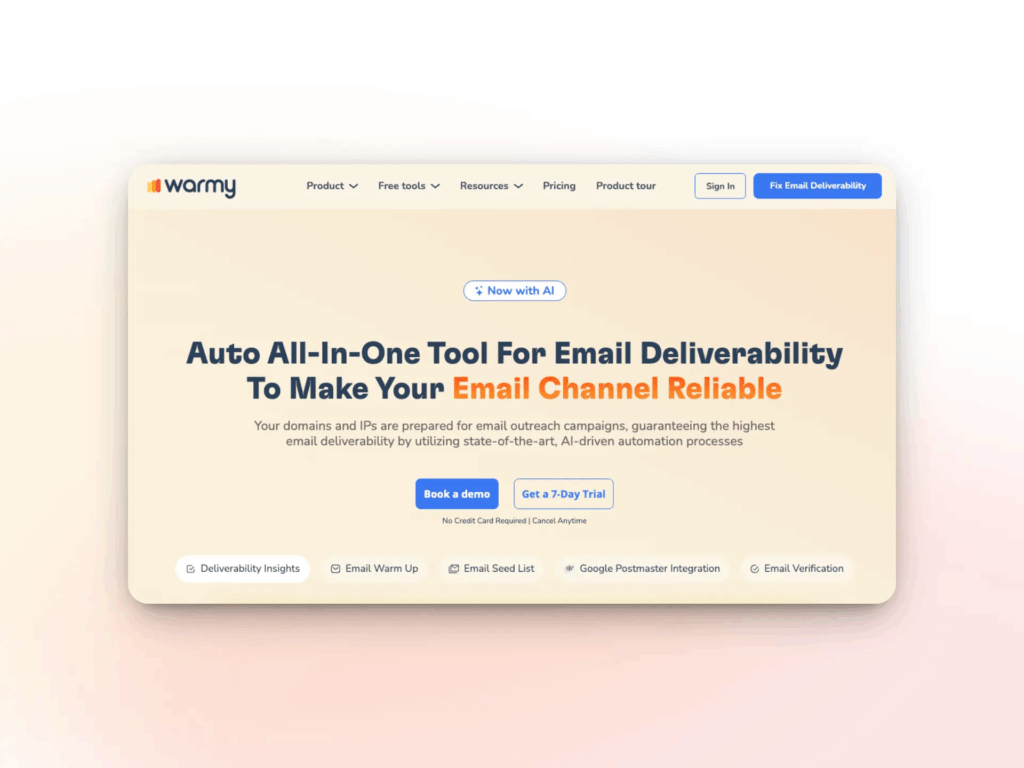
Warmy is a deliverability specialist rather than a bulk sender, which is why it complements or replaces the warm-up side of Smartlead. Its AI engine, Adeline, runs warm-up across a network of real inboxes that open, click, reply to, and rescue messages from spam to build genuine engagement signals. You control warm-up by provider, language (30 or more supported), topic, and volume, and the Domain Health Hub tracks inbox placement, DNS authentication, blacklist status, and Google Postmaster signals in one dashboard.
Key features: AI warm-up across a real-inbox network, Domain Health Hub monitoring, seed-list inbox placement testing across Gmail, Outlook, and Yahoo, and free tools including a free SPF record generator and a template checker.
Best for: Teams that want independent warm-up and continuous deliverability monitoring on top of any sender.
Pros: The deepest warm-up controls in the category, continuous monitoring, provider-agnostic setup, and generous free tooling.
Cons: Not a sending platform, and priced per inbox, so cost rises with mailbox count.
Pricing: Custom and quote-based in 2026, with a 7-day free trial and no credit card required.
Check your content too before you commit to any tool: run your message through Warmy’s free template checker to catch spam triggers before you hit send.
2. Instantly:
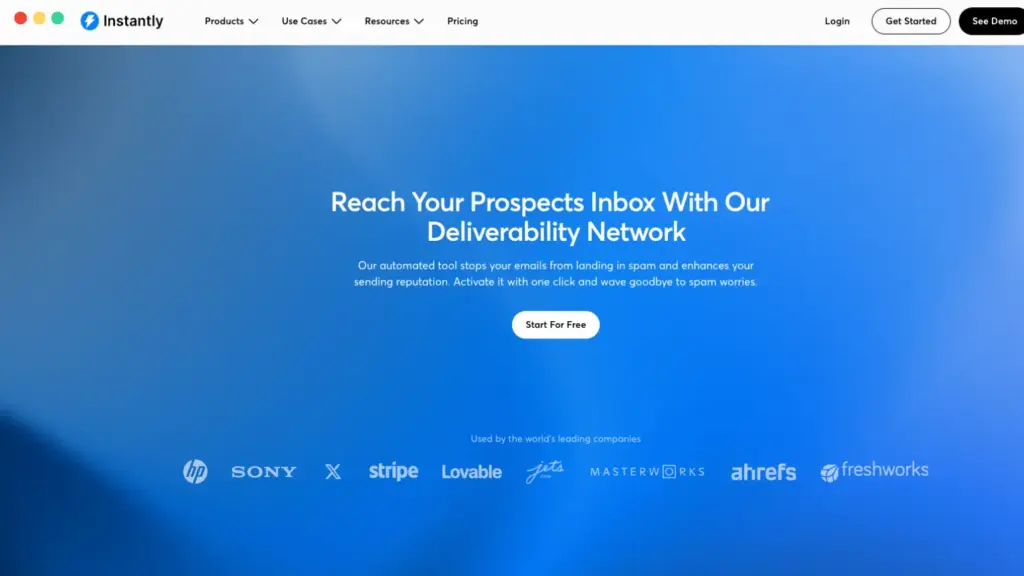
Instantly is the closest like-for-like replacement for Smartlead’s sending function. It offers unlimited sending accounts on a flat fee, built-in warm-up across a large private network, inbox rotation, and an optional lead database. Pricing starts around $37 per month on the Growth plan, with Hypergrowth near $77 to $97.
Best for: High-volume, email-only teams that want predictable flat pricing.
Pros: Unlimited mailboxes, a simple flat fee, and warm-up included.
Cons: The lead database, CRM, and inbox placement testing are separate add-ons that raise the real cost.
3. lemlist:
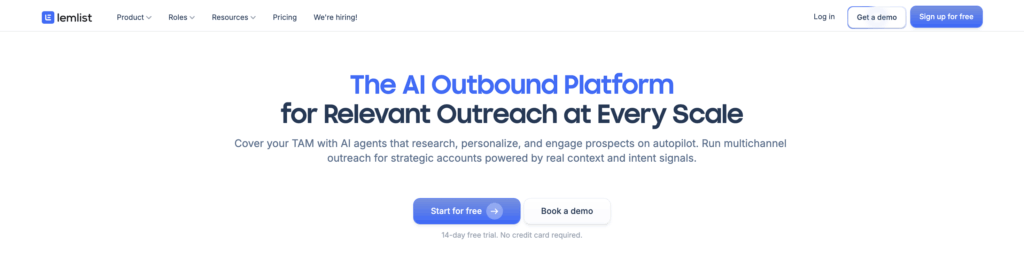
lemlist adds channels Smartlead does not cover natively. It combines email with LinkedIn steps and calling in one sequence, along with image and video personalization. Pricing is per user and starts around $39 per user per month for email, rising to roughly $99 for multichannel.
Best for: Teams running coordinated multichannel campaigns.
Pros: Native multichannel outreach, strong personalization, and a large contact database.
Cons: Per-user pricing gets expensive for larger teams.
4. Saleshandy:
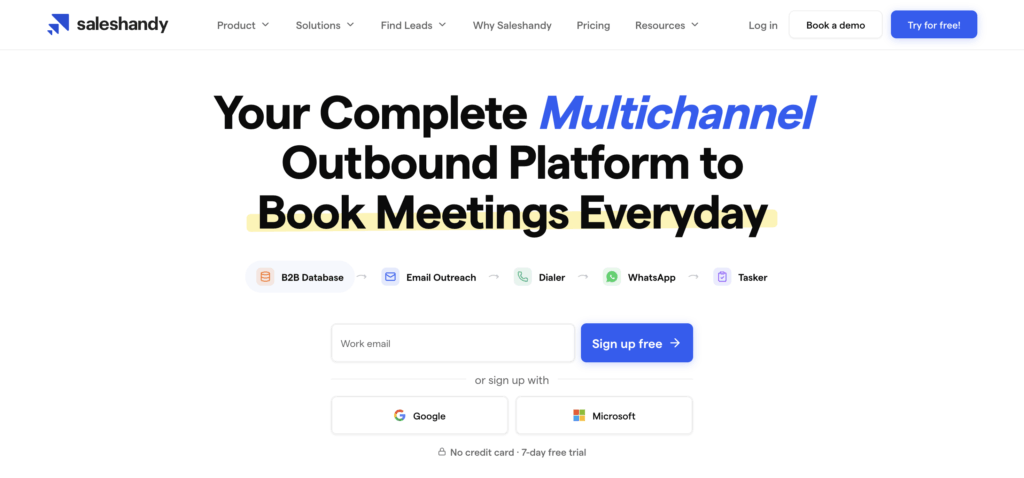
Saleshandy pairs low entry pricing with transparent plans, a free built-in CRM, and white-label client management at a flat fee. Pricing starts around $25 per month on annual billing, and agency Scale plans near $139 add unlimited clients.
Best for: Agencies that want predictable, low-cost sending with client management included.
Pros: Transparent pricing, a free CRM, and unlimited clients on higher tiers.
Cons: Advanced AI features sit behind higher plans.
5. Woodpecker:
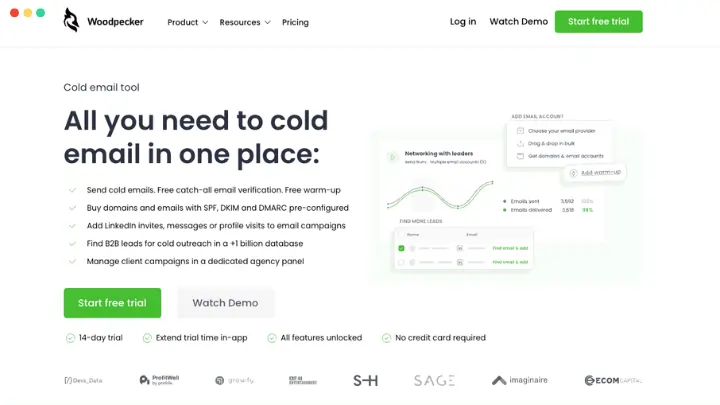
Woodpecker is a straightforward sending tool with built-in free warm-up and a clean interface, aimed at small teams and individual senders. Pricing starts around $35 per month, or about $24 with annual billing.
Best for: SMBs and solo founders who want simple cold email with warm-up included.
Pros: Easy to use, warm-up included, and an affordable entry price.
Cons: Fewer advanced features than agency-focused platforms.
6. QuickMail:
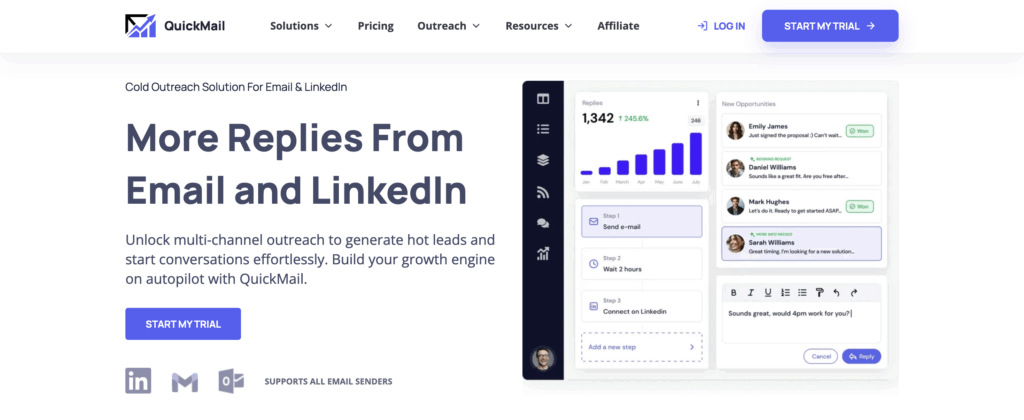
QuickMail has been in cold email longer than most, and it stands out for granular inbox-level analytics, so you can see which mailbox drives replies and which one drags a campaign down. It bundles free warm-up through its MailFlow integration. A free warm-up-only plan is available, and paid sending starts around $49 per month.
Best for: Reply-focused senders and agencies that want per-inbox visibility.
Pros: Detailed analytics, free bundled warm-up, and unlimited team members.
Cons: The interface feels dated next to newer tools.
7. Mailreach:
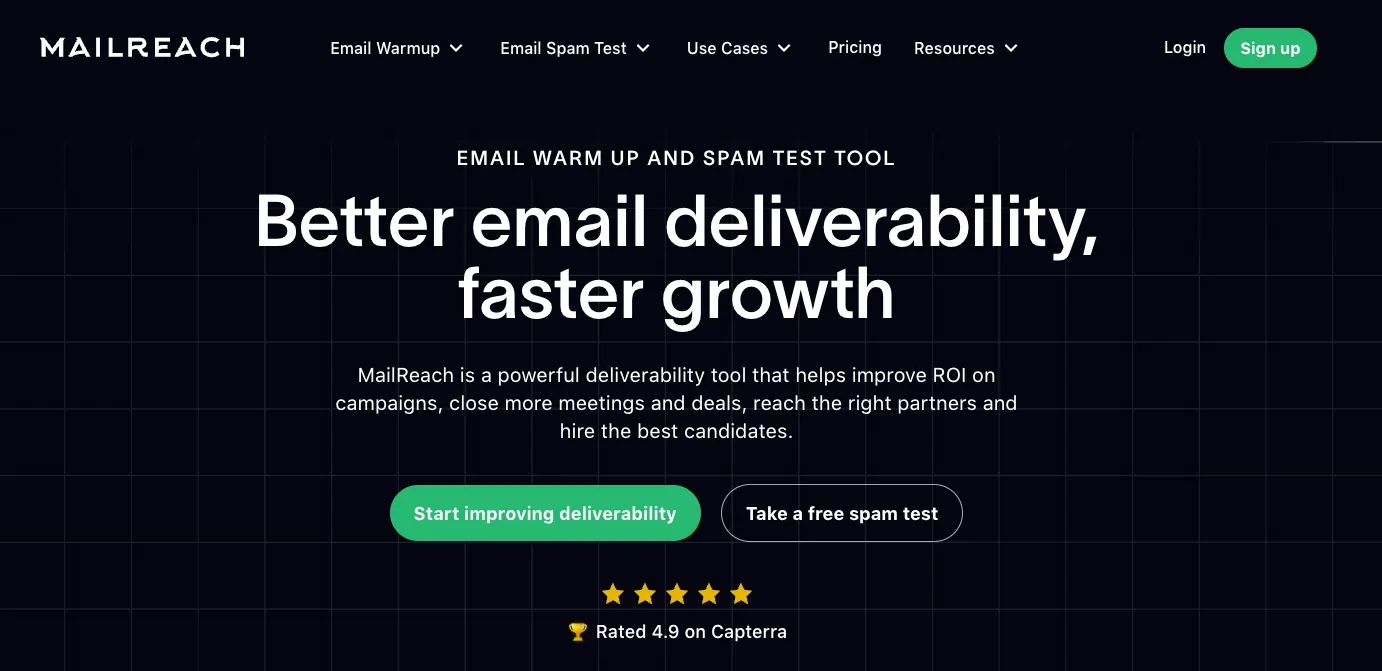
Mailreach is the closest direct peer to Warmy on the deliverability layer. It warms mailboxes through a real-inbox network and runs spam tests across dozens of seed addresses, with blacklist and authentication checks. Pricing starts around $15.60 per inbox per month on annual billing.
Best for: Teams that want lean, standalone warm-up plus spam testing on a budget.
Pros: Affordable per-inbox warm-up and solid spam testing.
Cons: Lighter monitoring and fewer free tools than Warmy.
How to choose the right Smartlead alternative
Match the tool to the job
Start with the job, not the brand. If you need to send at higher volume or across more channels, compare the sending platforms: Instantly and Saleshandy for cost, lemlist for multichannel, QuickMail for analytics, and Woodpecker for simplicity.
If your emails already send fine but land in spam or promotions, the fix is a deliverability layer, not another sender. Our guide to the best email warm-up and deliverability tools breaks this down further.
Compare true cost, not sticker price
Flat-fee senders like Instantly look cheap per mailbox at scale, but the lead database, CRM, and placement testing are often billed separately. Per-inbox tools like Warmy cost more per mailbox, yet they give you monitoring and testing a bulk sender does not. Add up what you will actually use, then compare the totals.
Conclusion
Smartlead is a strong sending platform, and the best alternative depends on the job you are solving. For teams that want to change how they send, Instantly, lemlist, Saleshandy, Woodpecker, and QuickMail each win a specific use case.
For teams that want to protect how they land, Warmy gives you AI warm-up, continuous monitoring, and inbox placement testing that work on top of any sender, including Smartlead itself.
Ready to see where your emails land and how to fix it? Book a demo and see how Warmy protects your inbox placement.