

TL;DR A seed list is a network of real, monitored mailboxes across Gmail, Outlook, and Yahoo that receive your mail and engage with it — opening it, reading it, clicking links, replying, and pulling it out of spam. Every one of those actions is a positive signal to the mailbox provider, and together they teach the filters that your domain sends mail people actually want. Use a seed list to warm a new domain or mailbox, to rebuild reputation after a drop, and to keep engagement steady between campaigns so your sending history never goes cold.
A seed list is a network of real, actively maintained mailboxes, spread across providers like Gmail, Outlook, and Yahoo, that receive your emails and engage with them the way an interested subscriber would. That engagement is what builds sender reputation: every open, click, and reply teaches the provider that your mail belongs in the inbox.
A new domain sends its first campaign and lands in spam. An established domain goes quiet for a few weeks, comes back with a large send, and watches its open rates collapse. The cause is the same in both cases — the mailbox provider has no recent record of people wanting your mail, so it has no reason to trust you. Authentication will not fix that, and neither will better copy on its own. Reputation is built from engagement, and that engagement has to come from somewhere before your real list can supply it.
In simple terms, a seed list is how you supply it. Warmy is an AI-driven email deliverability platform that builds the reputation behind strong inbox placement. This guide explains what a seed list is, how seed list warm-up works, what it can and cannot do, and how to run one step by step.
This guide explains what a seed list is, how seed list testing works, what it can and cannot tell you, and how to run one step by step.
What is a seed list?
A seed list is a pool of real email accounts that a deliverability provider owns, maintains, and keeps active. When you send to those accounts, they do not simply receive your message — they behave like engaged recipients. They open it, spend time reading, click links, reply, mark it as important, and move it to the inbox when a filter has put it elsewhere. Mailbox providers watch that behavior and adjust how they treat your domain accordingly.
Seed list vs seed list warm-up
The two terms get used together, so it helps to separate them. The seed list is the network of mailboxes. Seed list warm-up is what you run with it: you send to the list on a schedule, the accounts engage, and your standing with each provider grows. One is the asset, the other is the process. If deliverability feels new to you, Warmy’s primer on email deliverability basics is a good place to start.
Why seed lists exist: Reputation is earned, not configured
Authentication gets you through the door. SPF, DKIM, and DMARC prove you are who you say you are, but they say nothing about whether anyone wants your mail. Filters decide that from behavior: who opens, who replies, who deletes without reading, who complains. A brand-new domain has none of that history, and a domain that has been landing in spam has the wrong kind. A seed list gives providers the positive behavior they need to see, consistently, until your real audience can carry the load.
How a seed list works
Seed list warm-up follows a simple loop, and understanding it explains both the value and the limits of what it can do.
A network of mailboxes across providers
A good seed list spans the mailbox providers your real audience uses, typically Gmail, Outlook, and Yahoo. Reputation is built per provider, so coverage matters — engagement at Gmail does nothing for how Outlook sees you. You send to every address on the list, and each provider registers the interaction independently.
What seed list engagement does
Each account treats your message the way a genuinely interested recipient would. It opens the email, keeps it open long enough to register as a read, clicks a link, replies to the thread, and marks it as not spam or moves it out of Promotions when a filter has misrouted it. Replies carry the most weight: a two-way conversation is one of the strongest trust signals a mailbox provider has.
Warm-up works best when the rest of your setup is sound, so it is worth confirming that authentication is in place and links resolve before you start. Warmy’s guide to deliverability diagnostics covers those checks.
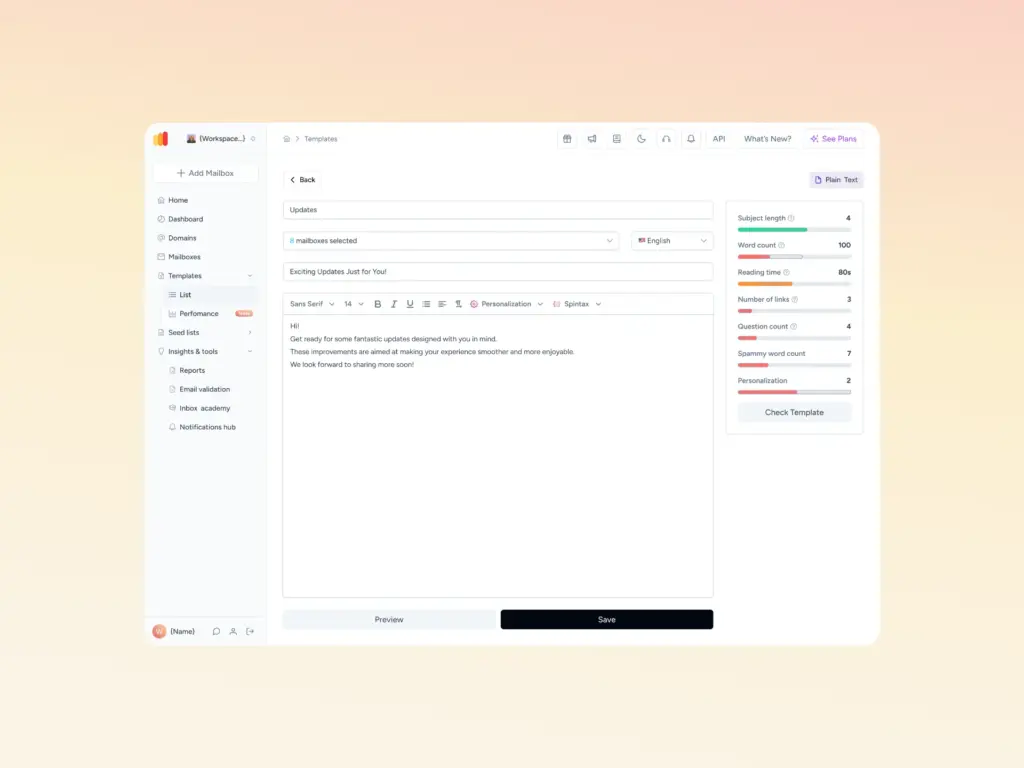
Content matters here too, because filters weigh the message itself alongside your reputation. Warming a domain with copy full of spam triggers works against you, so running your templates through Warmy’s Template Checker keeps the signals clean.
How seed lists improve email deliverability
Seed list warm-up improves deliverability directly, by changing the behavioral record providers hold on your domain.
Building history before a live send
A new domain or mailbox has no track record, and sending a cold campaign from it is how domains get burned. Warming with a seed list first gives the provider weeks of ordinary, healthy activity to look at: mail that gets opened, read, and answered. By the time your real campaign goes out, you are not a stranger.
Building reputation provider by provider
Every provider filters differently and keeps its own record of you, so trust at Gmail does not transfer to Outlook. A seed list spreads engagement across ecosystems, which means you build standing with each one in parallel instead of discovering months later that one of them never learned to trust you. Warmy’s look at how a seed list improves open and click rates covers the engagement side of that story.
Seed list vs inbox placement test
People use these two terms almost interchangeably, but they do different jobs. An inbox placement test measures where a message landed. A seed list changes where your messages land, by feeding providers the engagement that reputation is built from. One is a reading; the other is the work.
They pair well. Check where you stand, then run seed list warm-up to move the number. If you want to see how the measurement side works, Warmy’s inbox placement test shows that workflow.
Pro Tip: Warm up with content that resembles the mail you actually send — same domain, same infrastructure, same style of subject line and links. Reputation forms around the pattern providers observe, so if your warm-up traffic looks nothing like your campaigns, the trust you build transfers poorly to the send that matters.
The limits of seed list warm-up
Seed list warm-up is powerful, and it is not a substitute for everything else. Knowing where it stops keeps your expectations honest.
Use it alongside real engagement and provider dashboards
Warm-up builds the foundation; your real audience decides what gets built on top of it. If your list is stale, your content is weak, or your complaint rate is high, no amount of seed engagement will hold the line. Keep watching your real open and reply rates alongside provider dashboards such as Google Postmaster Tools, Yahoo Sender Hub, and Microsoft SNDS, and treat seed warm-up as the thing that gets you to a fair starting position rather than the thing that keeps you there.
| Seed list warm-up | Real subscriber engagement | |
|---|---|---|
| What it shows | Builds positive sending history with each provider | Confirms and sustains that reputation over time |
| When you get it | Before and between campaigns, continuously | During and after a send |
| Best for | New domains, recovery after a drop, quiet periods | Long-term reputation and revenue |
| Blind spot | Cannot compensate for weak content, bad lists, or complaints | Slow to build from zero, and fragile if you start cold |
How to run seed list warm-up with Warmy
Warmy compresses the process into three steps and keeps the engagement running in the background.
The steps, from download to report
1. Pull a fresh seed list. Add your sender, then open Warmy’s Seed List to get your set of seed addresses. Download the list before every campaign. The pool rotates, and running a test against yesterday’s addresses gives you a reading on mailboxes you are no longer sending to.
2. Send your real campaign to it. Import the addresses into your sending platform and build the campaign around content you actually plan to use: same subject line, same links, same sending domain, same authentication setup. Anything you sanitize for the test is something the test will not catch.
3. Read the placement report. Warmy breaks results down by provider and shows where each message landed: inbox, Promotions, spam, or missing entirely. The same report covers blacklist status and SPF, DKIM, and DMARC checks, so a failed placement usually comes with the reason attached.
What Warmy’s seed list does differently
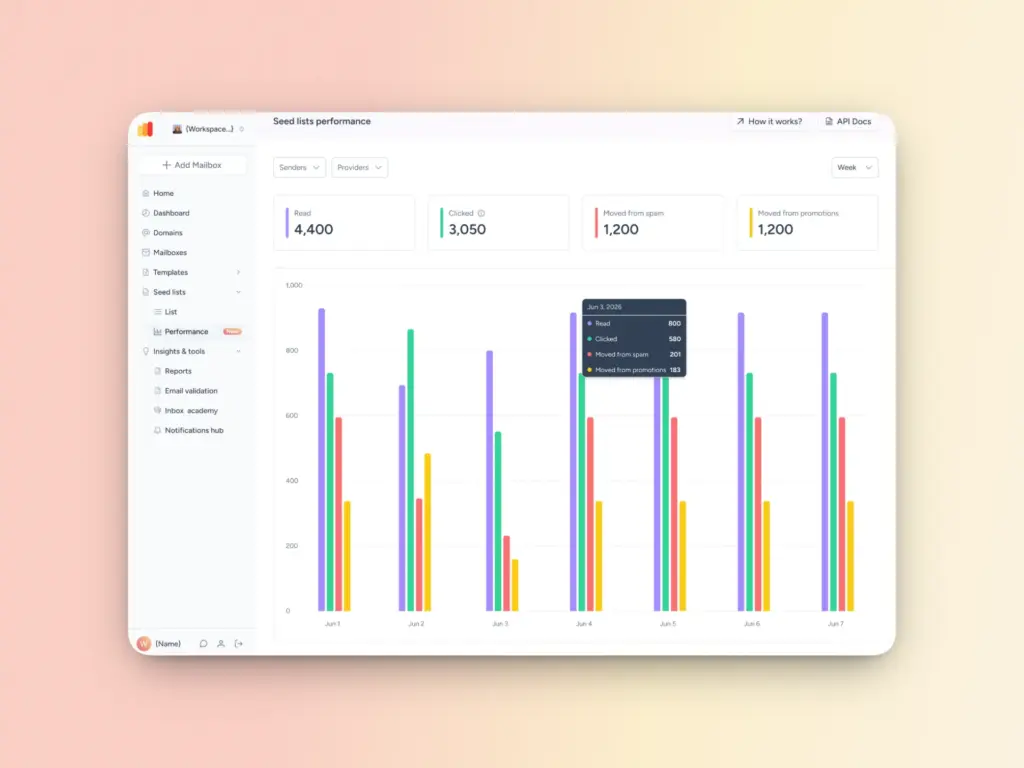
Traditional seed lists passively receive your email and report where it landed. Warmy’s seed list goes further. Its addresses are real, actively maintained accounts across Gmail, Outlook, and Yahoo that open your message, scroll through it, click links, reply, and pull it out of spam when needed.
That engagement sends genuine positive signals to mailbox providers rather than just measuring placement. For a deeper walkthrough, see how seed lists boost deliverability.
The bottom line on seed lists
A seed list answers the question your delivery rate cannot: did your email actually reach the inbox? Used well, it gives you an early warning when placement slips, a provider-by-provider view of where you stand, and a safe way to test content and authentication before a real send. Read it as a directional signal, keep it next to your real engagement data, and act on what it tells you.
Warmy brings the test and the fix into one platform, from the Advanced Seed List and free deliverability tools to AI-driven warmup that builds the reputation behind strong placement. Ready to see Warmy in action? Book your demo today and take control of where your emails land.