TL;DR: Email marketing tools split into four categories that work together: ESPs to send, deliverability and warm-up to reach the inbox, verification to clean your list, and analytics to measure. Pick one from each and connect them, because your ESP alone doesn’t decide whether you land in the inbox.
The best email marketing tools in 2026 fall into four categories: email service providers (ESPs) such as Mailchimp, Klaviyo, HubSpot, Brevo, ActiveCampaign, MailerLite, and GetResponse; deliverability and warm-up, led by Warmy; verification tools such as ZeroBounce and NeverBounce; and analytics tools such as Litmus and Google Analytics 4. Pick one from each category and connect them into a stack.
Email still returns about $36 for every dollar spent, higher than any other channel. That return only exists if your emails reach the inbox. A great ESP with a beautiful template earns nothing when the message lands in spam. Warmy is an AI-driven email deliverability platform that keeps your sending reputation strong so your campaigns reach real people. Before you compare tools, run a free email deliverability test to see where your emails land today.
Email marketing tools breakdown
| Tool | Category | Best for |
|---|---|---|
| Mailchimp | ESP | All-around SMB email marketing |
| Klaviyo | ESP | Ecommerce and Shopify stores |
| HubSpot Marketing Hub | ESP | B2B teams that want CRM plus marketing |
| Brevo | ESP | Multichannel email, SMS, and CRM |
| ActiveCampaign | ESP | Advanced automation workflows |
| MailerLite | ESP | Creators and small teams that want simplicity |
| GetResponse | ESP | Email plus webinars and funnels |
| Warmy | Deliverability and warm-up | Reaching the inbox with any ESP |
| ZeroBounce | Verification | List cleaning with bundled deliverability tools |
| NeverBounce | Verification | Real-time and bulk list verification |
| Litmus | Analytics and testing | Email rendering, QA, and engagement analytics |
| Google Analytics 4 | Analytics | Tracking campaign traffic and conversions |
Categories of email marketing tools
Most roundups list ESPs and stop there. That leaves out three jobs that decide whether your campaigns perform.
Email service providers (ESPs)
An ESP is the platform you send from. It stores your contacts, builds and schedules campaigns, runs automations, and reports on opens and clicks. This is the category most people mean when they say “email marketing tool,” and it is where you start.
Deliverability and email warm-up
Deliverability tools do a different job. They build and protect your sender reputation so the emails your ESP sends actually reach the inbox. Warm-up is the core mechanism here: it generates positive engagement over time to prove to mailbox providers that your domain is trustworthy.
Verification and analytics
Verification tools clean your list before you send, removing invalid and risky addresses that cause bounces and hurt your reputation. Analytics and testing tools sit at the other end of the workflow, showing how your emails render across clients and how recipients engage after you send.
The 12 best email marketing tools by category
Best email service providers
- Mailchimp. A general-purpose ESP with campaigns, basic automation, templates, and audience management. Best for small and midsize teams that want a familiar, all-around platform.
- Klaviyo. An ecommerce-focused ESP with deep Shopify and store integrations, behavioral segmentation, and predictive analytics. Best for ecommerce and Shopify brands.
- HubSpot Marketing Hub. Marketing automation tied to a full CRM, with workflows, lead scoring, and reporting. Best for B2B teams that want marketing and CRM in one place.
- Brevo. Email, SMS, and a light CRM in one platform, with automation and transactional sending. Best for teams that want multichannel messaging.
- ActiveCampaign. An automation-first platform with advanced workflows, segmentation, and a sales CRM. Best for teams that need deep automation.
- MailerLite. A clean, beginner-friendly ESP with drag-and-drop campaigns, automations, landing pages, and websites. Best for creators and small teams that value simplicity.
- GetResponse. An all-in-one platform that adds webinars and funnels to email and automation. Best for teams that run webinars alongside campaigns.
Best deliverability and warm-up tool
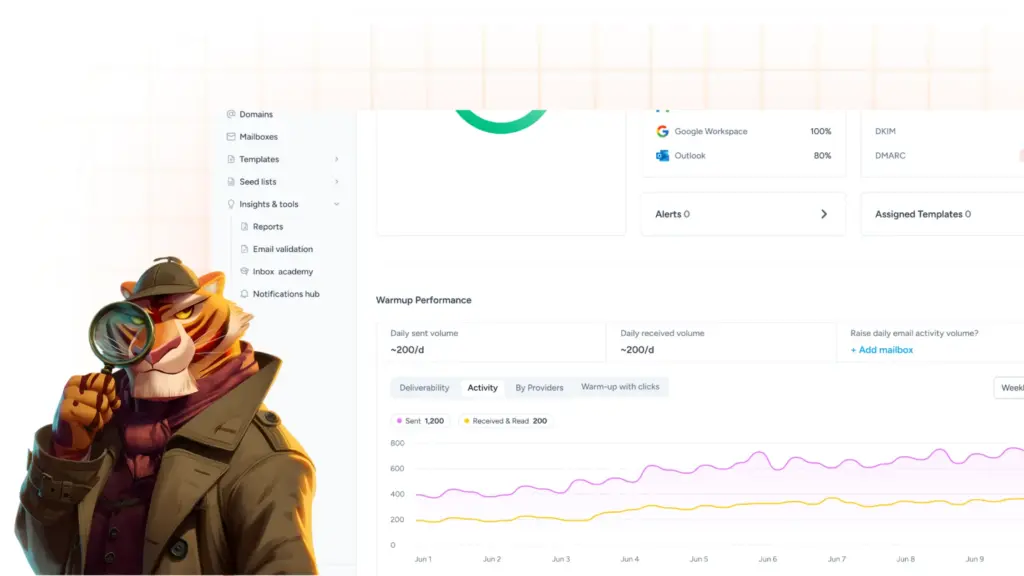
Warmy is an AI-driven email warmup and deliverability platform that pairs with any ESP on this list. Its automated email warm up exchanges messages with real inboxes across Gmail, Outlook, Yahoo, Zoho, and Amazon SES, using auto-generated, personalized messages in more than 30 languages.
Emails are opened, replied to, marked as important, and pulled out of spam, which trains mailbox providers to treat your domain as credible. Warmy also gives you deliverability insights across providers, integrates with Google Postmaster to pull reputation data, and monitors your SPF, DKIM, and DMARC status from one dashboard.
An email seed list lets you test inbox placement before you send to real recipients. Best for reaching the inbox reliably with whichever ESP you already use.
Best verification tools
- ZeroBounce. Identifies invalid, spam-trap, disposable, and abusive addresses, and bundles extra deliverability checks. Best for cleaning lists while getting deliverability tooling in the same place.
- NeverBounce. Real-time and bulk verification that removes bad addresses before you send. Best for teams that want pay-per-use list cleaning.
Best analytics and testing tools
- Litmus. Previews how your emails render across clients and devices, runs pre-send QA checks, and reports on post-send engagement. Best for teams that ship visually designed emails at scale.
- Google Analytics 4. Tracks the traffic and conversions your campaigns drive on your website through UTM tags. Best for connecting email activity to on-site results.
Why your ESP is not enough on its own
Here is the gap most teams miss. An ESP sends your email. It does not decide whether that email reaches the inbox. The receiving mailbox provider makes that call.
What receiving servers check
Gmail and Yahoo now hold senders to explicit standards. Under Google’s email sender guidelines, anyone sending around 5,000 or more messages a day to personal Gmail accounts must authenticate with SPF and DKIM, publish a DMARC record, and keep the user-reported spam complaint rate below 0.3%. Miss those bars and messages get filtered to spam or rejected outright. Authentication and reputation, not template design, are what open the inbox.
How Warmy pairs with any ESP
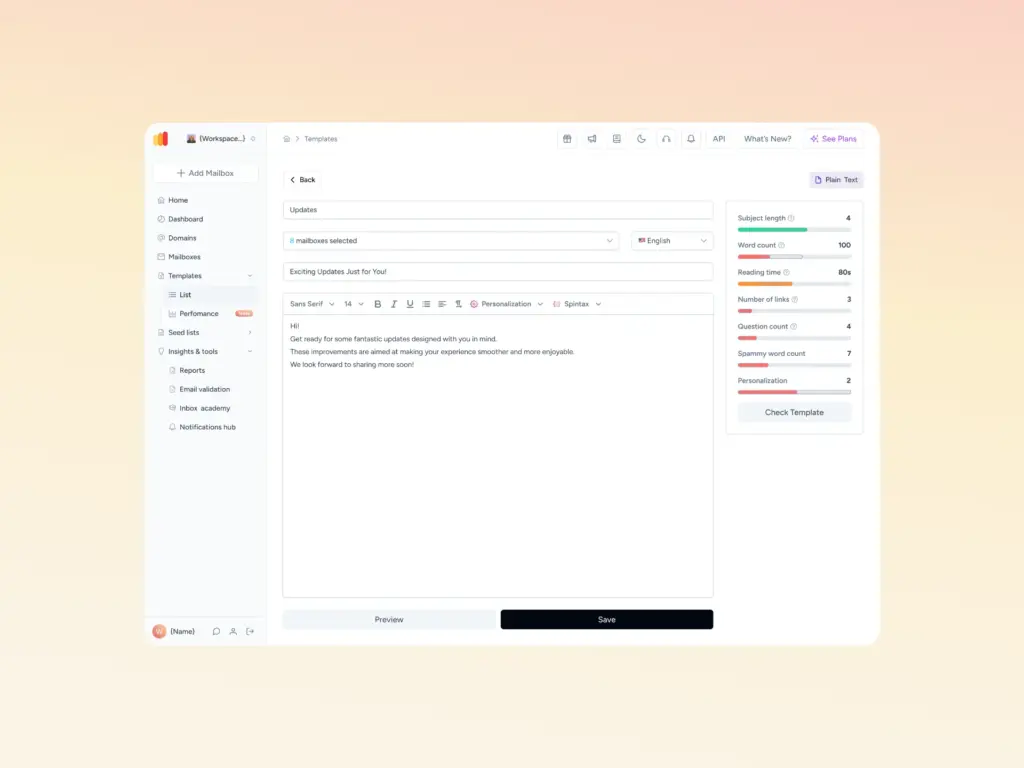
A new or cold domain has no sending history, so mailbox providers have no reason to trust it yet. That is the reputation gap warm-up closes. Warmy connects the mailboxes you send from and generates steady, human-like engagement that builds credibility over time, then keeps it stable while you run live campaigns.
Because it sits underneath the ESP rather than replacing it, you keep Mailchimp, Klaviyo, or whatever you send from, and add the layer that protects placement. When content is the issue rather than reputation, run your message through the Template Checker to catch spam triggers before you hit send.
Pro Tip: Warm up a new domain for a few weeks before your first real campaign. Sending a high volume from a cold domain is the fastest way to trigger spam filters and damage a reputation you have not built yet.
Best tools for B2B vs B2C
Your audience shapes the ESP, but the deliverability layer stays the same. B2B teams often favor HubSpot or ActiveCampaign for CRM depth and workflow automation, and they lean on verification to keep bounce rates low across prospecting lists.
B2C and ecommerce teams usually pick Klaviyo, Mailchimp, or Brevo for volume, segmentation, and store integrations. In both cases the job underneath is identical: get the message into the primary inbox.
That is why warm-up and deliverability monitoring belong in every stack, regardless of audience. For a deeper look at the metrics that matter after the send, see Warmy’s guide to email marketing analytics.
How to build an email marketing stack that reaches the inbox
- Pick your ESP by audience and budget. Choose the sending platform that fits how you sell, whether that is ecommerce, B2B, or creator-led.
- Add verification to protect sender reputation. Clean your list before the first send so bounces do not damage your standing with mailbox providers.
- Add deliverability and warm-up with Warmy. Warm your domains and mailboxes, then monitor placement so problems surface before a campaign tanks. Warmy’s email deliverability best practices guide walks through the fundamentals.
- Measure with analytics and testing. Use rendering QA and web analytics to see what works and refine each send.
Conclusion
The best email marketing tools are not competitors for a single slot. There are four categories that work together: an ESP to send, a deliverability layer to reach the inbox, verification to protect your list, and analytics to measure results. The teams that consistently land in the primary inbox are the ones that treat deliverability as its own job rather than assuming their ESP handles it.
Warmy is the deliverability layer that makes the rest of your stack perform. Ready to see it on your own domains? Book a demo and see how Warmy protects your inbox placement.