TL;DR: Most ecommerce email marketing best practices guides cover segmentation, personalization, and automation flows and stop there, treating deliverability as a footnote. Those tactics only pay off if the email lands in the inbox first, and ecommerce-specific patterns like BFCM sending spikes, checkout-collected lists, and mixed transactional and marketing streams create deliverability risk that generic guides don’t address. This piece covers both halves: the engagement practices that drive results, and the infrastructure practices that let those results actually reach someone.
Ecommerce email marketing is the use of email to drive purchases and retention for an online store, spanning promotional campaigns, cart-abandonment flows, and post-purchase sequences that turn one-time buyers into repeat customers. Its return depends entirely on inbox placement: a well-timed, well-segmented email that lands in spam produces nothing.
If you’ve tightened your segmentation and personalization and still aren’t seeing the lift you expected, the problem might not be your content. Gmail, Yahoo, and Microsoft now enforce strict authentication and complaint-rate rules, and e-commerce email marketing open rates have climbed to 25.1%, up from 10.16% three years earlier, according to Statista, which means the channel is worth more than ever and worth protecting accordingly.
A checkout-collected list, a promotional calendar that spikes hard around sales, and transactional mail sharing a domain with marketing sends are exactly the conditions that get ecommerce brands filtered before a subject line ever gets read.
What “Best Practices” Actually Means for Ecommerce Email
The best email marketing strategy for ecommerce treats engagement and infrastructure as two halves of the same job: segmentation and personalization decide whether a subscriber wants to open your email, while authentication and sending history decide whether they ever see it at all. Most “ecommerce email marketing best practices” content only covers the first half.
Engagement practices vs. infrastructure practices
Engagement practices are the ones every guide already covers well: who you send to, what you say, and when you say it. Infrastructure practices determine whether that message reaches the person you segmented and personalized it for in the first place. Skip either half and revenue gets left on the table, but a gap in infrastructure stays invisible until a whole campaign disappears into spam.
Why ecommerce email behaves differently from B2B email
A B2B sender emails a steady trickle year-round. An ecommerce brand often sends almost nothing for weeks, then floods its full list the moment a flash sale opens, and mailbox providers watch for that shape of behavior because it also describes a compromised account or a spam operation.
Small business email marketing runs into this constantly: a lean DTC team without a dedicated deliverability specialist builds a checkout-collected list under time pressure and layers an erratic sending pattern on top of it, landing on the exact combination spam filters are tuned to catch. Email marketing for ecommerce has to account for both the list and the pattern, not just the content.
Engagement Best Practices
Segmentation by purchase behavior and lifecycle stage
Segment by what a customer has actually done: first-time buyer, repeat purchaser, high-value customer, or lapsed subscriber, rather than only by acquisition source. A lifecycle-stage segment lets a win-back email speak to someone who hasn’t purchased in months differently than a post-purchase email speaks to someone who checked out yesterday, which keeps both messages relevant enough to avoid a spam complaint.
Personalization beyond first-name merge tags
A first name in the subject line is the smallest form of personalization available, and mailbox providers have seen it so often it barely registers as a positive signal. Real personalization pulls from purchase history, browsing behavior, and product category affinity, so a recommendation reflects what someone actually shops for rather than a generic bestseller list. Generic, sales-heavy language is also part of what pushes a campaign into Gmail’s Promotions tab instead of Primary, so sharper personalization does double duty.
Automation flows: welcome, abandoned cart, post-purchase, win-back
Four flows cover most of an ecommerce program’s automated revenue, and each is triggered by behavior rather than a calendar date, which naturally produces the steady, spread-out sending pattern mailbox providers trust more than a concentrated burst:
- Welcome series: introduces a new subscriber and sets expectations for what they’ll receive.
- Abandoned cart: recovers checkout drop-off while purchase intent is still fresh.
- Post-purchase: turns a single order into an ongoing relationship.
- Win-back: re-engages lapsed customers before removing them from active sending.
Deliverability Best Practices Ecommerce Brands Skip
Treat this section as the email deliverability checklist most engagement-focused guides skip entirely. For deeper technical detail, see Warmy’s email deliverability best practices guide, and for the ecommerce-specific version, Warmy’s guide to email deliverability for e-commerce.
- List hygiene: sunset unengaged checkout-collected addresses on a real schedule.
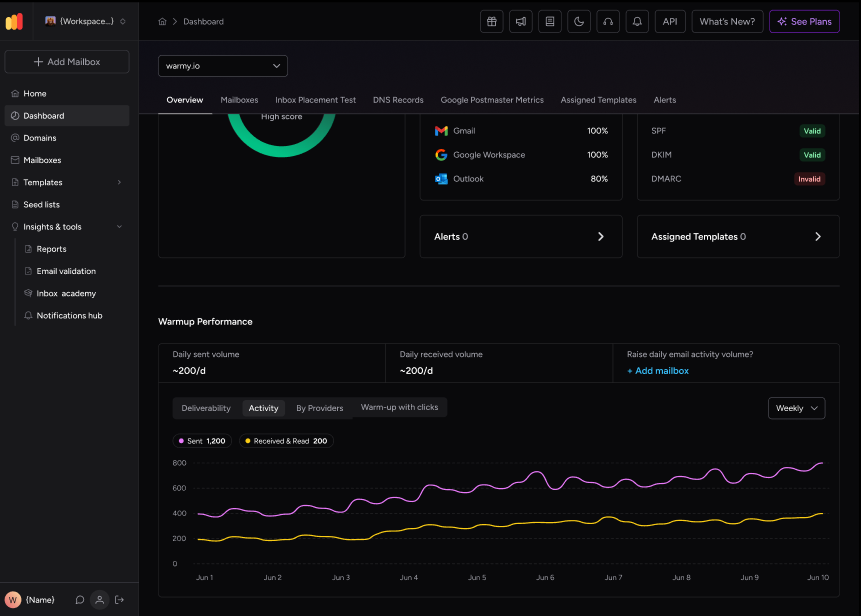
- Authentication: SPF, DKIM, and DMARC passing and aligned for every sending domain.
- Volume management: ramp gradually ahead of sales instead of spiking overnight.
List hygiene for checkout opt-ins
Addresses collected at checkout get typed quickly, under time pressure, so typos and disposable addresses slip through more often than on a dedicated signup form. A short recurring routine keeps a checkout-collected list from quietly dragging down sender reputation:
- Run a sunset flow on subscribers who haven’t opened or clicked in 90 to 180 days.
- Move unengaged addresses to a reduced cadence before removing them entirely.
- Watch feedback loops, the notifications mailbox providers send when a recipient marks your mail as spam, since a rising complaint rate is often the first sign a list has gone stale.
Authentication (SPF, DKIM, DMARC) for every sending domain
None of this is optional in 2026. Per Google’s email sender guidelines, every sender delivering to Gmail personal accounts must authenticate with SPF and DKIM, and bulk senders must add DMARC and keep spam complaint rates below 0.3%, with real headroom meaning well below that ceiling. Klaviyo is the dominant ESP among ecommerce brands, and its shared sending infrastructure is a common source of unexplained placement drops;
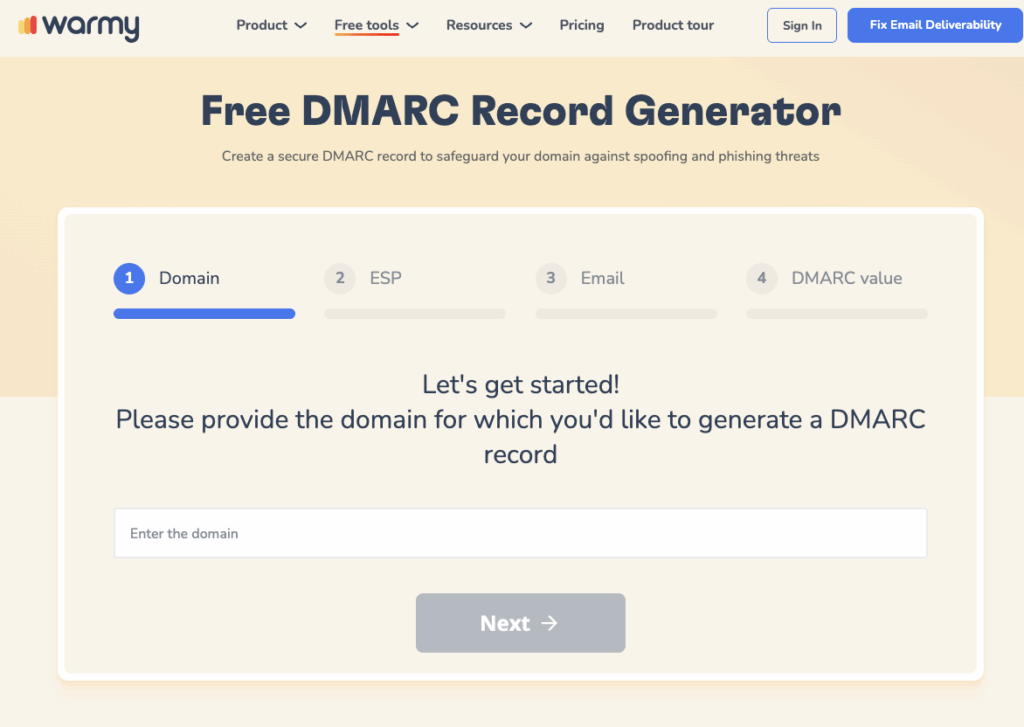
Warmy’s guide to fixing Klaviyo deliverability issues walks through diagnosing whether a shared-pool issue or your own account is the cause, and Warmy’s guide to Klaviyo SPF, DKIM, and DMARC setup covers the platform-specific configuration steps. If you’re starting from scratch, Warmy’s free DMARC record generator builds a policy tailored to your setup without requiring any DNS expertise.
Pro Tip: Split transactional mail (order confirmations, shipping updates) onto a separate subdomain from marketing mail, each with its own SPF and DKIM under a shared root DMARC policy. A reputation problem on the promotional side then never touches the order confirmations a customer is actively waiting for.
Managing sending-volume spikes around sales events
A domain sending consistently, with engagement holding steady, has far more headroom before a filter reacts than one that’s flat and quiet for weeks, then spikes overnight the moment a sale opens. Ramp volume gradually well before the event rather than compressing the increase into the final days. If customers span multiple regions, treat that as a variable too, since inbox provider mix and local engagement norms shift the numbers by region.
Why BFCM and holiday sends are the highest-risk period of the year
Black Friday and Cyber Monday combine the two conditions mailbox providers scrutinize most: a sudden volume spike against a list carrying plenty of unengaged addresses accumulated over the year. A domain with a strong, gradually built sending history going into November has meaningfully more headroom than one sending at a flat, low baseline all year and then tripling volume overnight.
Pro Tip: Test engagement on a seed list before your BFCM ramp reaches real customers. Warmy’s guide to seed lists for deliverability covers how a genuine, actively maintained address list gives you a placement report before a send goes to your full customer list rather than after.
Check Your SPF and DMARC Records Free
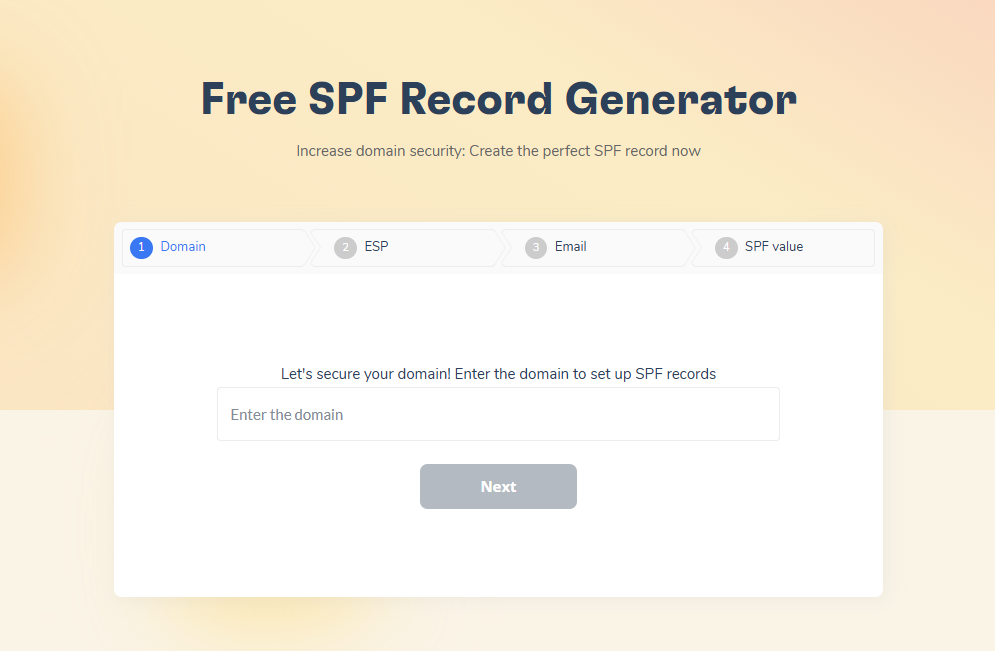
Before you scale sending for your next sale, confirm your authentication is actually passing rather than just present. Warmy’s free tool lets you generate your SPF record free in a few minutes, without needing to understand DNS syntax first.
Examples / Use Cases
A mid-size DTC brand fixing inbox placement before a seasonal sale
A mid-size DTC brand notices its open rates have quietly dropped over three months, then discovers during a pre-holiday check that a chunk of its promotional sends are landing in spam on one major provider specifically. The fix sequence is always diagnosis first:
- Run a free Email Deliverability Test to confirm authentication is passing and check inbox placement across providers.
- Check for a blacklist listing on the specific provider where placement dropped.
- Rebuild engagement gradually with the segment most likely to open.
- Return to full list volume only once engagement has recovered.
A return to full-volume sending without that rebuild step is what turns a two-week fix into a six-week one.
Segmented win-back campaign that avoided a reputation hit
Rather than blasting every lapsed subscriber at once, a growing ecommerce brand splits its win-back list into tiers by recency, sending first to subscribers who went quiet only in the last 90 days and holding the coldest segment back until the first wave’s engagement confirms the domain can absorb it. That staged approach keeps engagement high enough that mailbox providers never flag the volume increase as suspicious.
Tools / Warmy Features
The best email marketing tools for ecommerce pair campaign and flow-building features with deliverability monitoring, since a platform that only handles content and segmentation leaves the sending-infrastructure half of the job to chance. Warmy’s ecommerce-relevant toolkit includes:
- Adeline AI: a dedicated deliverability AI that adapts warmup pace per provider in real time, not a fixed schedule.
- Warmup With Clicks: real link clicks and Promotions-tab recovery layered on standard warmup activity.
- Email Deliverability Test: inbox placement, blacklist, and authentication checks across Gmail, Outlook, and Yahoo in one report.
- Seed Lists: real, actively maintained addresses for placement testing before a big send.
- Template Checker: spam-trigger and formatting scans, in-platform and as a Chrome Extension.
- SPF and DMARC Record Generators: free authentication record builders, no DNS expertise required.
- Dedicated support: a Customer Success Manager, a deliverability expert, and free Inbox Academy access.
Warmup With Clicks for new sending domains
A new or recently migrated sending domain needs to be warmed up before it carries ecommerce campaign volume, since mailbox providers treat unfamiliar domains with heightened scrutiny by default regardless of content quality. Warmy’s Warmup With Clicks layers real link clicks and Promotions-tab recovery on top of standard warmup, the signals Gmail’s algorithms weight most heavily when deciding whether to trust a sender, so you can warm up a new sending domain before it ever touches a live campaign.
That activity runs across a network of more than 1 million active mailboxes and millions of warmup emails a day, tracked in a dashboard that shows real click and spam-recovery data rather than an unverifiable claim, with blacklist monitoring bundled into the Email Deliverability Test rather than sold separately.
Template Checker for content-side spam risk
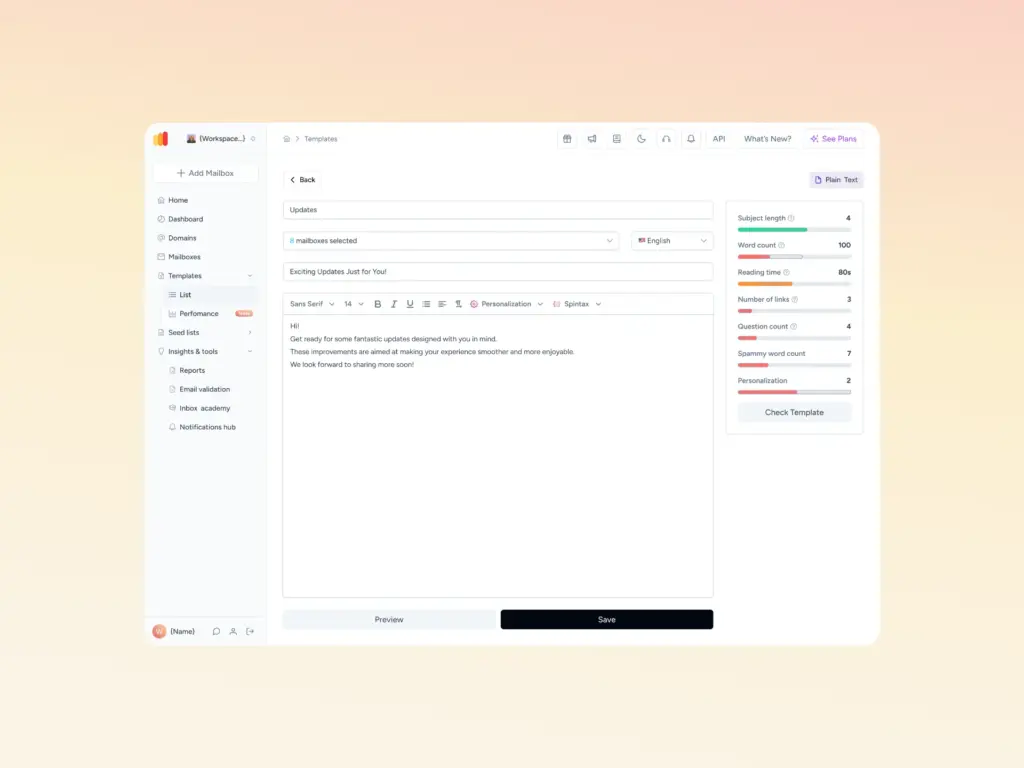
Even a domain with perfect authentication and a clean sending history can lose placement to content that trips a spam filter on its own. Warmy’s free Template Checker scans subject lines, body copy, and formatting for spam triggers before a campaign goes out, both inside the platform and as a Chrome Extension for testing directly inside Gmail.
Conclusion
Ecommerce email marketing best practices only work when the infrastructure underneath them holds up. Segmentation, personalization, and well-built automation flows drive the engagement that makes an email worth opening, but authentication, list hygiene, and a gradually built sending history get that email in front of someone in the first place. Treat both halves as one job, and inbox placement stops being a surprise right when a sale puts the most pressure on it.
Protect Your Next Campaign
Want to see how Warmy keeps your seasonal campaigns out of spam? Book a Demo and see how Warmy’s AI-driven warmup and deliverability monitoring protect your next send.