

TL;DR: Reactivation campaigns are the hardest sends in iGaming email because dormant player lists carry weak engagement signals inbox providers already distrust. Warming the sending domain and running a deliverability list test before every reactivation offer typically lifts inbox placement from the 60% range toward 90%, and that gap converts directly into re-deposit revenue.
Email warm-up for player reactivation campaigns is the practice of gradually rebuilding a sending domain’s reputation and running pre-send seed list sends before a bonus or win-back offer goes out to dormant players. Casino CRM teams that skip this step routinely see reactivation sends land at 60% inbox placement or lower, while warmed and seed-list-verified domains regularly clear 90%. That gap shows up directly in re-deposit revenue, not just open-rate reports.
Every retention manager has run this campaign: a segmented list of dormant players, a well-timed bonus offer, and a send that should move the needle on re-deposits. Then the numbers come in soft, and the copy gets blamed first. It’s rarely the copy.
The real issue is that reactivation email is structurally harder to deliver than almost any other CRM send. A dormant list has already told inbox providers it doesn’t engage, and gambling content adds a second layer of scrutiny most other verticals never face. Before changing a single subject line, run a free Email Deliverability Test to see where your domain actually stands against Gmail, Outlook, and Yahoo today.
Why Reactivation Campaigns Have the Worst Deliverability in iGaming
Reactivation email compounds two problems that most CRM sends only deal with one at a time. First, the recipients are dormant by definition, and inbox providers read low opens and low clicks from a segment as a signal that the sender’s mail generally isn’t wanted. Second, the domain sending that reactivation offer is often the same one used for every other casino send, so any reputation damage from an unrelated campaign bleeds into your win-back numbers too.
This is why a domain with no sender reputation, not weak subject lines, is usually the real reason casino emails keep landing in spam. Inbox providers evaluate authentication, sending history, and complaint rate before a spam filter ever reads your promotional copy.
Three signs your reactivation-sending domain already has a reputation problem:
- Inbox placement noticeably below industry norms across Gmail, Outlook, and Yahoo on reactivation sends specifically, even if other campaigns from the same domain look fine.
- A spam complaint rate that keeps climbing send over send instead of holding steady, a trend that matters more than any single snapshot number.
- One provider, commonly Outlook or Yahoo, showing a sharp placement drop while the others still look fine, an early sign that provider is starting to distrust the domain.
Global spam placement rates nearly doubled over the course of 2024, and average inbox placement across legitimate marketing senders now sits at roughly 84 to 85 percent, according to Validity’s 2025 benchmark research. By comparison, average email open rates across industries sit around 42%, per HubSpot’s 2025 benchmark data, a figure that assumes the message reached the inbox in the first place. That’s the baseline for a well-behaved sender with an engaged list.
A reactivation campaign to a dormant casino audience starts well below that line unless the domain has been deliberately rebuilt first, which is exactly where trying to improve inbox placement for player reactivation campaigns has to begin, not with the offer itself.
The Reactivation Warm-Up Timeline: What Casino CRM Teams Actually Do
Auditing and Ramping the Domain Before the Send
The fix starts with an audit, not a sending schedule. Before you touch a reactivation list, confirm:
- Blacklist status on the sending domain and IP across major blocklist operators.
- SPF, DKIM, and DMARC all passing cleanly on the exact subdomain you plan to use for the reactivation send.
- Sending history over the last 30 to 60 days, including any complaint-rate spikes tied to a previous promotional campaign.
Our full walkthrough on how to warm up a domain for iGaming CRM covers this audit step in detail, along with the volume ramp that follows it.
Casino sending needs a longer, more deliberate ramp than a typical B2B warm-up because reactivation volume is high and the content draws extra scrutiny. A typical ramp for a reactivation-sending domain looks like:
- Weeks 1 to 2: low-volume transactional and light promotional sends only, while authentication and engagement signals establish a baseline.
- Weeks 3 to 4: introduce small, segmented reactivation tests to a limited player cohort rather than the full dormant list.
- Weeks 5 to 8: scale toward full reactivation volume, with a a seed list send before every major send.
Most operators need four to eight weeks in total to properly prepare a domain for a large-scale win-back send, not the one to two weeks a cold outreach sequence might need. If you’re managing multiple domains or scaling reactivation volume across markets, our guide to warm-up built for high-volume senders breaks down what changes at that scale. Estimating how many mailboxes your reactivation program actually needs is also worth doing early. Warmy’s free Mailbox Calculator gives CRM teams a starting figure before they commit sending infrastructure to a campaign calendar.
Adaptive Warm-Up With Adeline AI
A fixed warm-up schedule doesn’t account for the fact that a domain’s reputation changes with every send, which is where a static ramp calendar falls short for a reactivation program running multiple campaigns a month. Warmy’s proprietary Adeline AI engine adjusts pace and provider distribution in real time based on each domain’s actual sending pattern, rather than following a preset ramp regardless of how the domain is performing. It processes roughly 20 million decisions a day across the network to make that call.
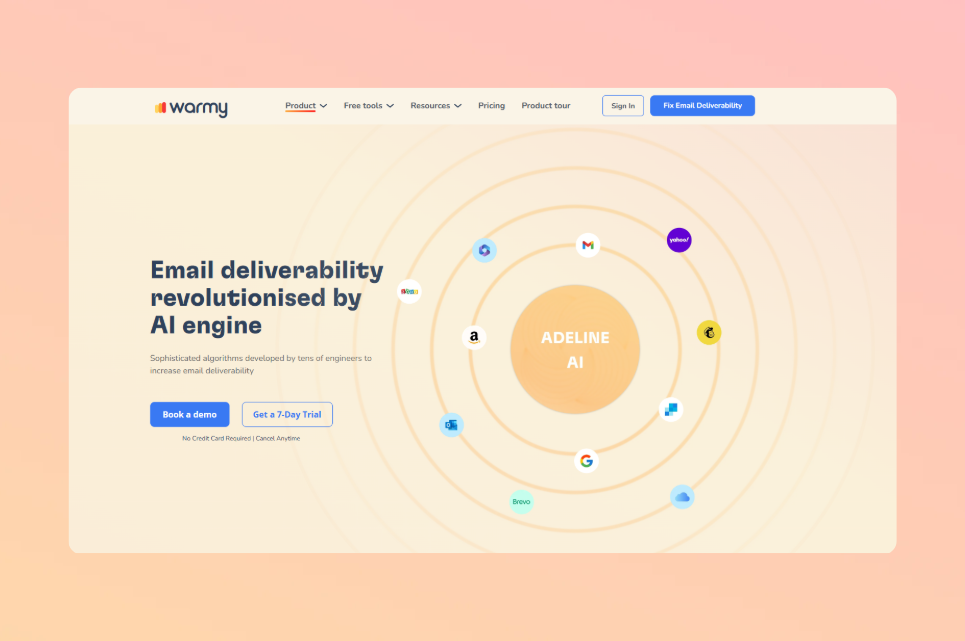
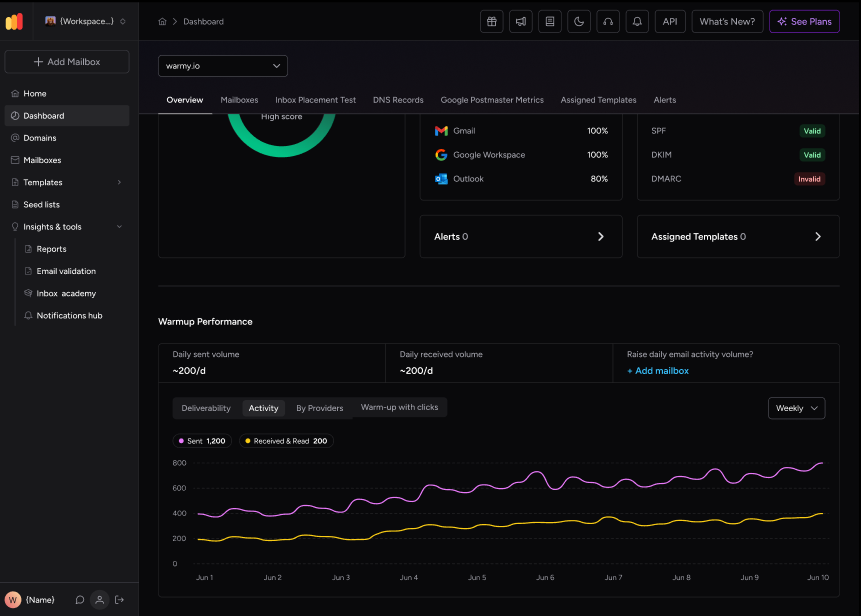
Behind that adjustment sits Warmy’s Email Warm-Up engine, which runs across a live network of more than 1 million real mailboxes and can handle millions of warm-up emails a day, generating genuine opens, replies, and clicks rather than bot activity. Warmup Preferences let you control:
- The split of warm-up traffic across Gmail, Outlook, and other providers, to mirror how your actual player base is distributed.
- A B2C engagement pattern instead of the B2B default most warm-up tools ship with.
- Per-domain pacing that Adeline AI adjusts automatically as sending history builds up.
Pro Tip: Re-run your domain audit immediately before any reactivation send that follows a quiet period longer than two weeks. Casino promotional calendars are seasonal, and a domain that’s gone quiet between campaigns loses ground just like a brand-new one, even if it warmed up perfectly the first time.
Ready to see where your reactivation domain actually stands before your next win-back send? Try Warmy’s Seed List ato send campaigns to real monitored inboxes and start earning the positive engagement history that improves placement over time.
The ROI Math: What Inbox Placement Is Actually Worth
This is the section worth pulling into a Slack message for your VP. Global online gambling revenue is projected to reach roughly $107.7 billion in 2025, per Statista, and player reactivation is one of the most direct levers CRM teams have on that revenue. The math behind it is simple and modular, so plug in your own numbers rather than someone else’s. Four inputs drive the whole calculation:
- List size, the total number of dormant players in the reactivation segment.
- Inbox placement rate, the share of that list actually reaching the primary inbox rather than spam or promotions.
- Conversion rate, the share of players who see the offer and re-deposit.
- Average deposit value, based on your own historical reactivation data.
List size × inbox placement rate × conversion rate × average deposit value = reactivation revenue.
Here’s how that plays out with a hypothetical, illustrative example. Take a 500,000-player reactivation list. A cold or reputation-damaged domain landing around 58% of that volume in the inbox reaches roughly 290,000 players. A domain that’s been properly warmed up, landing closer to 90%, reaches roughly 450,000 players from the same list, a gap of about 160,000 additional inboxes reached.
At even a modest 5% conversion rate on the players who actually see the offer, that difference alone accounts for thousands of additional re-deposits from the same campaign, the same list, and the same offer. Run your own list size, your own historical conversion rate, and your own average deposit value through the same formula, and the number that comes out is the one worth defending in a budget conversation.
That gap only holds if you know where a specific send is actually landing before it goes to the full list, which is what seed lists for casino operators is built to catch. A seed list send against the exact reactivation offer, sent to a monitored panel of real inboxes, checks three things before the full send goes out:
- Which folder the message landed in on each provider: primary inbox, promotions, or spam.
- Whether SPF, DKIM, and DMARC all passed cleanly on that specific send.
- Whether anything in the offer copy tripped a content-level spam filter.
The whole check takes about 30 minutes and tells a CRM team whether the send is safe before a single player sees it.
What ESPs Work for Casino Reactivation Emails, and What Warmy Fills In
Where Casino CRM Teams Actually Send From
Mailchimp’s acceptable use policy explicitly prohibits promoting gambling, and Klaviyo lists gambling as restricted content in its platform policies as well. Most other mainstream marketing ESPs treat gambling the same way, as a high-risk or excluded category, regardless of an operator’s licensing status. That pushes casino CRM teams onto infrastructure built for delivery, not reputation management:
- Amazon SES, for teams that need programmatic, high-volume sending control.
- Mailgun, common among operators running transactional and promotional traffic through the same API.
- Custom SMTP, for teams with existing infrastructure that just needs a sending relay.
None of these handle reputation monitoring on their own. For a broader picture of how gambling-specific sending changes the warm-up approach compared to standard cold outreach, our comparison of warm-up tools built for gambling operators covers that gap in more depth. This is exactly the layer a CRM email deliverability tool built for iGaming needs to fill, since none of these sending providers manage reputation for you.
Closing the Authentication and Content Gaps
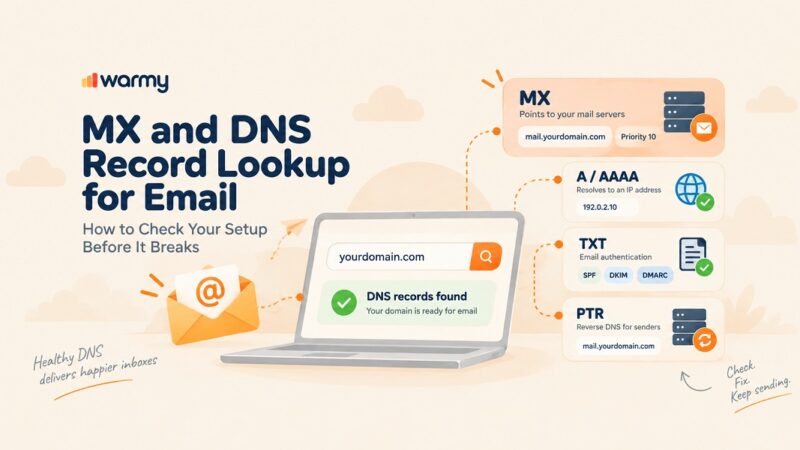
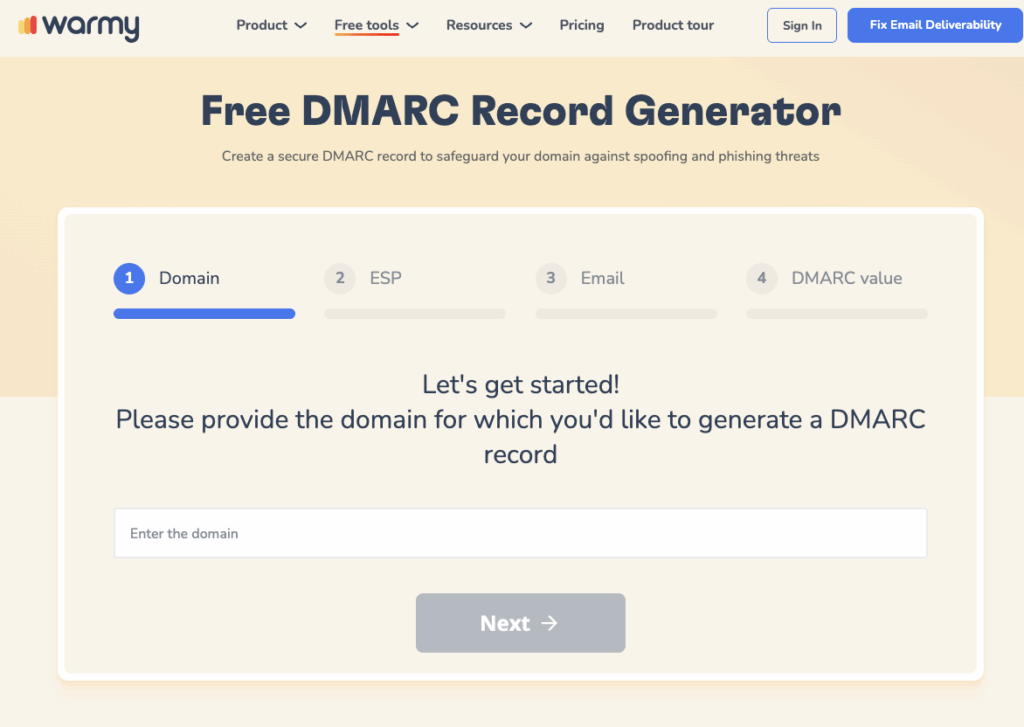
Every one of those infrastructure choices still needs correct authentication on every sending subdomain, not just the root domain. Google’s bulk sender guidelines instruct senders to keep spam complaint rates below 0.3%, ideally under 0.1%, and messages failing SPF, DKIM, or DMARC alignment risk outright rejection rather than a soft landing in spam. Warmy’s free SPF Record Generator and DMARC Record Generator build valid records for each sending source without the manual lookup-limit errors that break hand-written setups.
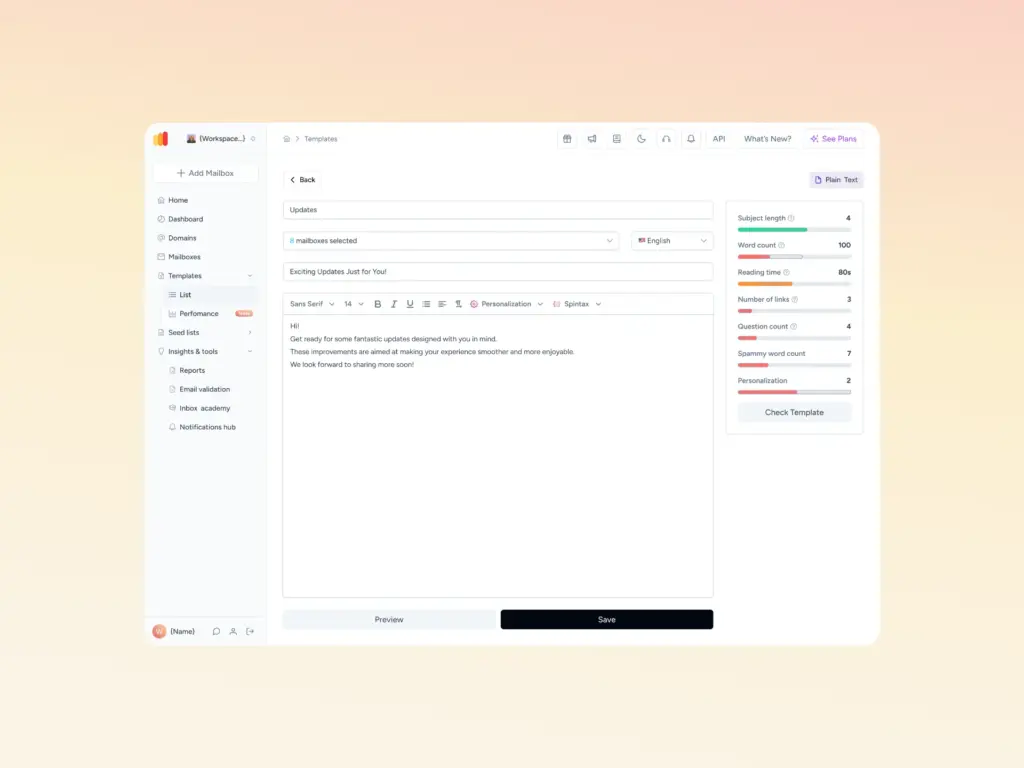
Content matters too. Gambling and bonus-related language trips content filters more readily than standard promotional copy, so running reactivation offers through Warmy’s free Template Checker before send catches spam-trigger wording that a clean domain alone won’t fix. Once the send is live, Deliverability Insights tracks domain health, authentication status, and blacklist listings continuously, so a reputation dip surfaces before it quietly affects the next reactivation cycle. Taken together, a CRM email deliverability tool for iGaming needs at minimum:
- AI-adjusted warm-up pacing that reacts to each domain’s actual sending pattern.
- A Seed List of real Gmail, Outlook, Yahoo, Google Workspace, and Microsoft 365 addresses that builds positive engagement signals with every send.
- Authentication tooling for SPF and DMARC that doesn’t require manual DNS troubleshooting.
- Continuous blacklist and domain health monitoring, not a one-time audit.
- A dedicated deliverability expert who understands gambling-specific filtering, rather than general-purpose ESP support.
Comparing Warm-Up Platforms Before You Commit
| Factor | Standard ESPs (Mailchimp, Klaviyo) | Warmy |
|---|---|---|
| Accepts gambling/casino sending accounts | Restricted under acceptable use policy | Yes, no gambling exclusion |
| Dedicated sender reputation monitoring | Not offered | Deliverability Insights with authentication and blacklist checks |
| AI-driven warm-up scheduling | Not offered | Adeline AI adjusts pace per domain in real time |
| Seed List engagement warm-up | Not offered | Included, covering Gmail, Outlook, Yahoo, Google Workspace, and Microsoft 365 |
| Dedicated deliverability support | General support tiers | Dedicated Customer Success Manager and deliverability expert |
If you’re comparing warm-up platforms as part of a broader email deliverability consulting review, our buyer’s guide to choosing an email warm-up service breaks down the criteria that separate a genuine inbox placement network from a vague health-score dashboard. For a closer look at what makes an AI-driven approach different from a fixed-schedule tool, see what makes Warmy different. And if you want the mechanics behind why seed lists work in the first place, our piece on how seed lists boost email deliverability covers that in more detail.
The Bottom Line for Player Reactivation Email Casino Programs
Reactivation campaigns don’t fail because the offer is wrong. They fail because the domain sending them hasn’t earned the reputation a dormant-list send needs before it goes out, and nobody checked where it would land before it did. Audit the domain, warm it deliberately over four to eight weeks, run every major send through a real seed list first, and run the ROI math with your own numbers before the next campaign goes live. That sequence is what separates a reactivation send that quietly underperforms from one that shows up in next quarter’s re-deposit numbers.
Ready to see where your next reactivation campaign actually lands? Book your demo today and see how Warmy’s warm-up and seed list use fit into your next win-back calendar.