Inbox placement testing for casino operators means sending your exact campaign to a monitored panel of real inboxes across Gmail, Outlook, and Yahoo before it reaches your full player list, then checking exactly where it landed. It takes about 30 minutes and tells a CRM team whether a send is safe before a single player ever sees it.
Picture a reactivation campaign sent to 500,000 players where a meaningful share lands in spam: that’s a direct revenue loss, not a rounding error. The risk isn’t hypothetical at the industry level either.
Validity’s 2025 benchmark research found that global inbox placement rates declined through 2024, and puts the average placement rate at only 84 to 85%, meaning roughly one in six legitimate marketing emails never reaches the inbox at all. Gambling content pushes that risk higher still. One seed list test, run against the exact subject line and copy before launch, tells you whether your next send is one of the six before a support ticket does.
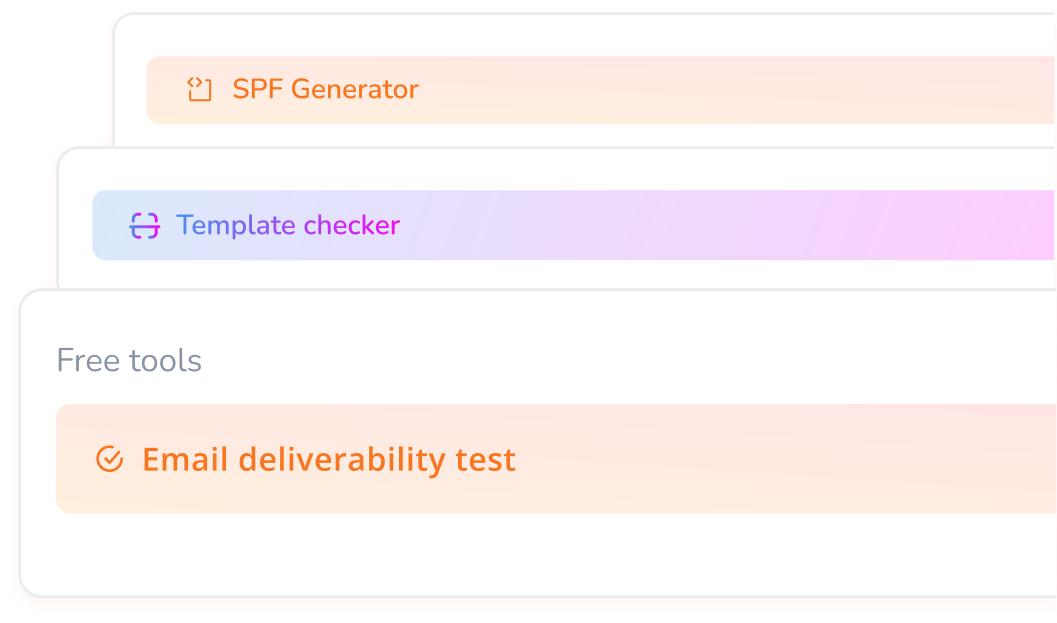
Warmy is an AI-driven email deliverability platform built for exactly this kind of check: it runs seedlist testing for betting emails across the providers that matter to your player base and flags a placement problem before it becomes a live campaign problem. If you have never run one, a free Email Deliverability Test is the fastest way to see where your domain stands today.
What Is Seed List Testing? (And Why iGaming Teams Need It More Than Anyone)
An inbox placement test works by sending a real (or near-real) copy of your campaign to a fixed set of monitored addresses spread across major providers, then reading back where each one landed. That is different from a generic deliverability audit, which checks your domain’s authentication and blacklist status but does not tell you what happens to this specific send, with this specific subject line and offer, today.
For most B2B senders, that distinction matters less. For a casino CRM team, it matters enormously. Two structural problems stack against iGaming senders that do not apply to a typical marketing list:
- Content-level filtering: gambling-related content triggers stricter content filtering than standard promotional copy, so the same offer that clears easily for a retail brand can land in spam for a casino sender purely on wording.
- Restricted ESP access: most mainstream ESPs restrict or reject gambling accounts entirely, which pushes operators onto Custom SMTP or dedicated infrastructure that comes with no built-in reputation monitoring of its own.
That combination is exactly why seed list testing for betting emails is not optional the way it might be for a lower-stakes newsletter. Without a pre-send check, you find out about a placement problem from a support ticket or a quiet drop in reactivation numbers, days after the damage is already done.
Seed List Testing vs. General Deliverability Auditing
| Factor | General Deliverability Audit | Seed List / Inbox Placement Test |
|---|---|---|
| What it checks | Domain authentication, blacklist status, overall health score | Where this exact campaign lands, provider by provider |
| Timing | Point-in-time snapshot | Run before every major send |
| Best for | Ongoing domain monitoring | Pre-send go/no-go decisions |
| Typical setup | Automated, runs in the background | 50+ monitored addresses across Gmail, Outlook, Yahoo |
If your operation sends bonus drops or reactivation campaigns to hundreds of thousands of players at a time, our complete guide to iGaming email deliverability covers the full picture, authentication, list hygiene, and warm-up, that inbox placement testing sits inside.
How Seed List Testing Works: A Casino CRM Walkthrough
The mechanics are simple enough to run before every meaningful send, which is the entire point.
Step 1: Build or connect your seed addresses
Set up a panel of monitored addresses across the providers your players actually use, typically Gmail, Outlook, Yahoo. A DIY list of a handful of personal accounts technically works, but genuine, actively maintained seed addresses that open, click, and get rescued from spam produce far more reliable signal than static test inboxes that never engage with anything.
Step 2: Send the exact campaign, not a test version
Send the real subject line, real sender name, and real body copy, the same email that is about to go to your full list. Generic test content will not surface the spam triggers your actual promotional language creates.
Step 3: Check placement across every major provider
A single result doesn’t mean much on its own. Check each of these individually at Gmail, Outlook, Yahoo:
- Which folder the message landed in: primary inbox, promotions tab, or spam.
- Whether authentication (SPF, DKIM, DMARC) passed cleanly on that send.
- Whether anything in the copy tripped a content-level spam filter.
A result that looks fine on average can still hide one provider quietly filtering the message entirely.
Step 4: Interpret the result before you send to the full list
A clean result across all providers means the send is safe to launch. Anything less means fixing the specific issue first, which is where the next section comes in.
Pro Tip: Run the seed test against the exact send time you plan to use for the real campaign, not a convenient testing window earlier in the day. Some providers weight time-of-day sending patterns into their filtering decisions, and a test run at 9 a.m. does not always predict how a 6 p.m. promotional blast will be treated.
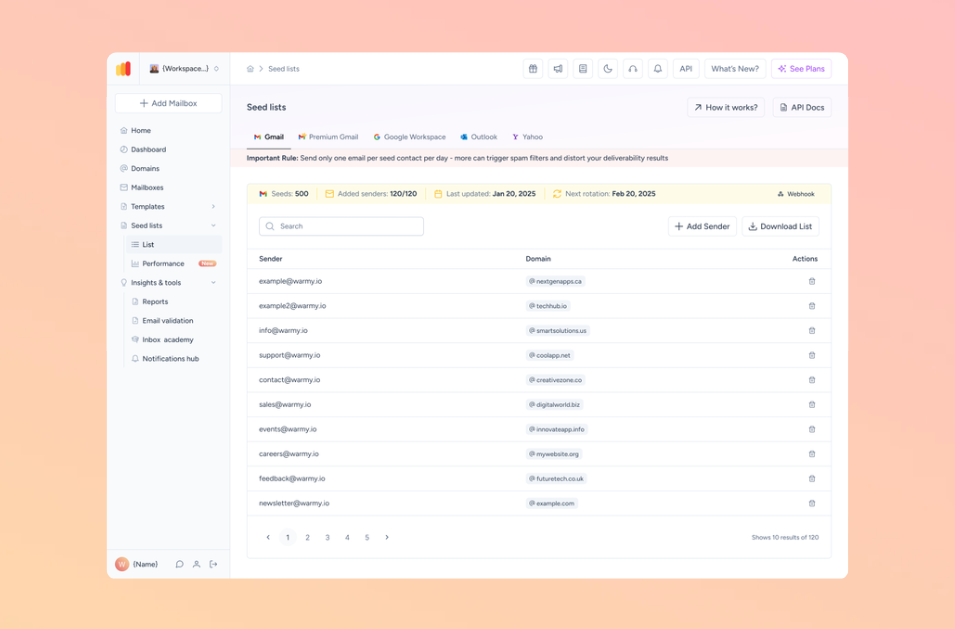
Ready to run your first check before your next promo drops? Start with Warmy’s Seed List and get a placement report before your players ever see the send.
What to Do When Your Seed Test Shows Poor Inbox Placement
A seed test only earns its place in your workflow if you know what to do with a bad result. Three scenarios cover most of what CRM teams actually see.
Scenario 1: Your test lands in spam
This is a domain reputation problem, not a copy problem. It usually means the sending domain has little or no warm-up history, or the domain has picked up complaints from a previous affiliate list. Pause the send and start with our guide on how to warm up a domain for iGaming CRM, which walks through the audit and ramp sequence casino sending domains need before they carry full promotional volume.
Scenario 2: Your test lands in Promotions, not Spam
This is a signal problem, not a reputation problem. Gmail’s Promotions tab is a lower-severity outcome than spam, but for a time-sensitive bonus offer it still means most players never see it in their primary feed. A few adjustments typically help:
- Trim promotional language out of the subject line.
- Use a consistent, recognizable from-name across sends.
- Build genuine link-click engagement over time rather than relying on opens alone.
Scenario 3: One provider shows a low rate while others look fine
If Gmail and Yahoo both come back clean but Outlook shows a poor result, the problem is usually specific to that provider’s authentication or IP reputation rather than your content. Authentication matters most exactly at the volume casino promotions run at: Google’s own bulk sender guidelines require domains sending 5,000 or more messages a day to Gmail addresses to keep spam complaint rates below 0.3%, with SPF, DKIM, and DMARC all properly configured, or messages risk outright rejection rather than a soft landing in spam.
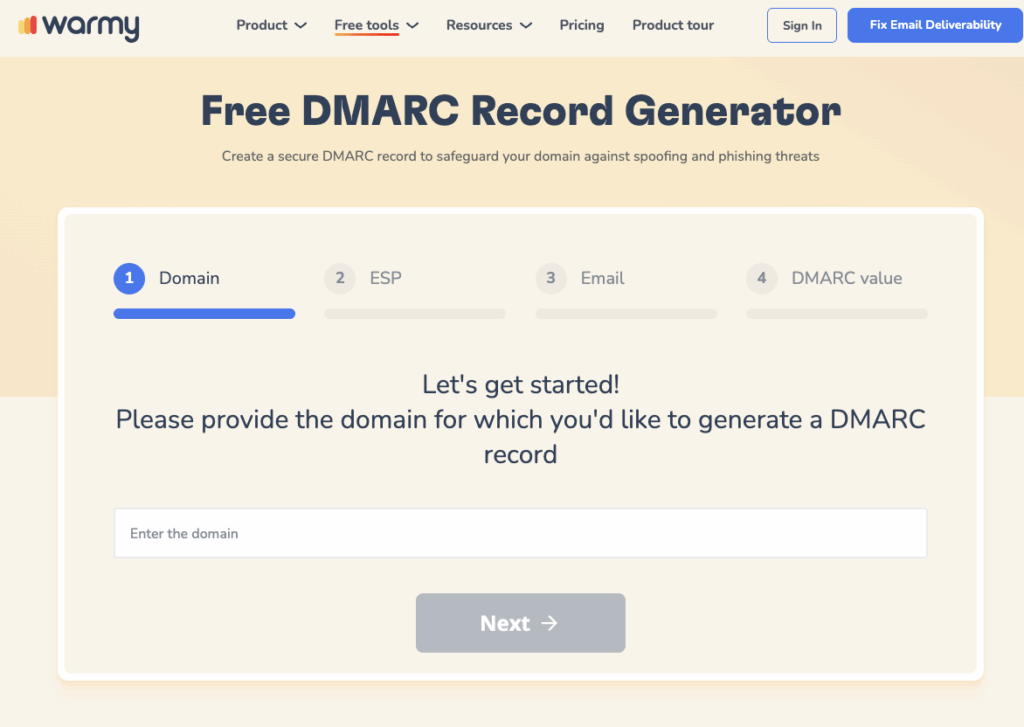
Check your SPF and DMARC configuration for the sending path that is underperforming. Warmy’s free SPF Record Generator and DMARC Record Generator build correctly formatted records without the manual lookup-limit errors that quietly break hand-written setups.
How Warmy’s Seedlist Works for iGaming Senders
Warmy’s Seedlist gives casino CRM teams genuine, actively maintained addresses across Gmail, Outlook, and Yahoo that behave like real players: opening the message, clicking links, and getting pulled out of spam and marked important when something lands there by mistake.
Results come back detailed enough to show provider-by-provider placement, not just a single pass or fail score, and the network extends to platforms standard warmup tools cannot reach at all, which matters for operators running promotions through Shopify, Klaviyo, or Omnisend alongside a primary ESP.
Seedlist testing works alongside a few other pieces of the platform:
- Adeline AI adjusts warm-up pacing and provider distribution automatically for each domain, instead of running a fixed schedule regardless of how a domain is actually performing.
- Warmup Preferences lets you set the split of ongoing warm-up traffic across Gmail, Outlook, and other providers to mirror how your actual player base is distributed.
- Email warm-up, including Warmup With Clicks, layers real link clicks on top of standard warm-up activity to push borderline domains out of the Promotions tab.
- Deliverability Insights tracks domain health, authentication status, and blacklist listings in one dashboard, so a reputation dip surfaces before it affects a live promotional send.
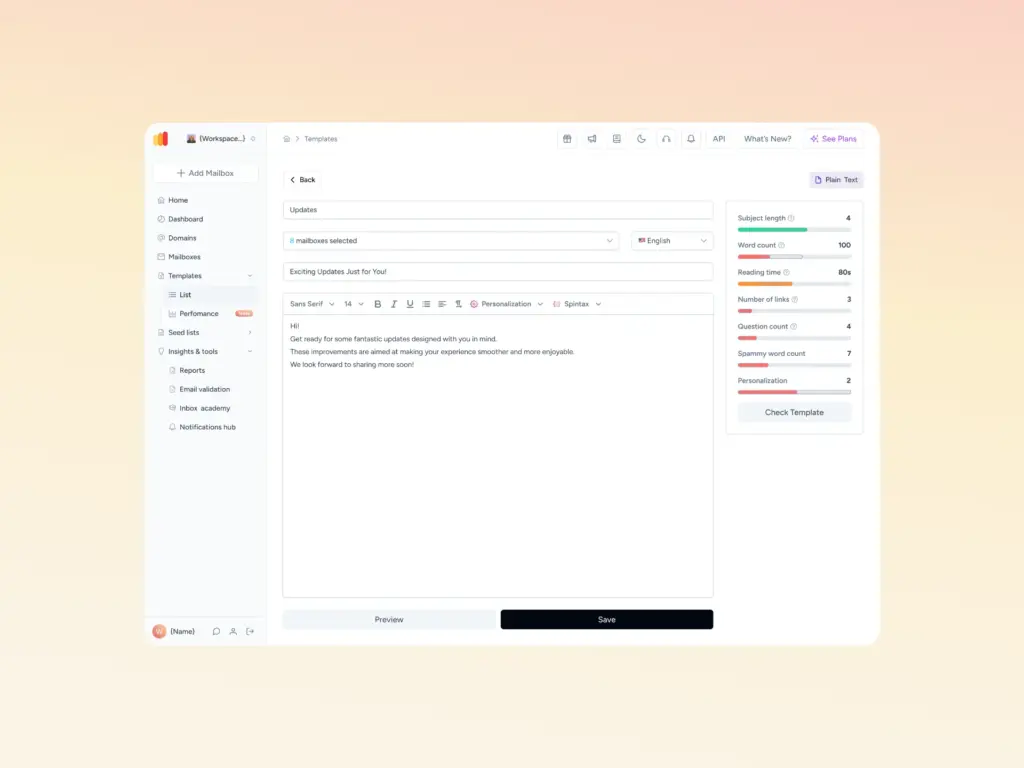
- Template Checker scans promotional copy for the content-side spam triggers that gambling language trips more often than most verticals, before it ever reaches a real inbox.
If you are still comparing platforms, our buyer’s guide to choosing an email warm-up service breaks down the criteria that separate a real inbox placement network from a vague health-score dashboard.
Ready to See Where Your Next Send Actually Lands?
Sending to a player base this large without knowing where the message lands is a risk no casino CRM team needs to carry. A seed list test takes half an hour and tells you, provider by provider, whether your next bonus drop is safe to launch. Book your demo today and see how Warmy’s Seedlist fits into your next promotional calendar.