How do you warm up an email domain for iGaming CRM without burning your sender reputation before the first big promo goes out? Knowing how to warm up email domain infrastructure correctly means gradually increasing sending volume from a new or dormant domain while running seed list tests, also known as inbox placement testing, before every major promotional send. For casino and betting operators, this takes four to eight weeks, not the two weeks typical of cold outreach, because bulk promotional volume and gambling-related content draw closer ISP scrutiny.
If you’re following the same warm-up guide your SDR team uses, you’re doing it wrong. Cold email warm-up assumes low, steady volume and B2B recipients. iGaming CRM sending looks nothing like that: bonus drops go out to hundreds of thousands of players at once, promotional language trips spam filters that a sales email never would, and Gmail and Yahoo’s bulk sender rules apply the moment you cross 5,000 messages a day to personal inboxes. Most generic guides on how to improve inbox placement assume that kind of B2B volume, and none of it holds up against a casino sending list.
Warmy is an AI-driven email deliverability platform that handles exactly this kind of high-volume, consumer-facing warm-up: it adjusts pace and provider distribution automatically instead of following a fixed SDR-style schedule. For a sense of what that looks like at scale, see our guide to warm-up built for high-volume senders before you touch a warm-up schedule of your own.
iGaming CRM Warm-Up vs. Standard Cold Email Warm-Up
| Factor | Standard Cold Email Warm-Up | iGaming CRM Warm-Up |
|---|---|---|
| Typical timeline | 1-2 weeks | 4-8 weeks |
| Recipient type | B2B professional inboxes | B2C consumer inboxes at high volume |
| Seed list testing | Optional, occasional | Mandatory before every major send |
| Domain structure | Single domain often fine | Separate promo and transactional subdomains |
Step 1: Audit Your Current Domain Health Before Starting
Every warm-up plan starts from a baseline, and skipping this step is the single most common reason iGaming warm-ups fail before they begin. The real answer to how to warm up an email domain for a casino brand starts here, not with a sending schedule: check blacklist status, authentication records (SPF, DKIM, DMARC), and any existing sending history tied to the domain or subdomain. If you want the mechanics of what warm-up actually does once the audit is clean, our primer on what email warm-up actually does covers the fundamentals.
Blacklists matter more for iGaming than most verticals because gambling-related keywords and high complaint rates from expired promotional lists are exactly what blacklist operators watch for. A domain that’s clean on paper can still carry a poor reputation if a previous sender used it for unrelated bulk mail.
Authentication is not optional at any volume iGaming operators actually send. Google’s own guidance is explicit: bulk senders should keep their spam complaint rate below 0.1% and never let it reach 0.3%, and messages that fail SPF, DKIM, or DMARC alignment risk outright rejection rather than a soft landing in spam (Google). If you’ve never set these records up correctly, that gap alone can undo weeks of warm-up progress. For background on how these thresholds are enforced day to day, our breakdown of Gmail’s bulk sender requirements walks through the specific error codes and what triggers them.
Pro Tip: Run your domain health audit again immediately after any dormant period longer than two weeks. Casino promotional calendars are seasonal, and a domain that goes quiet between campaigns loses reputation just like a brand-new one.
Step 2: Set Up Your Sending Infrastructure for iGaming
Once the audit is clean, the next decision is infrastructure, and this is where choosing the right email warm-up tool for iGaming actually starts to matter, not at the point you pick a sending schedule. Shared domains and shared IPs are common in SDR tooling because B2B senders trust that everyone on the pool follows similar practices. That assumption breaks down in iGaming, where one poorly targeted bonus campaign can tank deliverability for every sender on a shared IP. Our comparison of the best email warmup tools for sender reputation breaks down what separates a tool built for this from one that just automates sending volume.
Do not use a shared domain for casino promotional sends. Instead, split promotional and transactional traffic onto separate subdomains: one for bonus offers and marketing, one for deposit confirmations, withdrawal approvals, and responsible-gambling alerts. This isolation means a spike in promotional complaints never touches the transactional stream that regulators and players actually depend on.
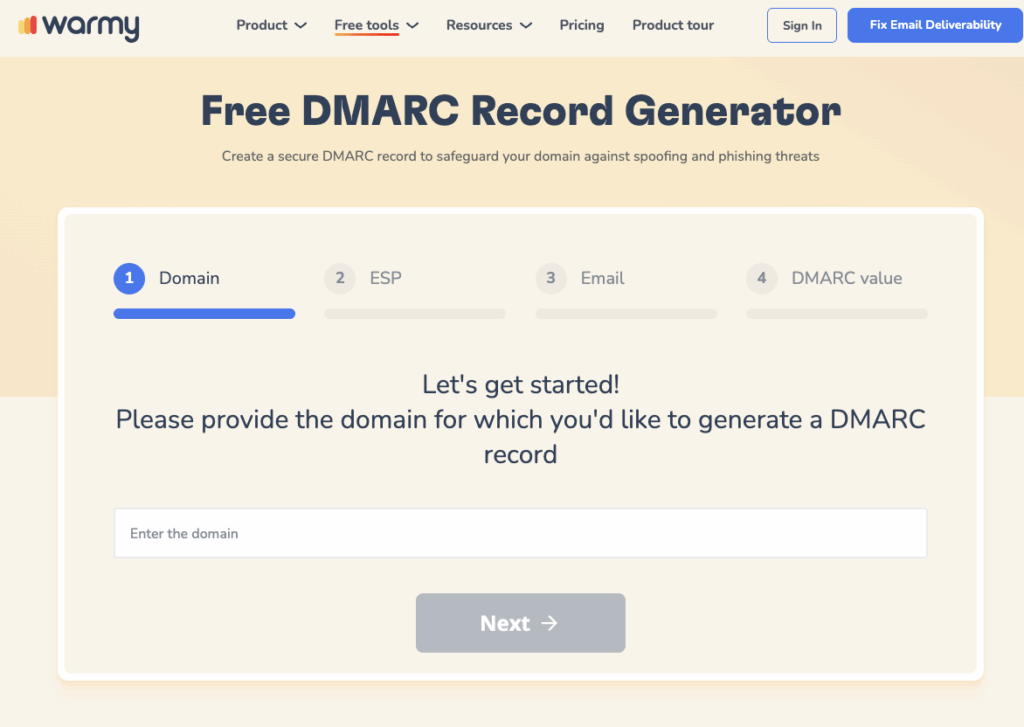
Authentication has to be correct on every subdomain independently, not just the root domain. Warmy’s free SPF Record Generator and DMARC Record Generator build valid records for each sending source without the manual lookup-limit errors that break hand-written SPF strings. Set DMARC to a monitoring policy first, confirm alignment is passing, and only then move toward enforcement.
This is also where Warmup Preferences becomes relevant: rather than defaulting to a B2B engagement pattern designed for SDR sequences, you can configure the split of warm-up traffic across Gmail, Outlook, and other providers to match how your actual player base is distributed, and choose a B2C engagement pattern that reflects real consumer sending behavior instead of professional outreach.
Step 3: The 4-Week iGaming Domain Warm-Up Timeline
With infrastructure in place, warm-up itself follows a volume ramp, and casino sending patterns need a different ramp than cold outreach because the destination volume is so much higher. The table below is a starting framework; adjust pace down if you see any spam complaint spikes along the way.
| Week | Daily Volume (per domain) | Send Types | What to Monitor |
|---|---|---|---|
| Week 1 | 50-200 emails | Transactional only (welcome, verification) | Bounce rate, authentication pass rate |
| Week 2 | 200-1,000 emails | Add low-frequency newsletters | Spam placement, engagement rate |
| Week 3 | 1,000-5,000 emails | Introduce small segmented promos | Complaint rate, inbox vs. promotions split |
| Week 4 | 5,000-15,000+ emails | Full promotional cadence with seed list checks before each send | Blacklist status, domain health score |
Manually tracking this ramp across multiple domains and providers is where most in-house teams fall behind. Warmy automates the volume ramp through its dashboard, adjusting pace based on domain age and current reputation rather than a fixed calendar, which matters when a promotional calendar shifts and a scheduled send needs to move up or back. For a fuller breakdown of what to look for in a warm-up platform for this kind of volume, see our guide on how to choose an email warm-up service.
Warmy automates steps 1 through 5 for iGaming CRM teams, with built-in seed list testing and warm-up schedules calibrated to casino sending patterns rather than SDR cadences. Run a free Email Deliverability Test to see where your domain stands before you commit to a schedule.
Step 4: Seed List Testing Before Every Major Send
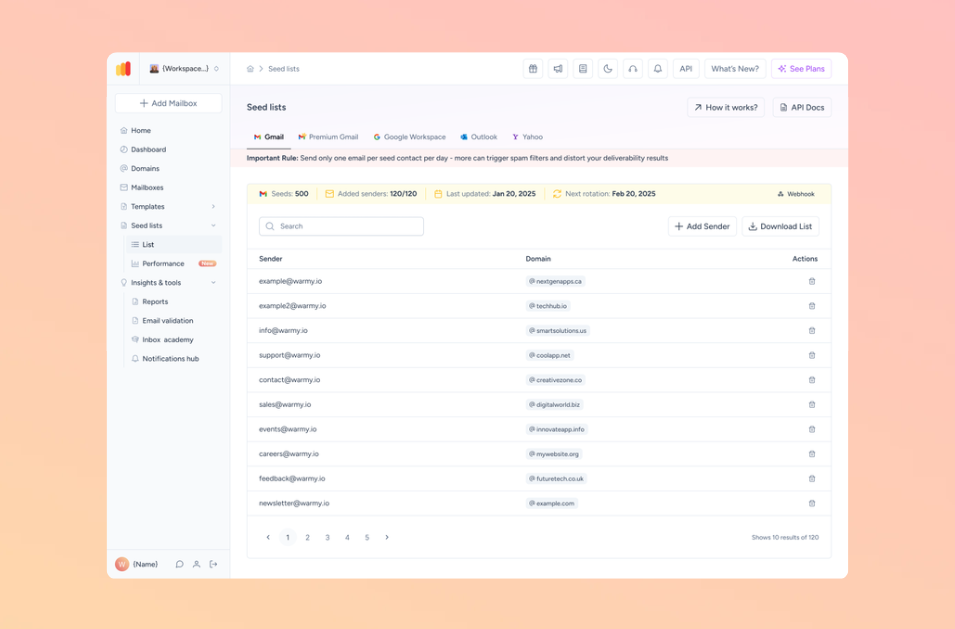
Volume ramp gets a domain to sending capacity, but it doesn’t tell you where a specific campaign will actually land. That’s what inbox placement testing is for, and it is not optional for casino operators the way it might be for a lower-stakes B2B newsletter. A bonus campaign that lands in spam for a meaningful share of your player base is a direct, measurable revenue loss, not just a missed impression. Our breakdown of how seed lists boost email deliverability covers the mechanics of why this works.
Run the test with a monitored panel of real inboxes across the providers your players actually use, commonly 50 or more addresses spanning Gmail, Outlook, and Yahoo. Send the exact campaign you’re about to launch, including the real subject line and promotional copy, since generic test content won’t surface the spam triggers your actual send will hit. Then check three things: which provider folder each test message landed in, whether authentication passed cleanly, and whether anything in the copy tripped a content filter.
If the test shows a drop in inbox placement compared to your last check, pause the send and investigate before it goes to the full list. A late catch here is far cheaper than a domain-wide reputation hit two weeks into a promotional cycle.
Step 5: Monitor and Maintain Ongoing Reputation
Warm-up and seed list testing get a domain launch-ready, but reputation is not a one-time achievement. It moves with every send, which is why weekly monitoring has to become a standing habit rather than a response to a problem that’s already visible.
Track inbox placement rate, spam complaint rate, and bounce rate every week, not just after a campaign underperforms. Global spam placement rates nearly doubled over the course of 2024 according to Validity’s benchmark research, which is exactly the kind of shift that shows up in weekly inbox placement testing well before it shows up in open rates. If you’re serious about how to improve inbox placement over time rather than just reacting to a bad week, this weekly cadence is the mechanism, not a one-time audit.
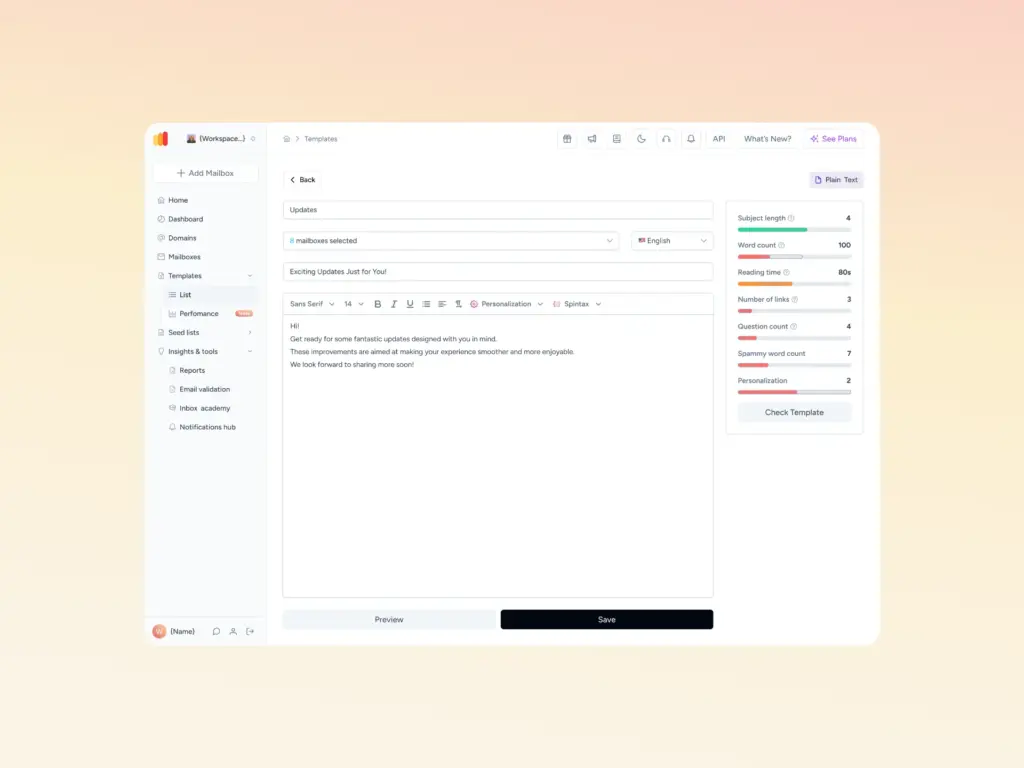
A re-warm-up is triggered by a sustained rise in spam complaints, a blacklist listing, or a gap in sending longer than two to three weeks. Escalate to a full audit, not just a volume pause, if authentication starts failing on a subdomain that previously passed, since that usually points to a DNS change rather than a content or engagement problem. On the content side, run promotional copy through a Template Checker before it goes out, since gambling-adjacent language is one of the more common triggers for content-based filtering even when authentication and engagement are both clean. For a look at how AI-driven monitoring changes this workflow compared to manual tracking, see what makes Warmy different from rule-based tools.
Why Warmy Is the Email Warm-Up Tool for iGaming CRM Teams
Warmy brings warm-up, testing, and monitoring into one dashboard instead of stitching together separate tools for each stage, which is how to improve inbox placement without adding headcount to manage it:
- Adeline AI – Warmy’s proprietary AI engine adjusts warm-up pace and provider mix in real time based on each domain’s sending pattern, rather than following a static schedule.
- Seed List – genuine, actively maintained addresses across Gmail, Outlook, and Yahoo that double as ongoing inbox placement testing, opening, clicking, and getting rescued from spam the way real players would; see the Seed List feature for setup details.
- Warmup Preferences – control the distribution of warm-up traffic across providers and choose a B2C engagement pattern that mirrors casino and betting sending behavior instead of a B2B default.
- Millions of warm-up emails per day across a network of more than 1 million real mailboxes, built for operators sending well beyond SDR-scale volume.
- Warmup With Clicks – layers real link clicks and Promotions-tab recovery on top of standard warm-up, which matters for bonus and promo emails that Gmail is quick to route away from the primary inbox.
- Blacklist monitoring included as part of the Email Deliverability Test, rather than sold as a separate add-on.
- Dedicated deliverability expert and customer success manager for every account, useful when a promotional calendar and a warm-up schedule need to move together.
If you’re comparing this against other tools in the category before committing a live domain, our comparison of the best email warmup and deliverability tools and our breakdown of the best warm-up tools for Gmail specifically cover how Warmy stacks up feature by feature.
Conclusion
Warming up a domain for iGaming CRM email is not a shorter version of cold email warm-up: it’s a different process built around higher volume, stricter content scrutiny, and a player base that expects both promotional offers and time-sensitive transactional messages to land reliably. If you take one thing away from how to warm up an email domain for this industry, it’s that audit, infrastructure, and testing all have to happen before volume, not alongside it. Audit first, separate promotional and transactional infrastructure, ramp volume deliberately over four weeks or more, test every major send against a seed list, and treat weekly monitoring as permanent rather than optional.
Ready to see a warm-up schedule and email warm-up tool for iGaming built around casino sending patterns, not SDR cadences? Book your demo today and see how it holds up against your next campaign.