


TL;DR: COB means “Close of Business”, the deadline shorthand for the end of the standard workday, usually 5:00–6:00 PM in the sender’s local time zone. It’s sometimes used interchangeably with EOB, EOP, or COP. Always pair it with an exact time, time zone, and date (e.g., “COB Friday, 5:00 PM ET, Mar 14”). Without one, it’s a leading cause of missed handoffs and delayed launches.
You’ve seen it in your inbox. “Please confirm by COB today.” Or maybe “COB tomorrow, no later.” And you’ve wondered, whose COB? What time is COB, exactly?
You’re not alone. COB is one of the most misused deadline terms in business email. When it’s vague, it can cost teams approvals, handoffs, and launch windows. This guide tells you exactly what COB means, when to use it versus EOD, and how to write it in a way no one misreads.
What does COB mean in email?
COB in email means “Close of Business.”
It signals that a task, response, or deliverable must be completed by the time the business day ends or before the office (or virtual workday) closes.
In practice, COB is used in email to set a same-day or next-day deadline during working hours. It’s especially common in B2B contexts: requesting approvals, chasing vendor deliverables, syncing on campaign launches, or confirming handoffs before a team logs off for the day.
Here’s the catch. “Close of business” is not a universal clock. COB for a team in San Francisco is three hours later than COB for colleagues in New York. It’s also a full workday later than colleagues in London. That’s why COB without a time and time zone is a recipe for a missed deadline.
Pro Tip: Never write “by COB” alone. Always write: “by COB [day], [time] [timezone] ([date]).” An example is “by COB Friday, 5:00 PM PT (Mar 14).” This one habit eliminates the most common COB-related miscommunication.
You may also see COB written as EOB (End of Business) or, especially in UK and consulting contexts, EOP or COP (End of Play / Close of Play). All four terms point to the same idea (the close of the standard business day), but COB is the version used almost universally in U.S. and international B2B email.
COB vs. EOD: What’s the difference?
These two acronyms look interchangeable, but they’re not. Understanding the difference reduces miscommunication.
COB (Close of Business)
- Refers to the end of the business day, typically aligned with working or office hours.
- Typically it is 5:00 PM or 6:00 PM local time.
- Use it for things you need it during business hours: approvals, reviews, vendor handoffs.
EOD (End of Day)
- Broader and mostly interpreted as the end of a calendar day.
- Typically 11:59 PM unless specified otherwise.
- Use it when after-hours delivery is acceptable: written copy, QA screenshots, overnight tasks.
| Factor | COB | EOD |
| Full form | Close of Business | End of Day |
| Typical cutoff | 5:00–6:00 PM | 11:59 PM |
| Best for | Same-day handoffs, approvals | Overnight tasks, written deliverables |
| Urgency signal | Higher — during work hours | Lower — after-hours ok |
| Risk of confusion | High if time zone omitted | Medium — usually assumed as midnight |
Rule of thumb:
- If you need it before the office closes for the day, say COB and include time + zone. Example: “Submit the brief by COB today, 5:30 PM CET (Mar 12).”
- If after-hours is acceptable, use EOD and define the exact time. Example: Upload the final draft by EOD Friday, 11:59 PM ET (Mar 14).
When is Close of Business? Common COB times by region
There’s no universal COB. However, here are the most common end-of-business windows by region:
| Region | Common COB Time |
| United States (ET) | 5:00 PM ET |
| United States (PT) | 5:00 PM PT |
| United Kingdom | 5:00–5:30 PM GMT/BST |
| Western Europe | 5:30–6:00 PM CET/CEST |
| India | 5:00–6:00 PM IST |
| Singapore / HK | 5:30–6:00 PM SGT/HKT |
| Australia (AEST) | 5:00–5:30 PM AEST |
| Japan | 5:30–6:00 PM JST |
Pro Tip for global teams: When emailing across regions, add a one-line conversion note: “By COB today, 5:00 PM CET (4:00 PM GMT / 11:00 AM ET / 8:00 AM PT).” This saves everyone the mental math and removes any excuse for a missed deadline.
How to interpret “COB today” vs. “COB tomorrow”
It might make sense to use “COB today” or “COB tomorrow” when you’re the one sending the email. Unfortunately when you share your availability with teammates or colleagues in different time zones, these two words can be easily lost in translation.
- COB today: Action required before the end of today’s business hours in the stated time zone. Send early enough to give the recipient time to act. Example: “Please send the invoice by COB today, 5:00 PM PT (Mar 12).”
- COB tomorrow: Action required by the close of the next business day. Example: “Review the draft by COB tomorrow, 6:00 PM CET (Mar 13).”
Edge cases to watch for:
- Weekends and public holidays: COB doesn’t apply to non-business days. If you’re sending on a Friday afternoon, don’t write “COB tomorrow.” Write “next business day (Monday), 5:00 PM ET (Mar 16).”
- Late-day requests: If you’re writing at 4:45 PM and your recipient is in the same time zone, “COB today” gives them 15 minutes. Be honest and state COB the next business day if the same-day isn’t realistic.
- Recipient-first assumption: If you don’t specify, most readers assume their own local COB. Always specify to prevent this.
Are your emails landing before your recipients’ COB? Poor deliverability means deadline emails vanish into spam. Test your inbox placement now for free.
How to use COB in emails: Best practices and examples
When deadlines affect conversions, approvals, or handoffs, COB meaning in email should be crystal-clear. The thing you should always bear in mind when including COB in your emails is that the date, time, and time zone must be clear.
1. Always include date, time, and time zone
The three-part formula: [Day/Date] + [Clock time] + [Time zone]. No exceptions.
✅ “Please send the report by COB today, 5:00 PM PT (Mar 12).”
✅ “Confirm by COB Monday, 6:00 PM GMT (Mar 16).”
❌ “Please send by COB.” This poses questions like “Which time zone?” and “Which COB?”
2. Spell it out the first time
Not everyone knows what COB means, especially in cross-functional or international emails. Write “close of business (COB)” at first mention, then use the acronym freely after. Pair it with a time every time.
3. Use COB strategically, not habitually
COB signals urgency and implies the task needs to happen during work hours. Overusing it or applying it to tasks that could wait dilutes the urgency. Reserve COB for deadlines that genuinely require same-day action.
For finance teams, this often includes closing out daily transactions or confirming payouts, tasks that become much faster with a Stripe to QuickBooks integration that keeps books updated automatically throughout the day.
4. Don’t mix COB and EOD in the same thread
Swapping between the two creates confusion about whether 5:00 PM or midnight is the real cutoff. Pick one term per thread. If you need both, define each explicitly: “COB = 5:00 PM PT; EOD = 11:59 PM PT.”
5. For email marketing: make offer deadlines honest
If your promotional digital newsletter says “offer ends COB today,” the offer must actually end at business close and not midnight. Mismatched urgency claims erode trust and can raise compliance concerns. Use EOD if the offer runs until midnight; use COB only when you mean it.
Examples:
- COB (End of Business): “Offer ends COB today, 5:00 PM PT.”
- EOD (End of Day): “Last chance! Offer ends EOD today, 11:59 PM ET.”
6. Add time zone notes in footers for global audiences
For international campaigns or cross-regional team emails, include a footer line such as “All deadlines are stated in PT (Pacific Time, UTC−7). Please adjust for your local time zone.”
Add this conversion note directly to your email signature so it travels with every message. Warmy’s Signature Builder makes it a one-time setup instead of something you retype on every send.
4 COB email templates (ready to use)
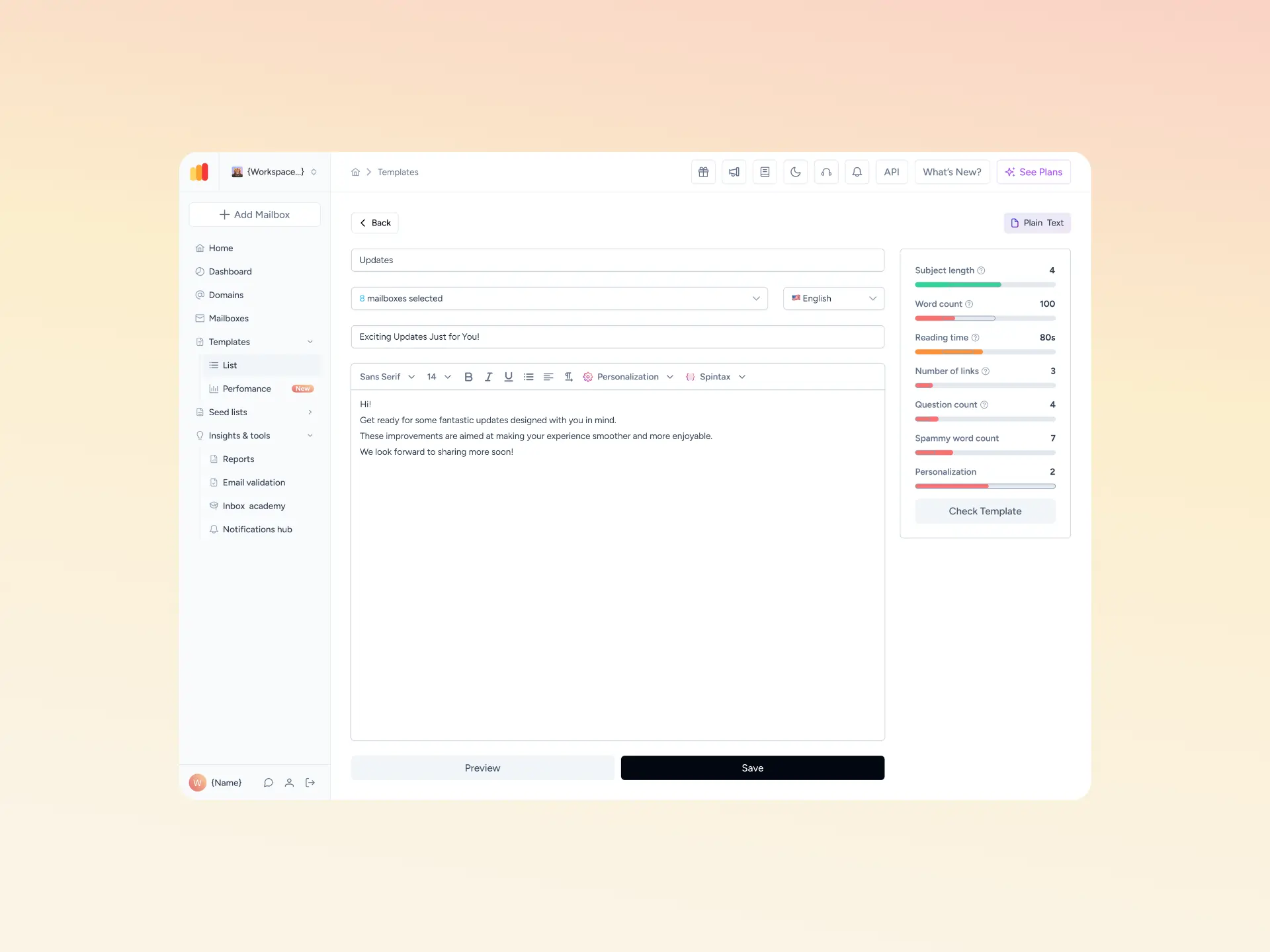
Below are ready-to-use templates for common email scenarios. Each explains when to use COB vs EOD, and how to phrase deadlines so nobody asks “when is COB?” again.
Before you hit send, run your draft through Warmy’s Template Checker to catch spam-trigger words and rendering issues that could keep your COB deadline email out of the inbox entirely.
Internal request template for same-day action
When to use: You need a same-day action during business hours such as a final UTM check, creative tweak, or list segment approval before launching campaigns.
How to phrase it: Name COB today, specify time + time zone + date, and state the consequence if the deadline isn’t met.
Template #1:
Subject: Final Checks Needed by COB Today (5:00 PM PT, Mar 12)
Body:
Hi team,
Please review the promo links and confirm tracking is working by close of business (COB) today, 5:00 PM PT (Mar 12) so we can schedule tomorrow morning’s send.
If timing is tight, reply with your earliest ETA.
Thanks!
[Your name]
Template #2:
Subject: Approvals by COB Today, 6:00 PM GMT (Oct 13)
Body:
Hey all,
Kind reminder to approve the email header and subject lines by COB today, 6:00 PM GMT (Oct 13). Without sign-off, we’ll move the launch to the next available window.
Appreciate the quick turnaround!
[Sender]
External vendor or handoff template
When to use: You’re coordinating with an external agency, an email service provider (ESP), printer, freelancer, or teams managing large-scale email marketing platforms, and you need to receive their output during your office hours to keep the schedule.
How to phrase it: Use “by COB [weekday], [time zone] ([date]),” plus a checklist to reduce back-and-forth.
Template #1:
Subject: Asset Handoff by COB Thursday, 5:30 PM CET (Mar 13)
Body:
Hi [Name],
To keep our production timeline on track, please upload final HTML and image assets by COB Thursday, 5:30 PM CET (Mar 13).
Checklist:
– Inline-styled HTML (650px max width)
– Hero image JPG (≤200 KB) + retina version
– 3 subject line options + 3 preview texts
Upload link: [folder link]
If anything affects this deadline, please flag it 24 hours in advance.
Thanks,
[Your name]
Template #2:
Subject: Invoice & SOW Confirmation by COB Monday, 6:00 PM GMT (Oct 20)
Body:
Hi [Name],
Kindly send the invoice and confirm the SOW by COB Monday, 6:00 PM GMT (Oct 20) so we can release the campaign budget this sprint.
Docs can be uploaded here: [secure link].
Thanks in advance!
[Sender]
Status update or progress check before launch template
When to use: You need a progress signal to plan resources or choose a launch window for the next day (e.g., QA pass or list readiness).
How to phrase it: Say “by COB tomorrow” with exact time + zone + date and specify what “green” vs “blocked” means.
Template #1:
Subject: Campaign Readiness Check by COB Tomorrow (5:00 PM ET, Mar 13)
Body:
Hi [Name],
Please share a readiness status by COB tomorrow, 5:00 PM ET (Mar 13) so we can confirm Thursday’s send.
Reply with either:
✅ Green — All clear, ready to proceed
🚧 Blocked — Issue to resolve (add brief description)
Thanks,
[Your name]
Template #2
Subject: Tomorrow’s Campaign Readiness by COB (5:00 PM ET, Oct 14)
Body:
Hi team,
Kind reminder to confirm list hygiene, segments, and suppression by COB tomorrow, 5:00 PM ET (Oct 14).
Checklist:
- remove invalid or inactive contacts in contact lists
- suppress recent complainers
- align regional sends to local time
Ping here with any blockers.
[Sender]
EOD alternative or when after-hours delivery is acceptable
When to use: If after-hours delivery is acceptable (e.g., long copy, late-evening rendering pass). Define EOD explicitly so nobody assumes “office close,” but that it should be ready by the time you log in the next day.
How to phrase it: State “EOD = 11:59 PM [TZ] ([date])” or your team standard.
Template #1:
Subject: Draft v2 by EOD Friday (11:59 PM ET, Mar 14)
Body:
Hi [Name],
Please submit Draft v2 by end of day (EOD) Friday, 11:59 PM ET (Mar 14). For clarity, EOD = end of calendar day. We’ll review Saturday morning.
Key focus areas:
– Shorten intro by ~20%
– Add 2 benefit bullets above the CTA
– Confirm CAN-SPAM footer is included
Thanks!
[Your name]
Template #2:
Subject: QA Screenshot Package by EOD (11:59 PM PT, Oct 19)
Body:
Hey [Name],
Could you upload the multi-client screenshots by EOD (11:59 PM PT, Oct 19)?
Targets: Gmail, Outlook 365, Apple Mail, iOS native. Please flag any clipping or font fallback issues.
Folder: [link].
Thank you,
[Sender]
Pitfalls to avoid when using COB in email
| Mistake | Why It’s a Problem | Better Approach |
| “Please send by COB today.” | No time zone specified so every recipient interprets it differently | “By COB today, 5:00 PM PT (Mar 12)” |
| “COB tomorrow” sent on Friday | Implies Saturday, which is a non-business day | “By COB Monday, 5:00 PM ET (Mar 16)” |
| Using COB and EOD interchangeably | Confuses whether 5 PM or midnight is the real deadline | Pick one per thread; define both if you must use both |
| “Offer ends COB today” (really ends at midnight) | Misleading urgency; compliance risk in marketing email | Use EOD if the offer runs until 11:59 PM |
| Sending COB requests right before COB | Gives recipients no time to act | Send 60–120 minutes before their local COB |
Deliverability tip: Time your COB emails strategically
- A COB deadline only works if your email is actually seen before COB.
- For B2B emails, send at least 60–120 minutes before your recipient’s local close of business. This gives them a visible window to read, act, and respond while they’re still at their desks.
- Example: If your recipient is in New York (ET), schedule your email to arrive by 3:00–3:30 PM ET so there is a comfortable runway before their 5:00 PM COB.
But there’s a problem that even perfect timing can’t fix: if your emails land in spam, no COB deadline saves you. Maintaining a strong sender reputation is what ensures your time-sensitive messages actually hit the inbox every single time.
Maximize timely communication with Warmy.io
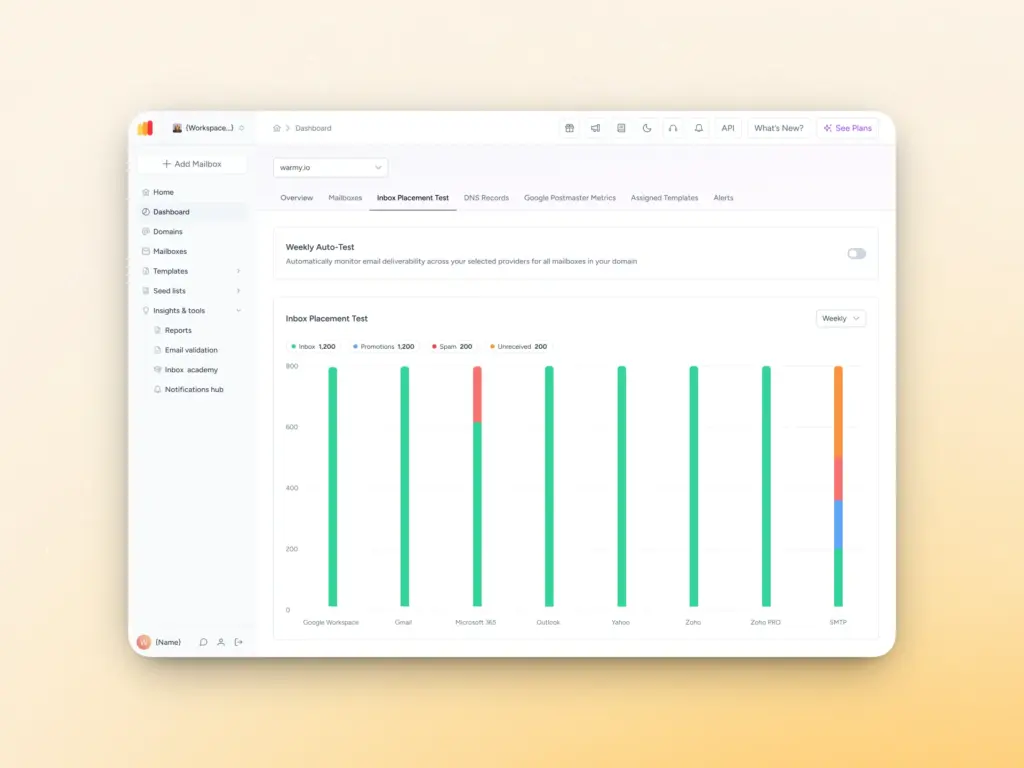
Warmy is an AI-driven email warm-up platform that builds and protects sender reputation, so the deadline-driven emails you send with a clear COB actually reach the inbox instead of getting silently filtered into spam.
Using COB clearly in your emails is half the battle. The other half is making sure those emails actually arrive before your recipient’s COB, not after it, and certainly not in their spam folder.
Even a perfectly worded deadline email is useless if it never reaches the inbox. That’s where sender reputation matters. If your domain is flagged, time-sensitive messages get filtered out silently, and no one meets your deadline because no one saw your email.
Warmy’s automated email warmup builds and maintains the sender reputation your COB emails depend on. You get real-time mailbox health analytics so you always know your deliverability is solid and your deadline messages land where they need to, every time.
Ready to make sure your emails hit the inbox before COB? Book a demo.
FAQ
What does COB mean in email?
COB stands for Close of Business. In email, it’s a deadline shorthand meaning “by the end of the business day.” The exact time depends on the recipient’s time zone and company hours, most commonly between 5:00 PM and 6:00 PM local time. Always pair COB with a specific clock time and time zone to prevent ambiguity.
What does “by COB today” mean?
“By COB today” means the action or deliverable is required before the close of business on the current day. To make it unambiguous, write it as: “by COB today, 5:00 PM PT (Mar 12).” Without a time and zone, the phrase is open to interpretation.
What is the difference between COB and EOD?
COB (Close of Business) refers to the end of working hours, typically 5:00–6:00 PM. EOD (End of Day) refers to the end of the calendar day, typically 11:59 PM. Use COB when you need something during business hours; use EOD when after-hours delivery is acceptable.
What time is COB if you’re working across multiple time zones?
There’s no single answer. If you’re coordinating across time zones, specify the time and zone explicitly in your email, and consider adding conversions: “5:00 PM CET (4:00 PM GMT / 11:00 AM ET / 8:00 AM PT).” Never assume your recipients will default to your local COB.
Can you use COB on a Friday or before a holiday?
You can, but use it carefully. If “COB tomorrow” falls on a Saturday or a public holiday, specify the next actual business day: “by COB Monday, 5:00 PM ET (Mar 16).” Avoid using COB for deadlines that fall on non-business days as it creates confusion and missed handoffs.