

TL;DR: Spamhaus ZEN is a composite blacklist that combines four separate Spamhaus IP lists into one lookup, and a spamhaus zen blacklist listing can get your emails rejected outright before they ever reach an inbox. Most listings trace back to spam traps, malware-infected servers, open relays, dynamic or residential IP ranges, or high spam complaint rates.
You can run a spamhaus zen blacklist check through Spamhaus’s own lookup tool or a deliverability testing platform to confirm which sub-list flagged you. Spamhaus zen blacklist removal always starts with fixing the underlying cause rather than filing a request first, and timelines vary widely: PBL removals often clear in minutes, while SBL and SBLCSS removals can take several business days of manual review.
What is the Spamhaus ZEN blacklist?
Spamhaus ZEN (Zero Evaluation Network) is a composite DNS-based blacklist (DNSBL) maintained by Spamhaus, a non-profit organization that has tracked spam, malware, and related cyber threats since 1998.
ZEN was created to make blacklist querying faster and simpler. Instead of checking four separate Spamhaus IP-based blocklists individually, mail servers can query ZEN once and get a comprehensive answer. If your IP is listed on any of the four constituent lists, it will show as listed on ZEN.
Email service providers, hosting companies, and system administrators around the world query Spamhaus ZEN in real time for every incoming connection. If your sending IP is listed, your emails will be rejected or filtered before they ever reach a recipient’s inbox. Regardless of how well-crafted your content is or how strong your domain authentication is.
Warmy.io is an AI-driven email warmup and deliverability platform that monitors your IP and domain reputation against major blacklists including Spamhaus ZEN, giving you early warning before a listing causes lasting damage to your sender reputation.
The four blacklists inside Spamhaus ZEN
| Blocklist | Full Name | What It Lists | Who Typically Gets Listed |
|---|---|---|---|
| SBL | Spamhaus Block List | Known IP addresses that are spam sources and conducting spam operations | Spam gangs, bulletproof hosting providers, spam support services |
| SBLCSS | SBL – Compromised/Snowshoe Spam | Snowshoe spam and compromised IP ranges used for spam | IPs spreading sending volume across many addresses to dilute reputation |
| XBL | Exploits Block List | Compromised devices, open proxies, and botnet-controlled IPs | Malware-infected servers, hijacked computers, open mail relays |
| PBL | Policy Block List | Dynamic, residential, or end-user IP ranges not designated for direct email sending | Home internet connections, ISP-assigned dynamic IPs |
Pro Tip: PBL listings are the most common and the easiest to resolve. If you’re on PBL, it doesn’t necessarily mean you’ve done anything wrong, but it may simply mean your IP range is designated for end-user connections, not direct email delivery. The fix is to route your outbound email through your ISP’s mail server or a reputable SMTP relay service rather than sending directly.
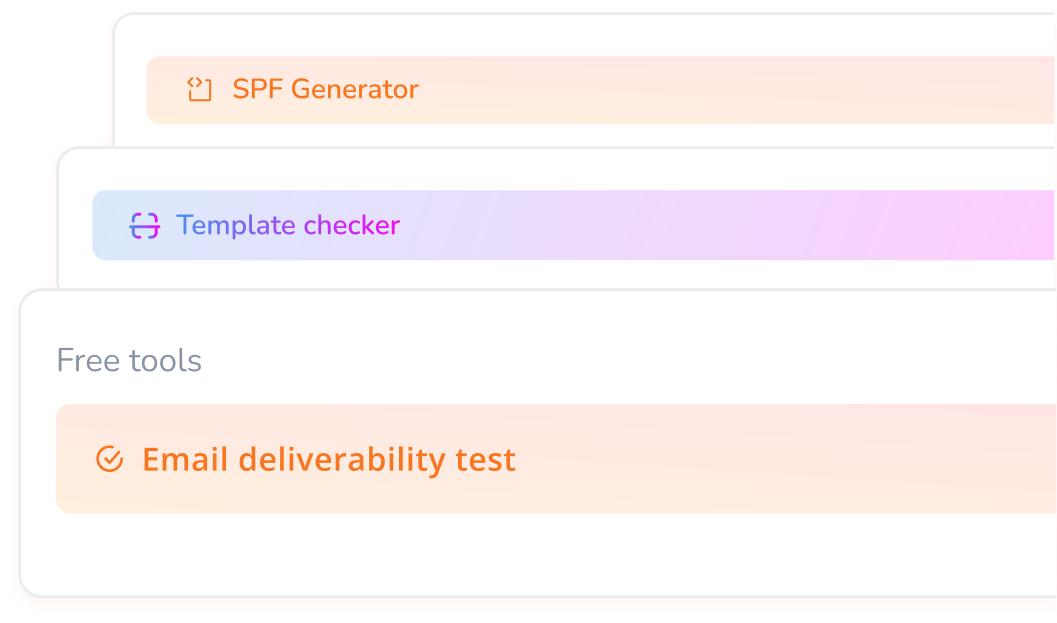
Not sure if your IP is currently listed? Run a Free Email Deliverability Test. Warmy’s test checks your IP and domain against major blacklists (including Spamhaus ZEN) and gives you a full deliverability report in minutes.
Why is my IP on the Spamhaus ZEN blacklist?
1. Your server or account was used to send spam
Whether you were directly responsible or not, if email originating from your IP was reported as spam in volume, Spamhaus may have listed it. This can happen if your account was compromised by a third party.
2. Your server is infected with malware or part of a botnet
Compromised servers can be used by external actors to send spam without your knowledge. This is the most common reason for XBL listings.
3. Your mail server is configured as an open relay
An open relay allows anyone on the internet to route email through your server. Spammers actively scan for open relays and exploit them. Running an open relay is one of the fastest paths to a Spamhaus listing.
4. You are sending from a residential or dynamic IP
ISPs assign dynamic IP addresses to home internet connections. These are not intended for direct email delivery. Spamhaus’s PBL preemptively lists these IP ranges as a policy measure, not as a judgment on your activity.
5. Your sending patterns resemble snowshoe spamming
Snowshoe spammers spread high sending volumes across many IP addresses and domains to dilute reputation signals. If your sending infrastructure resembles this pattern, SBLCSS may flag it.
6. High spam complaint rates leading to reports
When a significant number of recipients mark your emails as spam, those spam complaints can be escalated to Spamhaus directly by inbox providers, triggering a manual review and potential listing.
7. Your list contains spam trap addresses
Spam traps are inactive or recycled addresses that anti-spam organizations seed into old, purchased, or scraped lists specifically to catch senders with poor list hygiene. Hitting even a handful of spam traps can trigger an SBL or SBLCSS listing on its own, entirely separate from any complaint-based trigger. Never buy or scrape email lists, and remove unengaged or bouncing addresses on a regular schedule to keep spam traps out of your sends.
Understanding how blacklists affect your overall deliverability, not just through Spamhaus but across the broader ecosystem of inbox providers, is critical context. See our deep dive on how blacklists influence email providers.
How a Spamhaus ZEN listing affects your email deliverability
Being listed on Spamhaus ZEN is an active blocker that can immediately affect email delivery to a large portion of your audience.
Most enterprise mail servers, ESPs, and hosting providers query Spamhaus ZEN in real time on every incoming SMTP connection. If your IP is listed, the receiving server will typically issue a 5xx rejection error (a permanent failure) before your email is even transmitted. This means:
- Your emails do not reach the inbox, the spam folder, or even the server’s queue. Instead, they are rejected outright
- Bounce rates spike immediately, which damages your sender reputation score even more.
- Legitimate transactional emails such as password resets, order confirmations, support replies are blocked alongside marketing mail
- The longer the listing persists, the more your domain reputation degrades with inbox providers that track historical rejection patterns
A Spamhaus listing compounds over time. Inbox providers like Gmail, Outlook, and Yahoo factor rejection history and blacklist status into their own filtering algorithms. Even after you are removed from Spamhaus ZEN, the reputational damage to your domain may take weeks of consistent, authenticated sending to reverse.
Your email sender reputation score is directly affected by blacklist events, and recovering it requires the same gradual, positive-signal approach that email warmup provides. Read our full Spamhaus deliverability report.
How to check if your IP Is on the Spamhaus ZEN blacklist
There are two ways to run a spamhaus zen blacklist check on your IP:
- Spamhaus’s official lookup tool: Visit check.spamhaus.org and enter your IP address. The tool will tell you whether you are listed, which specific sub-list (SBL, SBLCSS, XBL, or PBL) you appear on, and provide instructions for the relevant removal process.
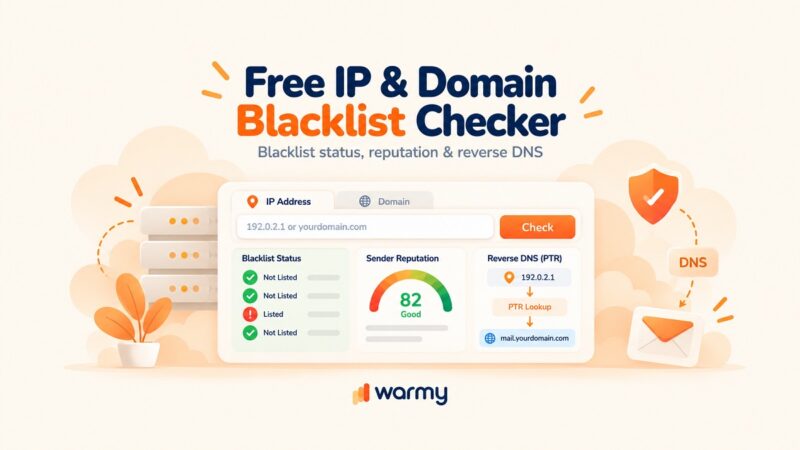
- Warmy’s free email deliverability test: Warmy’s free deliverability test checks your sending IP and domain against Spamhaus ZEN and other major blacklists as part of a comprehensive deliverability report. This is especially useful if you want ongoing visibility and not just a one-time check because blacklist status can change rapidly. The Warmy report also shows your inbox placement rates across Gmail, Outlook, and Yahoo, your authentication record status (SPF, DKIM, DMARC), and any other deliverability flags that may be affecting your campaigns all in one place.
Pro Tip: Don’t wait until you get high bounce rates before your check for a blacklist listing. Set up a routine of running a deliverability test before every major send. Warmy’s smart weekly auto-run feature can do this automatically, alerting you the moment something changes and before it affects your live campaigns.
How to remove Your IP from the Spamhaus ZEN Blacklist
Important note: Removal requests must come from the owner of the IP address or domain. If you do not control the IP directly, contact your hosting provider or ISP as they will need to submit the request on your behalf.
This spamhaus zen blacklist removal process works the same way regardless of which sub-list flagged your IP, though the specific fix in Step 2 depends on it. Follow these steps in order. Do not submit a removal request before completing Step 1 as Spamhaus will reject or reverse delisting requests where the underlying issue is still active.
Step 1: Identify which list you’re on
Visit check.spamhaus.org and look up your IP address. Confirm whether you are listed on SBL, SBLCSS, XBL, or PBL. Each has a different removal process, so knowing which one applies is essential.
Step 2: Investigate and fix the root cause
Before doing anything else, resolve the issue that caused the listing:
- SBL / SBLCSS: Stop any spam activity originating from your IP. If your server was compromised, remove malware, patch vulnerabilities, and secure your systems. If you were knowingly or unknowingly involved in snowshoe spamming, restructure your sending infrastructure.
- XBL: Scan for and remove malware from affected devices. Close any open proxies or open relays on your mail server. Use tools like MXToolbox to confirm your server is no longer operating as an open relay.
- PBL: Switch from direct email delivery to a legitimate SMTP relay or your ISP’s outbound mail server. Alternatively, obtain a static IP range from your provider and register it as a sending IP.
Step 3: Validate your email authentication
Ensure SPF, DKIM, and DMARC are correctly configured before submitting your removal request. Spamhaus reviewers consider authentication compliance when evaluating delisting requests. Having these in place signals that you’re operating a legitimate mail infrastructure.
Step 4: Return to check.spamhaus.org and submit your removal request
Once the root cause is resolved and authentication is in place, return to check.spamhaus.org, enter your IP, and follow the removal instructions specific to your list type. You will be asked to provide:
- Information about your organization and the IP address
- A description of the steps you have taken to resolve the issue
- Contact information for follow-up
Step 5: Wait for review and confirmation
Spamhaus will review your request and may contact you for additional information. Processing time varies:
- PBL removals: Often processed within minutes to a few hours (self-serve)
- XBL removals: Typically a few hours to 24 hours once the security issue is confirmed resolved
- SBL / SBLCSS removals: Can take 1–3 business days as these require manual review by the Spamhaus team
Step 6: Monitor your deliverability after removal Use Warmy’s free deliverability test to confirm the listing has cleared and that your inbox placement is recovering. Do not immediately resume high-volume sending. Instead, ramp up gradually to rebuild the positive sending history your domain lost during the blacklist period.
How to prevent future Spamhaus blacklisting
Getting removed from Spamhaus ZEN is only half the battle. Without changes to your sending infrastructure and practices, the same issues are likely to recur. Here’s how to protect your IP long-term:
Authenticate your email sending properly
SPF, DKIM, and DMARC have been mandatory requirements for bulk senders under Google’s and Yahoo’s sender rules since February 2024, and Microsoft extended similar enforcement to Outlook.com senders in May 2025. SPF, DKIM, and DMARC are now mandatory requirements for bulk senders under Google’s and Yahoo’s new sender rules. They’re also Spamhaus’s baseline expectation for legitimate senders. Missing authentication makes it significantly harder to appeal a listing. Use Warmy’s free tools like SPF Record Generator and DMARC Record Generator to ensure valid records.
Keep your server secure
Regularly audit your mail server for open relay configurations, outdated software, and malware. An unsecured server is an invitation for abuse. When spammers abuse it, your IP pays the price.
Warm up new IP addresses and domains
Never send at full volume from a new IP or domain. Gradual ramp up through email warmup builds the sending history that makes your traffic look legitimate to both inbox providers and third-party monitoring organizations like Spamhaus.
Maintain clean, engaged email lists
High spam complaint rates are one of the most direct paths to a Spamhaus listing. Regularly suppress unengaged subscribers, honor unsubscribes promptly, and never purchase email lists. Read our guide on why emails go to spam and how to fix it →
Monitor your blacklist status and domain health proactively
Don’t wait for campaign bounce rates to alert you to a listing. Warmy’s Domain Health Hub checks your overall domain health, including blacklist status, so you’re notified the moment something changes and not after the damage is done.
How Warmy helps you monitor, recover, and stay off blacklists
Warmy.io is an AI-driven email warmup and deliverability platform built to protect sender reputation and maximize inbox placement for businesses, agencies, and anyone sending email at scale.
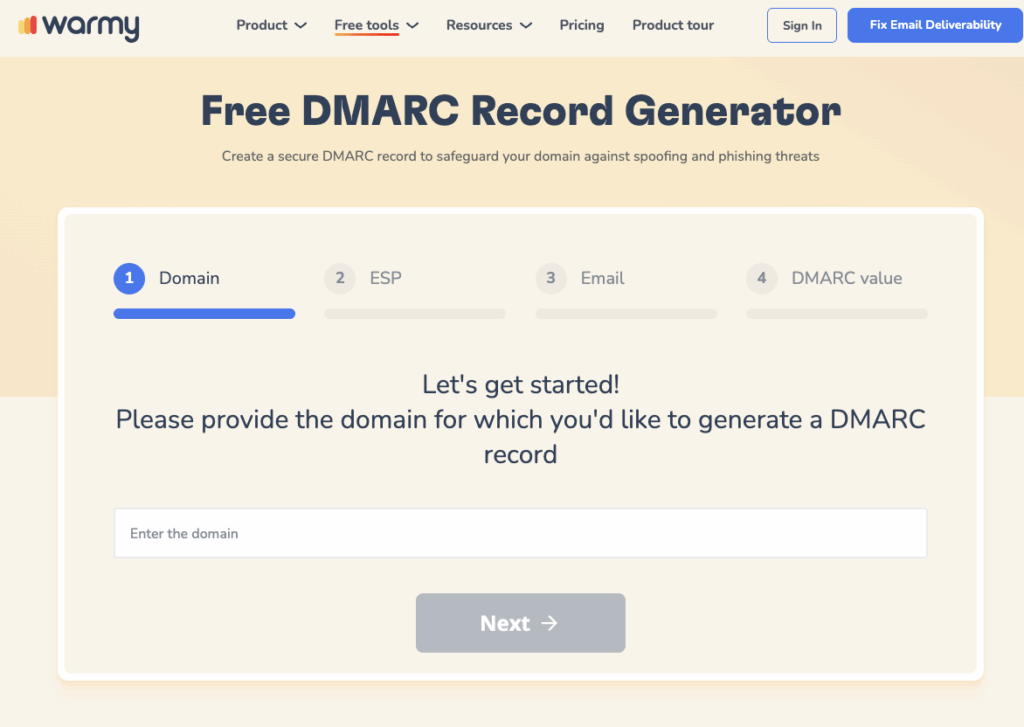
Here’s how Warmy supports you before, during, and after a Spamhaus ZEN listing:
- Blacklist & deliverability monitoring (Free): Warmy’s free email deliverability test checks your sending IP and domain against Spamhaus ZEN and other major blacklists in real time. You get a full report on inbox placement rates, authentication status, and any active flags all without needing to visit multiple tools.
- Authentication setup (free): Warmy’s free SPF Record Generator and DMARC Record Generator help you configure the email authentication protocols that Spamhaus and inbox providers both require. Correct authentication is a prerequisite for removal and the foundation for staying off blacklists going forward.
- Email warmup for reputation recovery: After a Spamhaus listing is cleared, your domain still needs to rebuild its sending history with inbox providers. Warmy’s AI-powered warmup engine gradually restores positive engagement signals (opens, replies, inbox recoveries) that tell Gmail, Outlook, and Yahoo that your domain is a trustworthy sender again.
- Smart weekly auto-run: Warmy automatically runs deliverability and blacklist checks on a weekly schedule across all your active mailboxes, so you’re always up to date and never caught off guard by a new listing.
Start your free 7-day trial today.