For sales and growth teams, email deliverability in the US market can be challenging. Here are six strategies to increase inbox placement in the country:
- Optimize email formats for the US market
- Craft the emails for an English-speaking audience
- Customize subject lines for better engagement and open rates
- Choose optimal sending times for maximum impact
- Localize your content
- Don’t get blacklisted
Email deliverability is an important ingredient in the success of any email marketing campaign. But it can get very complicated when it comes to reaching prospects in the United States.
Learning the intricacies of email deliverability to US contacts is a must for global marketing teams, SDRs, and agencies selling to America, though.
In this guide, we are going to dive into the tactics, regulations, and best practices you need to know about if you want to achieve better inbox placement in the US. If you are a company operating outside the US and want to expand your business, or a sales team in the region who wishes to optimize your cold email campaign, these tips and insights will be your guide.
Understanding the US email landscape
Email deliverability in the United States is critical for any business aiming to succeed:
- In April 2024, the US market had the highest volume of emails exchanged—that means an average of 9.7 billion emails sent daily. This shows how competitive the digital environment is.
- Aside from the market being competitive, businesses also struggle with inbox placement. A recent study by the Warmy Research Team, titled Mastering Global Email Deliverability in 2024–2025 reports that the average inbox placement rate for North America is around 85%. This means that even in an established market, around 15% of emails still fail to reach the targeted audiences.
Given these data points, it’s easy to see that increasing email deliverability in the US region can be quite the challenge but it’s very much possible.
5 key metrics to track for US-based emails
While you are working to improve your email deliverability in United States, be sure to monitor these important metrics to see how you are doing:
- Open rates: The percentage of recipients who open your emails. The higher your open rate is, the more your emails are welcomed by recipients.
- Complaint rates: The percentage of recipients who mark your email as spam. According to recent statistics, even a 0.1% complaint rate can significantly hurt your sender reputation. So the lower your spam complaint rate is, the better.
- Click-through rates (CTR): The number of recipients who click on links in your emails. A higher CTR indicates higher engagement and translates to higher deliverability.
- Bounce rates: This is the number of messages which could not be delivered or were sent back to the sender. There are temporary and permanent bounces.
- Device usage: Understanding which devices your US-based recipients are using to open emails can help optimize your email content for mobile or desktop.
First things first: How to comply with US email regulations
Navigating CAN-SPAM laws
The CAN-SPAM Act (Controlling the Assault of Non-Solicited Pornography and Marketing Act) governs email marketing and creates rules for commercial messages in the United States. This law was intended to shield consumers from spam and other unsolicited email.
Why is this important? CAN-SPAM compliance is essential for email deliverability. Every email marketer must be aware of this law. Get caught breaking and you could be fined—or blacklisted and/or banned.
Key points of CAN-SPAM:
- Emails must clearly state that they are promotional. Don’t trick your readers into thinking that they are receiving a personal or transactional email.
- Every marketing email should provide an easy way for recipients to opt out or unsubscribe from future emails.
- The subject line should be able to clearly give an idea of the content of the email.
- Emails must contain the physical address of businesses (or a valid alternative, like a P.O. Box).
Avoiding US-based spam blacklists
If your domain or IP was blacklisted, there is a great possibility your email campaign will be blocked or filtered to spam.
Some of the most well-known blacklists in the US include:
- Spamhaus: Spamhaus tracks IP addresses and domains that are suspected of sending spam.
- SORBS: This blacklist monitors spammy email practices and can block your emails if you end up on it.
- Barracuda: Known for its email filtering systems, Barracuda also maintains a blacklist that can affect your deliverability if you get listed.
6 strategies to increase email deliverability in the US market
To increase email deliverability in the US, these strategies will help ensure your emails reach inboxes and also boost engagement rates.
Strategy #1: Optimize email formats for US readers
According to a forecast in Statista, smartphone users in the US will continue to increase between 2024 to 2029 by 17.4 million users. This means mobile-friendly emails will be more in-demand as recipients can easily engage with these emails regardless of device.
On the other hand, poor formatting can impact your email deliverability by leading to higher bounce rates and reduced engagement.
Tips and best practices to optimize email formats:
- Use responsive design. Your emails should automatically adjust to fit the screen size of the device.
- Place essential content like the call-to-action (CTA) at the top to make it accessible on all devices.
- Test across devices. Preview emails on different devices (phones, tablets, desktops) before sending them. You can use tools like Litmus for this.
- Keep your layout simple. Avoid overloading the email with too many images or complex layouts. In fact, another report from the Warmy Research team tackled an experiment on how the email template affects deliverability. Access it here: Inbox vs. Spam: How DNS Configuration & Email Templates Affect Your Email Success.
Strategy #2: Craft emails for English-speaking audiences
Don’t forget that English is the most spoken language in the US. So it’s important to develop emails that follow cultural norms, spelling and phrasing. This is not just a question of grammar. It’s also about using language that is clear, concise, and culturally sensitive.
Here are a few more rules of thumb:
- Use simple language. Avoid industry jargon that might confuse or alienate your readers.
- Poor grammar can immediately reduce trust. Tools like Grammarly can help catch mistakes.
- Make sure the email’s purpose and the CTA are clear.
- Be professional. Being too casual may hurt your credibility.
- Use first names, company names, or industry-specific references to make the email feel more tailored.
Strategy #3: Customize your subject lines for better engagement
Trivia: 47% of email recipients decide an email is worth opening solely based on the subject line.
A good subject line can grab the recipient’s attention and persuade them to open your email. The right subject line can improve open rates and reputation with email providers, which in turn, improves deliverability.
Some reminders:
- Aim for subject lines between 40-50 characters for maximum impact.
- Include the recipient’s name or company for a more engaging and tailored subject line.
- Create a sense of urgency and make them excited. Explore phrases like “Limited Offer” or “Last Chance” encourage readers to open the email right away.
- Avoid spammy words. Words like “Free,” “Winner,” or “Urgent” can trigger spam filters.
- A/B Test. Test different subject lines to find the most effective ones for your audience.
Strategy #4: Time your emails for maximum impact
This is applicable for businesses located anywhere, but this is a good reminder for businesses based in other countries or regions:
- Businesses located in APAC should schedule emails to US contacts at a different time than emails to Asian contacts to avoid deliverability issues related to timing.
- According to multiple studies, the best times to send emails are 10AM, 9AM, and 8AM.
- Thursday is the best day to send an email, followed by Tuesday and Wednesday.
Quick note: many of the studies mentioned different time zones, so the best guideline is to choose the timezone that works for the majority of your audience. If you’re targeting US contacts, you can go with Eastern Time as it covers around 50% of the population.
Strategy #5: Localize content to appeal to US audiences
Localization goes beyond just translating language; it’s about adapting your content to the specific interests, preferences, and cultural norms of your US audience. In fact, 72% of consumers only engage with content tailored to their interests.
Tips and email deliverability best practices for localizing content:
- Use examples, idioms, or references that are familiar to US audiences.
- Mention US-specific holidays like Thanksgiving, Labor Day, etc., in your content.
- Showcase US-based success stories to make your emails more relevant.
- Different regions in the US may have specific tastes or preferences, so take the time to explore these.
- Choose images that US audiences can relate with. Consider national holidays, seasons, and local aesthetics.
Strategy #6: Avoid getting blacklisted, and know what to if so
Being blacklisted can harm your email deliverability. Once blacklisted, your emails are more likely to be marked as spam by other providers, which can affect your reputation and email performance.
Warmy’s Research Team released a comprehensive report on “Understanding ESP Blocks: Causes, Types, and Prevention.” This report discusses how different email service providers use blacklists as part of how they filter emails.
To avoid getting blacklisted:
- Monitor sender reputation. Regularly check your domain and IP reputation using tools like Warmy.io’s free deliverability test to ensure you’re not on any blacklists.
- Authenticate your emails. Email authentication should not be underestimated. Your SPF, DKIM, and DMARC records must be properly configured to verify your identity as a legitimate sender.
Maintain list hygiene. Keep your email lists clean by removing inactive or invalid email addresses, as high bounce rates and spam complaints can get you blacklisted. - When you do get on a blacklist, respond promptly. Act right away! Most blacklists have a procedure for removal and you should be sure to follow the steps to request to be removed. Follow these steps.
- Monitor blacklist removal: After removal, keep monitoring your emails to ensure they are no longer being flagged.
Maximize the effect of these strategies with Warmy.io
Implementing the right strategies is crucial for increasing email deliverability, but using the right tools can make the process more effective and efficient. Warmy.io provides a suite of advanced features designed to increase your overall deliverability. Using Warmy in conjunction with implementing the strategies above leads you on the path to success.
Take the deliverability test to know your priorities
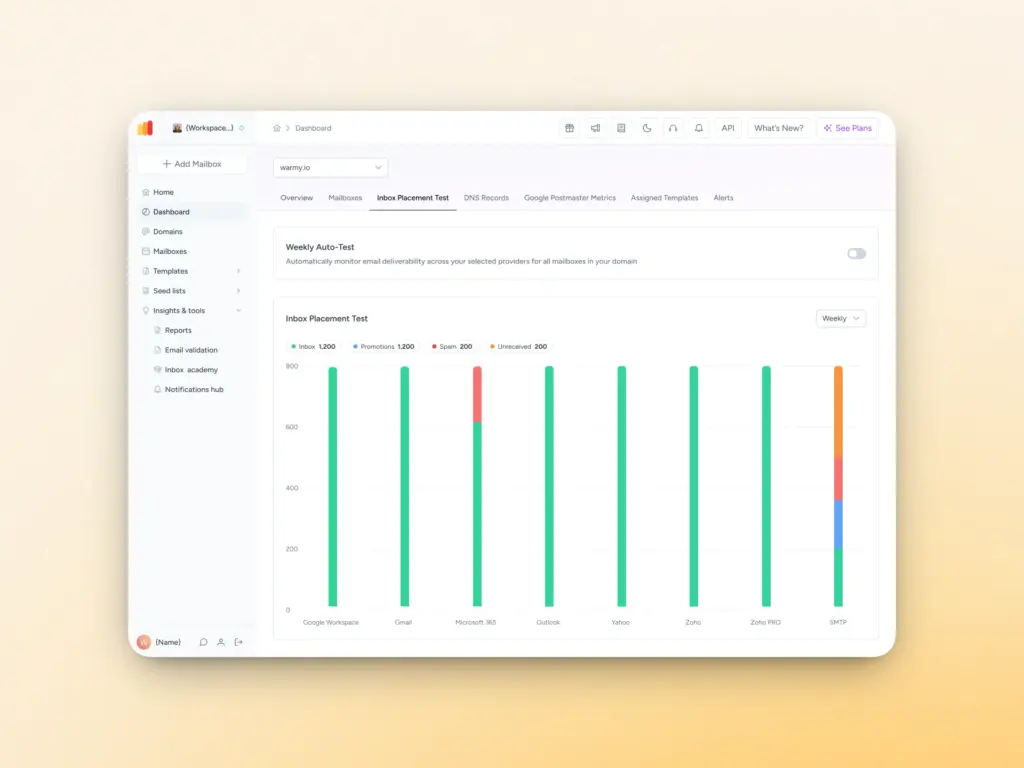
Warmy.io offers a free deliverability test that allows you to see how your emails are doing with the big ISPs like Gmail, Yahoo, and Outlook. It also measures your sender reputation, inbox placement rates, and provides information on whether your emails are being spammed or filtered and sent to promotion tabs.
The test provides actionable insights into where your emails are landing and what needs improvement. You can then prioritize efforts to enhance your deliverability, making sure your emails reach the inbox more often.
Establish a correct email warmup to maximize the benefits of your deliverability strategies
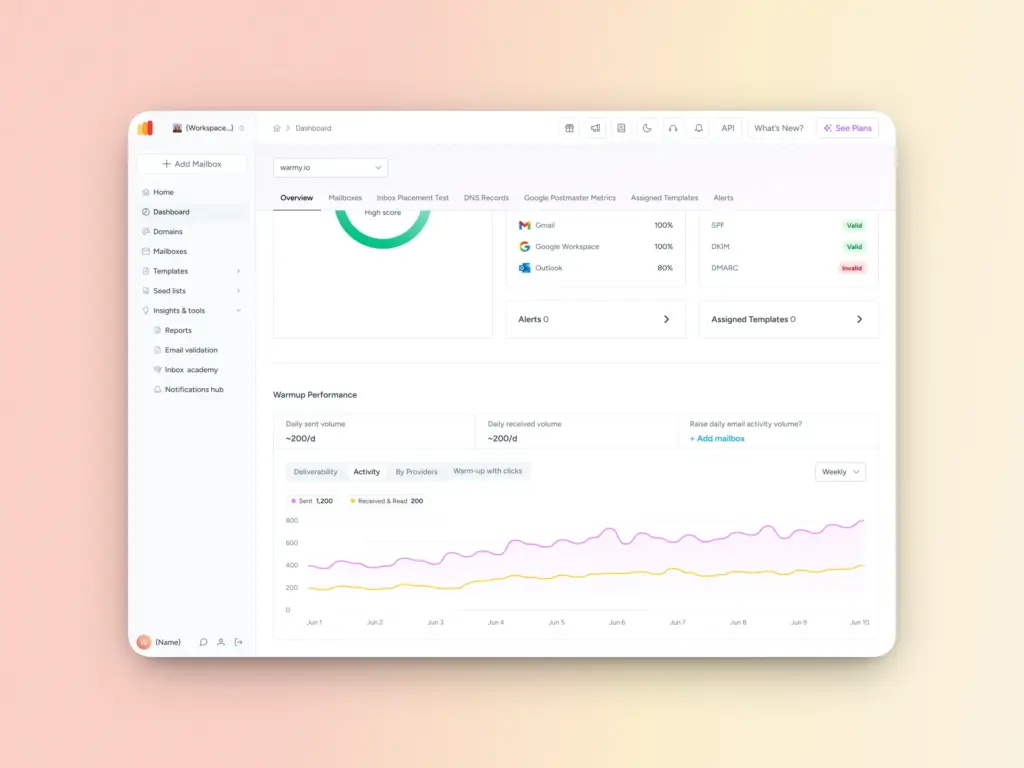
Email warmup is essential for improving your sender reputation, especially when you’re starting with a new domain or mailbox. Warmy.io automates the warmup process by gradually increasing the volume of emails sent, mimicking natural email sending behavior. Additionally, the network actively engages with your emails by opening, replying, and recovering them from spam. This process builds trust with ISPs and ensures that your emails are recognized as legitimate and not flagged as spam.
A well-executed warmup strategy ensures that your email address is trusted by ISPs, setting you up for success. Cold email accounts, if not warmed up properly, are often marked as spam due to sudden high-volume sending.
Use seed lists for a high-level warmup
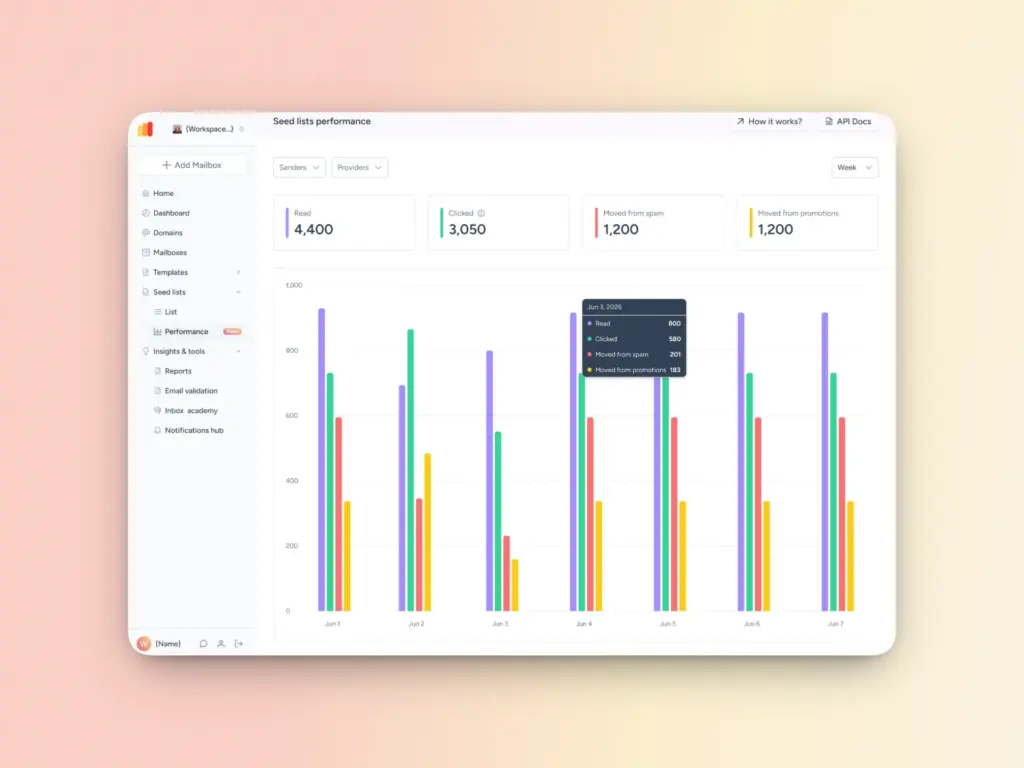
Looking to improve email deliverability even more? Warmy.io’s seed lists feature provides you with a set of real email addresses that help improve the warmup process. These addresses open, click, and reply to your emails, ensuring that ESPs see high engagement rates from your emails. They even remove your emails from spam and promotions and mark them as important to send stronger signals to ESPs.
High-quality seed lists are crucial for maintaining a strong sender reputation. Since Warmy.io uses real email accounts (not fake accounts), your warmup process is much more effective, mimicking real interactions and increasing your inbox placement rates.
Use the Template Checker for a more efficient way of optimizing content
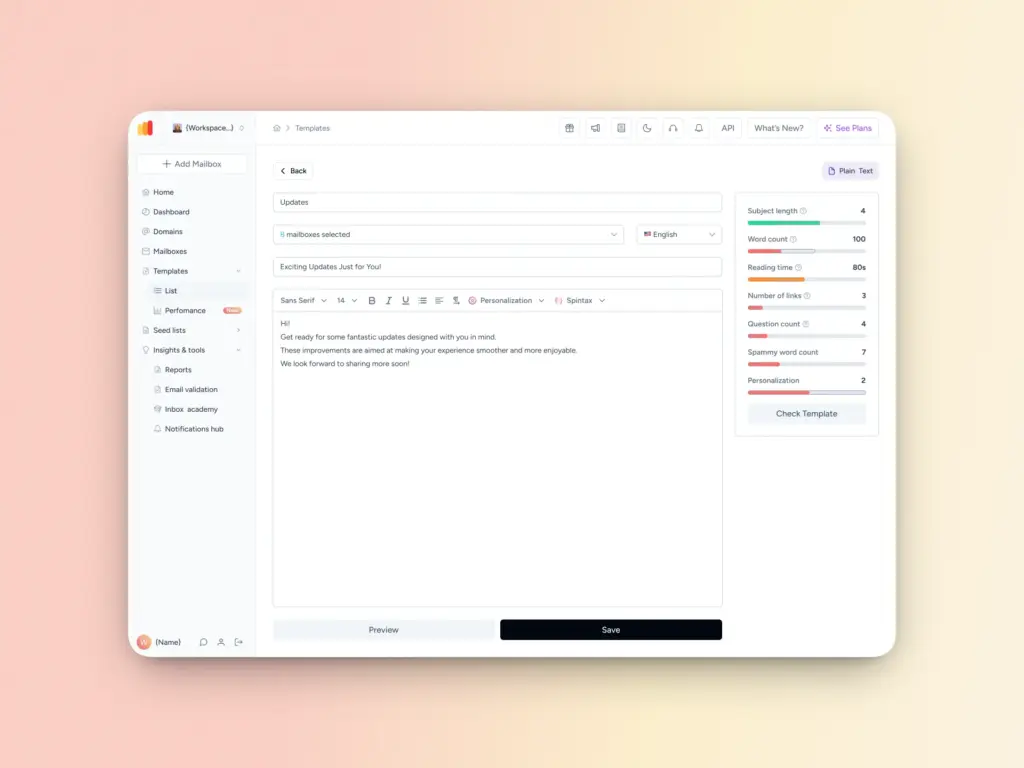
Want to preview your email templates before sending? Or get an idea whether it will be flagged as spam? The Template Checker (now with a Chrome Extension) by Warmy searches your email for common mistakes that can cause deliverability problems, such as tripping spam filters, shoddy formatting, sketchy wording, or broken links. This way, you can be sure that spam filters won’t be a roadblock preventing your emails from hitting the inbox from serious mistakes in your own content.
Fine-tune your strategy for the US market
Successfully navigating the complex landscape of email deliverability in the US market requires a combination of strategic planning, compliance with regulations, and the right tools.
Ready to improve your deliverability in the US? Book a demo with Warmy.io today and see how our advanced tools can help you maximize your results in the US market.
FAQ
What is the average inbox placement rate for emails sent in the US market?
According to research by the Warmy Research Team, the average inbox placement rate for North America is around 85%, meaning roughly 15% of emails still fail to reach their intended recipients.
What US regulations do you need to follow for email marketing?
The CAN-SPAM Act is the primary law governing commercial email in the US. It requires that emails clearly identify themselves as promotional, include an easy unsubscribe option, use honest subject lines, and display a valid physical business address. Violations can result in fines, blacklisting, or being banned.
What are the best times to send emails to US-based contacts?
Studies suggest the best sending times are 8–10 AM, with Thursday being the top-performing day, followed by Tuesday and Wednesday. If you’re targeting a broad US audience, Eastern Time is a practical reference point since it covers roughly 50% of the population.
How can I avoid being blacklisted by US email providers?
The key preventive steps are authenticating your emails with SPF, DKIM, and DMARC records, regularly cleaning your email list to remove invalid addresses, monitoring your sender reputation, and gradually warming up new domains rather than sending high volumes immediately.
How important are subject lines for US email deliverability?
Very important. 47% of recipients decide whether to open an email based on the subject line alone. Best practices include keeping subject lines between 40–50 characters, personalizing them with the recipient’s name, avoiding spam-trigger words like “Free” or “Urgent,” and A/B testing to find what resonates best with your audience.