

TL;DR: SMTP Error 555 means the receiving server accepted your MAIL FROM or RCPT TO command but rejected an unsupported parameter or extension on it, a permanent failure defined in RFC 5321. Fix it by removing unsupported ESMTP parameters from your sending configuration and confirming your SMTP settings match your provider’s requirements. It is unrelated to Error 556, which signals a recipient domain that refuses all mail outright.
The Simple Mail Transfer Protocol (SMTP) is a critical system that is foundational to the overall functionality of every email domain. It is responsible for sending emails and making sure that it is received by the intended recipient/s.
SMTP Error 555 is one of dozens of three-digit reply codes defined in the SMTP standard (see Warmy’s complete SMTP error code guide for the full list), and misconfigured or unsupported command parameters are the most common trigger. The server typically responds with one of the following messages:
“555 5.5.2 Syntax error.”
“555 5.5.4 Command unrecognized: [command].”
So why exactly did you receive this error?
SMTP Email Error 555: Defining the Error
SMTP Error 555 is a permanent, non-retryable failure defined in RFC 5321, the IETF standard that governs the SMTP command syntax. Specifically, it means the receiving server accepted your MAIL FROM or RCPT TO command but rejected one of its parameters. If you are seeing the specific 5.5.2 sub-code, Warmy’s 555 5.5.2 syntax error breakdown covers that variant in more depth.
This error can indicate a syntax issue in the parameters or arguments passed to the SMTP instructions, implying a misconfiguration or wrong format in the email sending request.
When SMTP Email Error 555 occurs, it is presented as a server response containing the code “555” followed by a message indicating that the server is refusing to accept the command due to a syntax error. The error message might read something like:
“555 5.5.2 Syntax error.”
“555 5.5.4 Command unrecognized: [command].”
What Causes SMTP Email Error 555?
The causes below apply whether your server returns the specific 555 code or the more general SMTP Error 500 catch-all syntax error, since both point to the same root problem: a command the server could not parse.
- Erroneous Command Syntax. This can be due to typing mistakes, erroneous command sequences, or unsupported instructions, depending on the server’s SMTP implementation. When the issue is specifically a malformed address or argument, the server may return SMTP Error 501 instead.
- Unsupported Extensions or Parameters. Certain SMTP servers may not support specific SMTP command extensions or parameters. If an email client communicates with the server using these unsupported components, it may see Error 555, or SMTP Error 502 if the server rejects the extension outright rather than just its parameters.
- Configuration errors in the email client. Improper setting of the email client might also result in syntax issues. This includes improper settings for server addresses, port numbers, or security protocols that do not meet the server’s specifications.
- Firmware or Software upgrades.Occasionally, upgrades to the SMTP server software or the email client may bring modifications that are incompatible with existing setups, resulting in syntax problems.
- Custom SMTP Settings or Scripts. There are some occurrences where custom SMTP scripts or settings (such as automated email systems), develop inappropriate scripting or setup often resulting in Error 555.
Pro Tip: Before touching your email client settings, check the raw SMTP transcript in your mail server or provider’s logs. Error 555 is specifically about the MAIL FROM or RCPT TO line, so knowing which parameter the server rejected saves you from guessing across every setting below.
Recommended Fixes for SMTP Email Error 555
For Gmail
- Verify SMTP Settings: Ensure that your settings match these recommended parameters:
- SMTP server: smtp.gmail.com
- Port: 587 (TLS) or 465 (SSL)
- Authentication required: Yes (use your full Gmail address and password)
- Use Correct Email Format: Ensure that the email addresses in the “To”, “CC”, and “BCC” fields are correctly formatted.
- Check for Updates: Make sure that your email client is up-to-date to support the latest SMTP standards and security protocols.
For Outlook
- SMTP Configuration Check: Confirm your settings are correctly input:
- SMTP server: smtp-mail.outlook.com
- Port: 587
- Encryption method: STARTTLS
- Authentication: Yes (your Outlook email and password)
- Correct Command Use: Ensure that any custom settings or scripts interacting with the SMTP server use correct SMTP command syntax.
- Update and Restart: Update your Outlook to the latest version and restart the application to apply changes.
For Yahoo
- Ensure SMTP Settings are Accurate:
- SMTP server: smtp.mail.yahoo.com
- Port: 465 (SSL) or 587 (TLS)
- Require SSL/TLS: Yes
- Authentication required: Yes (your Yahoo email and password)
- Email Format Verification: Double-check that all email addresses are properly formatted and contain no extraneous characters or spaces.
Pro Tip: A quick way to isolate a 555 without changing any client settings is to open a raw connection to the SMTP server (for example with openssl s_client or telnet) and issue the MAIL FROM and RCPT TO commands by hand. If the server rejects a specific parameter in that raw session, you have confirmed the cause before touching Gmail, Outlook, or Yahoo configuration at all.
SMTP Email Error 556: What is the Difference?
SMTP Error 556 means “Domain does not accept mail,” formally defined in RFC 7504. It typically appears as:
“556 5.1.10 Domain does not accept mail”
This is a very different problem from Error 555. It has nothing to do with your MAIL FROM or RCPT TO syntax; it means the recipient’s domain has published a “null MX” DNS record, a deliberate declaration that the domain accepts no email at all. It is also easy to confuse with SMTP Error 521, which signals a host refusing all mail at the connection level rather than a domain-wide null MX declaration.
It can result from:
- The recipient domain publishing a null MX record on purpose, often because it is a web-only or parked domain that was never meant to receive mail;
- A typo in the recipient’s domain that happens to match a domain configured this way, or;
- A domain that recently stopped accepting mail and updated its MX records accordingly.
Because 556 reflects the recipient’s own DNS declaration, it is not something you can fix by changing your own sending configuration, unlike 555, which is a sender-side issue.
Methods to Resolve SMTP Error 556
- Confirm the Recipient Address. Double-check the domain for typos; a null MX blocks the entire domain, not just one address.
- Check the Domain’s MX Records. Look up the recipient domain’s MX records. A single record pointing to “.” confirms a null MX, meaning the domain cannot receive mail by design.
- Contact the Recipient Through Another Channel. Since this is not fixable from the sending side, reach out by phone, a contact form, or a different verified address.
- Suppress the Address for Future Sends. Remove domains that consistently return 556 from your list so ongoing campaigns are not repeatedly rejected.
Pro Tip: Keep 555, 556, and 521 straight: 555 is a syntax problem on your own MAIL FROM or RCPT TO command that you can fix; 556 means the recipient’s domain has declared, in its own DNS, that it accepts no mail at all; and 521 means a host refuses every connection outright. Only the first one is something your sending configuration can resolve.
Enhancing Email Functionality with Warmy.io

Warmy.io offers a comprehensive suite of tools and services designed to enhance email performance and mitigate common SMTP errors, including SMTP Error 555 and SMTP Error 556. By integrating advanced features and expert consultation, Warmy.io ensures your email setup is optimized for high deliverability and compliance.
Features of Warmy.io
Warmy.io offers a comprehensive suite of features to optimize your email deliverability, such as:
-
- Email Deliverability Tests meticulously evaluate your email delivery capabilities, identifying potential issues and offering solutions to ensure your emails reach their intended recipients’ inboxes.
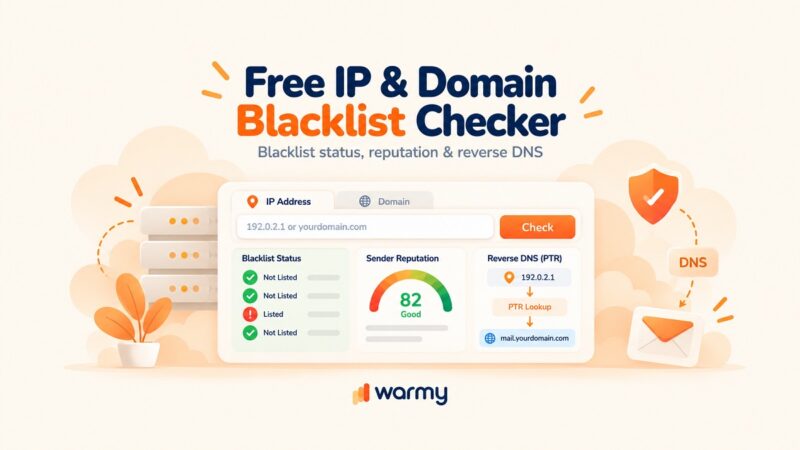
- Blacklist Monitoring keeps a vigilant eye on multiple blacklist databases, alerting you if your sending IP or domain is listed and guiding you through the steps to get delisted, thus safeguarding your reputation and email functionality.
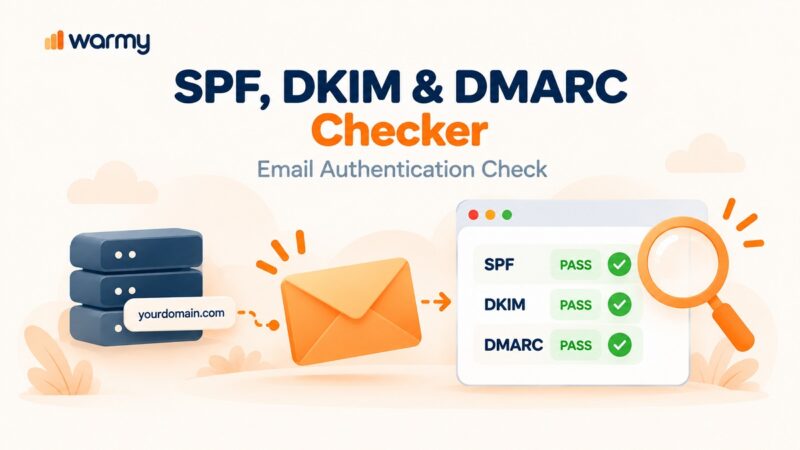
- Free SPF and DMARC Record Generators to simplify the setup of your email authentication process minimizing the risk of spoofing and phishing attempts, and reduce the likelihood of encountering security-related SMTP errors.
- Consultation from Email Deliverability Expert from Warmy.io offers a personalized assistance and tailored solutions. These specialists provide expert analysis, bespoke strategies, and guidance on best practices, ensuring optimal email performance and compliance with industry standards.

Correcting The Syntax Error
SMTP Error 555 is straightforward to resolve once you know where to look: check the raw command the server rejected, correct the unsupported parameter or malformed syntax, and confirm your SMTP settings match your provider’s requirements.
Error 556 is a different matter entirely. Since it reflects the recipient domain’s own null MX declaration, no amount of reconfiguring your outgoing server will get the message through; your only options are confirming the address and reaching the recipient another way.
Strong SPF, DKIM, and DMARC records will not resolve either code directly, but they do prevent the authentication problems that commonly get mistaken for a syntax error. Book a free demo with Warmy to get a deliverability expert to review your sending setup and catch these issues before they cause a bounce.