

| TL;DR: SMTP Error 441 means your outgoing mail server could not complete or hold a connection to the recipient’s server long enough to deliver the message. It usually comes down to one of five things: server overload, incorrect SMTP settings, a network interruption, a firewall or security block, or an outage on the recipient’s side. It’s a temporary 4xx failure, not a permanent bounce, so most email systems retry automatically. Confirming your SMTP configuration and connection stability resolves the majority of cases within minutes. |
|---|
SMTP Error 441 appears when your mail server cannot establish or hold a connection with the recipient’s server long enough to complete delivery. It’s one of the more common Simple Mail Transfer Protocol (SMTP) errors, and it can disrupt email exchanges in both personal and business contexts.
SMTP errors vary by their nature and cause, and each of them has a specific error code indicating the issue. Therefore, the knowledge of the existing errors is essential to manage email systems effectively.
This guide specifically tackles SMTP Error 441. Its explanation is provided in detail below to familiarize the readers with its existence and manifestations, as well as possible solutions to keep their email exchanges strong and resilient.
Understanding SMTP Error 441
The SMTP Error 441 warning often indicates an issue with the email server’s ability to process and send an email to the receiver.
This error is frequently seen when the server is unable to connect to the recipient’s email server for a variety of network or configuration reasons. The error message that users receive may vary depending on the email client or server, but it typically reads something along the lines of:
441 Connection dropped due to ConnectionReset
or
441 Service not available, closing transmission channel.
These notifications indicate that the connection was either interrupted or that the server has been temporarily unavailable. SMTP Error 441 falls under the 4xx class of temporary failures defined in the SMTP standard, RFC 5321, which means the message is deferred rather than permanently rejected. Understanding the intricacies of this error is critical for identifying the issue and implementing the appropriate solution to restore normal email communication.
💡 Pro Tip: Before assuming a network issue, check whether the 441 error recurs only with one recipient domain or across the board. A pattern limited to one domain usually points to an issue on their server; a broad pattern across many domains points to your own configuration or connection stability.
Identifying causes of SMTP Error 441
- Server overload. This occurs when an email server receives more traffic than it can handle, resulting in delays or inability to send emails. High traffic volumes may overflow the server’s processing capacity, resulting in temporary outages. This overlaps with related deferrals like SMTP Error 421, which also stems from server capacity limits rather than a message problem.
- Incorrect email settings. Misconfigured email settings are a frequent cause of SMTP problems. This could include wrong server addresses, port numbers, or security measures that prohibit the server from making a solid connection to the recipient’s server.
- Network issues. Connectivity issues on the network might disrupt communication between servers. This could be due to network congestion, unstable internet connections, or malfunctioning networking equipment.
- Firewall or security restrictions. Firewalls or security software may limit SMTP’s communication ports. These restrictions may misinterpret legitimate email traffic for possible security risks and stop it. Similar policy-based blocking also triggers SMTP Error 501 5.7.1, which is worth ruling out if the errors started right after a firewall or security change.
- Recipient server issues. The fault may not necessarily be with the sender’s server. If the recipient’s email server is offline, unreachable, or experiencing problems, Error 441 may occur. If the recipient’s server refuses the connection outright rather than dropping it, you’re more likely looking at SMTP Error 521.
Detailed resolution steps for SMTP Error 441
For Gmail Users
- Check Network Connections: Ensure your internet connection is stable and reliable.
- Verify SMTP Settings: Ensure that the SMTP settings are correctly configured:
- SMTP server: smtp.gmail.com
- Port: 587 (TLS) or 465 (SSL)
- Authentication required: Yes
- Use an App Password, Not “Less Secure Apps”: Google removed the “Less Secure Apps” setting in 2022, so it’s no longer an option. If you’re connecting a third-party email client, turn on 2-Step Verification and generate an app password instead, or use OAuth sign-in if the client supports it. Google’s bulk sender guidelines outline the current authentication requirements for sending through Gmail.
- Update Email Client: Ensure your email client is up to date to avoid compatibility issues.
👉 Not sure if your emails are reaching the inbox at all? Start your free Warmy trial and let Adeline AI monitor your sender reputation and inbox placement automatically.

For Outlook Users
- Inspect Network Settings: Confirm that your internet connection is active and stable.
- Check Email Server Settings: Correct any inaccuracies in your Outlook SMTP settings:
- SMTP server: smtp.office365.com or smtp.live.com
- Port: 587 (TLS)
- Authentication: Yes, using the same settings as your incoming server
- Review Security Software: Disable or configure firewall and antivirus settings that may be blocking your outgoing emails.
- Repair Outlook: Use the built-in repair tool to fix any issues with Outlook itself.
For Yahoo Users
- Verify Network Connection: Make sure your internet connection is working without interruptions.
- Confirm SMTP Configuration: Check and correct the SMTP settings for Yahoo:
- SMTP server: smtp.mail.yahoo.com
- Port: 465 (SSL) or 587 (TLS)
- Authentication: Yes, with your Yahoo email address and password
- Update Password: If recently changed, update the password in your email client.
- Consult Yahoo Support: If the issue persists, reach out to Yahoo support for more specific guidance.
💡 Pro Tip: If Error 441 only shows up with Yahoo addresses, check your DMARC alignment first. Yahoo enforces stricter authentication checks than most providers, and a misaligned DMARC record often presents as a timeout-style error instead of an outright rejection.
General Tips
- Restart Your Email Client. Sometimes, simply restarting your email client can resolve temporary connectivity issues.
- Clear Outbox. Remove any stuck emails in your Outbox since these can sometimes cause further sending issues.
- Test with Webmail. Try sending an email directly from the webmail interface of your provider to isolate the issue to your email client or network.
Common variants of SMTP Error 441
- 441 4.4.1 Error: Connection timed out. This variant indicates that the connection to the recipient’s server was not established within the expected time range. It usually indicates network delays or connectivity issues on either the sender’s or recipient’s end.
- 441 4.4.2 Error: Server is temporarily unavailable. This message indicates that the recipient’s server is temporarily unavailable to process requests. This could be the result of server maintenance, overload, or a brief outage.
- 441 4.7.1 Error: Service is unavailable; please try again later. This error happens when the receiving server momentarily blocks or denies access to the originating server, which could be due to suspected spam or security measures that restrict email acceptance.
For a full breakdown of every SMTP status code and what each one means for deliverability, see Warmy’s SMTP error codes guide.
💡 Pro Tip: Log the exact 441 sub-code (4.4.1, 4.4.2, or 4.7.1) every time it occurs. A pattern across sub-codes tells you whether you’re dealing with a network problem, a recipient-side outage, or a reputation-based block, so you fix the right thing instead of guessing.
Enhancing email functionality with Warmy.io
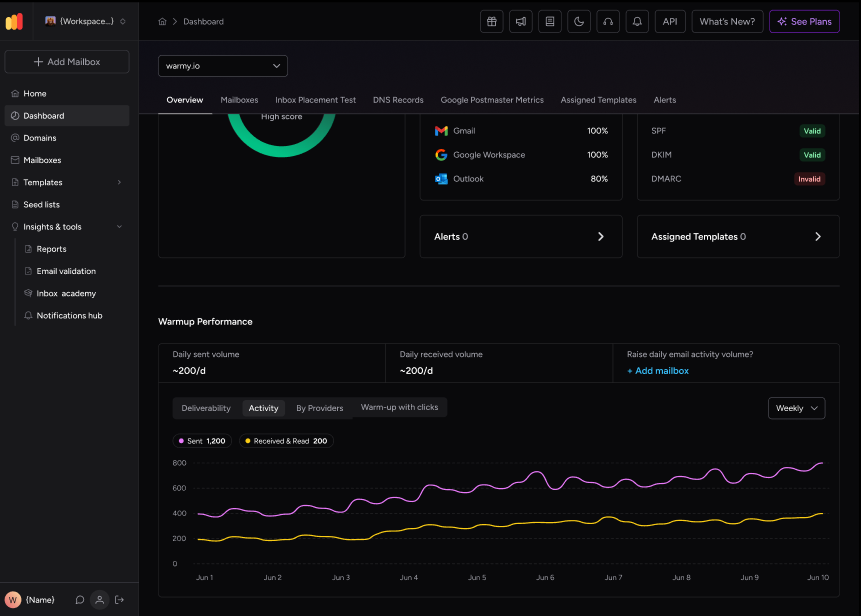
In the process of troubleshooting the SMTP Email Error 441, a specialized service such as Warmy.io can greatly facilitate the process of identifying and fixing the core problems, as well as improving the overall functionality of email. Warmy.io offers a variety of tools specifically developed to address multiple issues associated with email delivery.
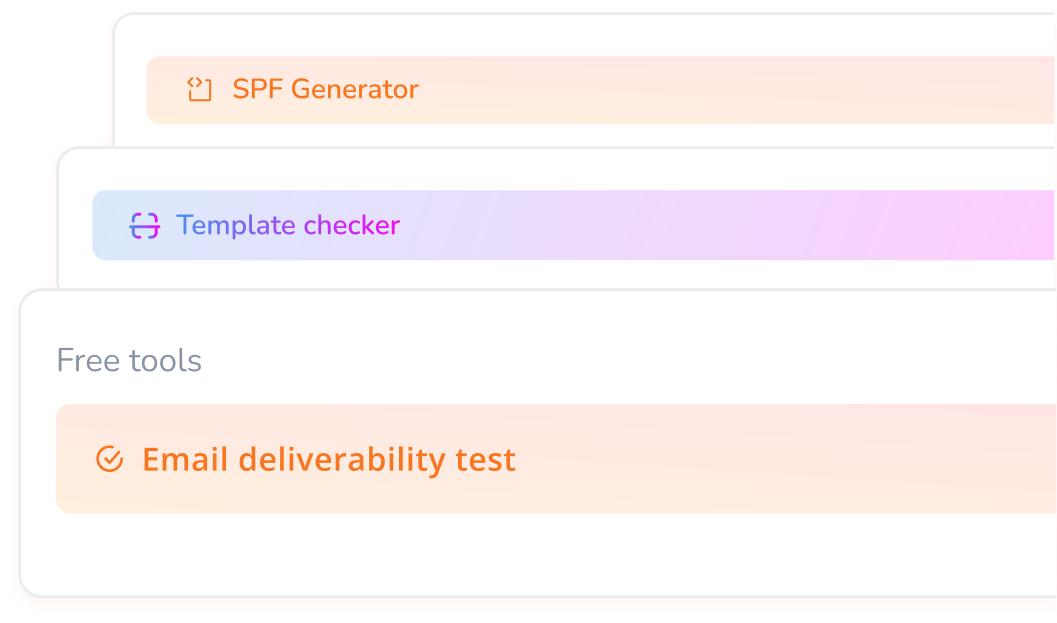
- Email deliverability checks. Warmy.io provides thorough testing for determining email deliverability. These tests assist uncover any potential issues that could interfere with email delivery, such as server configuration mistakes or network issues, which are common causes of SMTP errors.
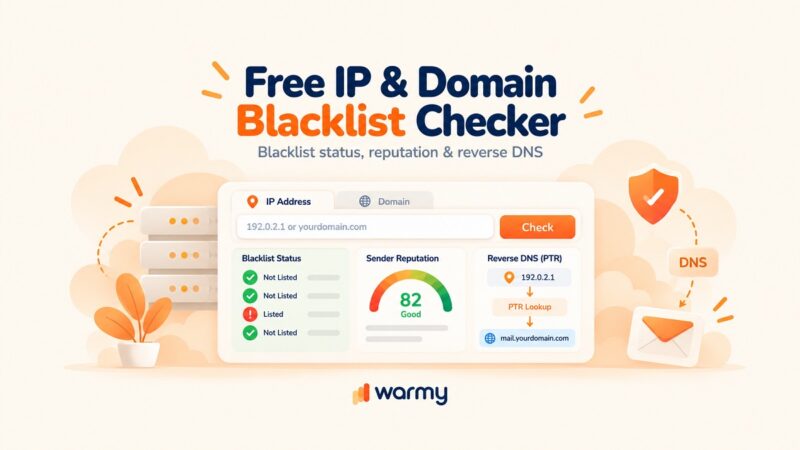
- Blacklist monitoring. One of the causes of SMTP problems could be the blacklisting of your domain or IP address. Warmy.io scans through numerous blacklist databases to determine whether your email sending capabilities are jeopardized by being classified as spam or harmful. Detecting and correcting blacklisting early on helps reduce SMTP problems and increase email delivery success rates.
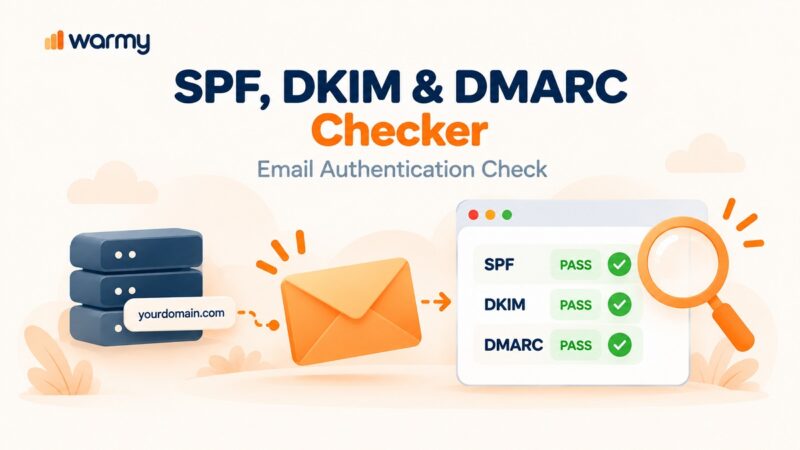
- Email authentication verification. Proper implementation of email authentication techniques such as SPF (Sender Policy Framework) and DMARC (Domain-based Message Authentication, Reporting, and Conformance) is critical for preventing email rejection by recipient servers. Warmy.io provides tools for creating and verifying these records, ensuring that they are properly configured to reduce the possibility of receiving SMTP errors due to authentication difficulties.
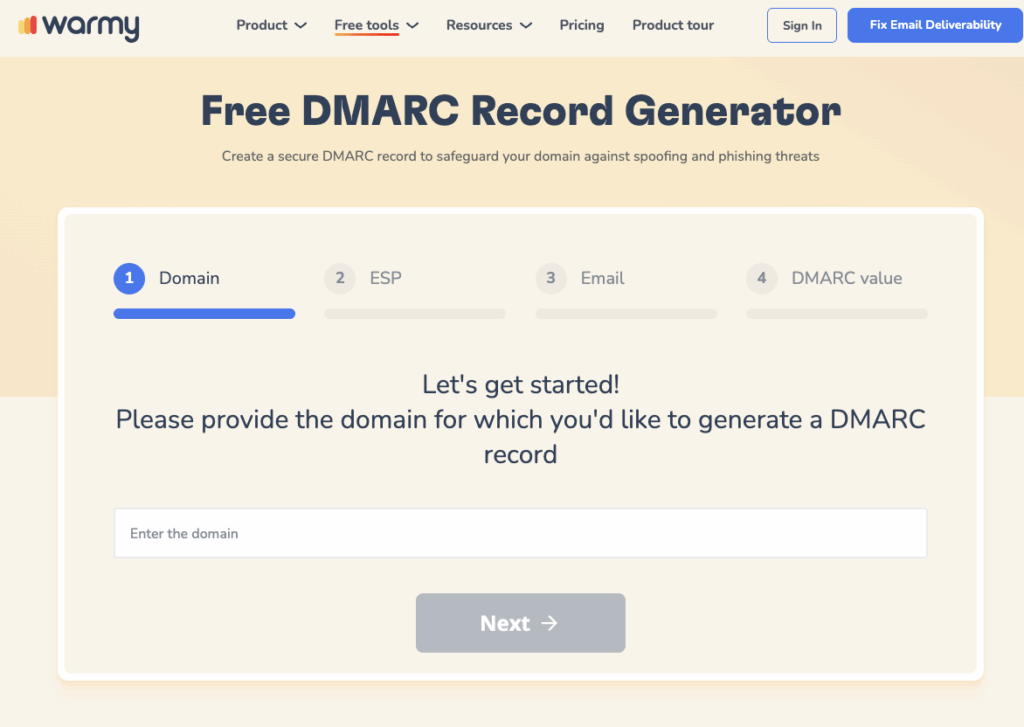
- Free tools for SPF and DMARC. Incorrect SPF or DMARC records might cause SMTP issues such as Error 441. Warmy.io provides free generators for these data, making it easier to create accurate setups that promote better email delivery and email security compliance.
Conclusion
To summarize, it is important to note that SMTP Error 441 must be resolved as quickly and efficiently as possible to maintain smooth and efficient email communication. Like other SMTP errors, this code can severely impact a person’s ability to communicate through its delay and potential for miscommunication.
Warmy.io’s email delivery tests and domain blacklist checking capabilities helped detect the problem while the additional email authentication check ensured that the following error could be avoided.
In the end, use this knowledge to ensure that you have a reliable and secure email system. Error prevention will significantly increase the reliability and affordability and long-term use of your digital communication system.
👉 Book a demo with Warmy’s team and see how proactive monitoring keeps errors like SMTP 441 from disrupting your email flow before they start.