

Warmy.io and Inboxy.io both operate in the email deliverability space, but they solve fundamentally different problems. Inboxy focuses primarily on spam scoring and inbox monitoring — useful diagnostics, but only one piece of the picture. Warmy.io is a full-featured AI-powered email warm-up platform built to actively build and protect sender reputation over time.
The difference shows up most clearly in raw warmup capacity. Warmy’s network of over millions active mailboxes supports millions of warm-up interactions daily. Inboxy caps out at around 3,600 emails per month. For a team warming a new domain or recovering from a reputation hit, that gap is the difference between being campaign-ready in 2–3 weeks versus waiting months while your outreach pipeline sits idle.
Getting your emails into your audience’s inbox is one of the biggest challenges in outbound and email marketing — and the right email deliverability tool makes all the difference.
Below, you’ll find a detailed comparison of Warmy.io and Inboxy.io, with a specific focus on Warmy.io’s superior email warming capabilities.
Warmy.io
Warmy is an AI-driven email warmup and deliverability platform that helps marketers warm up their email accounts, boost deliverability, and increase ROI.
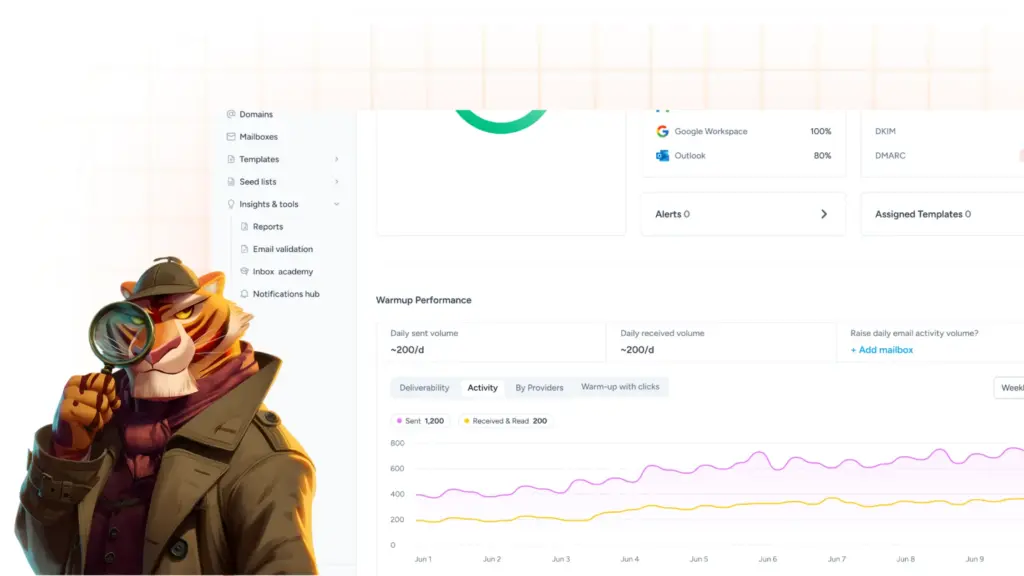
It works by sending automated warm-up emails to designated accounts, gradually building sender reputation over time. This steady warm-up process prevents your email accounts from being flagged as spam, increasing the likelihood that your messages reach recipients’ inboxes.
According to Gmail and Yahoo’s 2024 sender requirements, any account sending above 5,000 emails daily must maintain a spam complaint rate below 0.3%. Without proper warm-up, new domains often trigger automatic filters that enforce complaint rates as low as 0.1%. Warmy’s architecture specifically addresses this requirement by simulating natural engagement patterns that ISPs recognize as legitimate sending behavior.
Inboxy
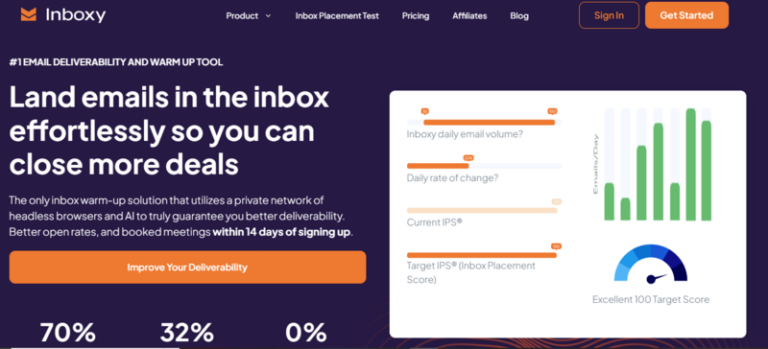
Inboxy is an email deliverability and warm-up tool designed to help emails land directly in recipients’ inboxes. Its core functionality revolves around categorizing emails into quality levels — such as spam, low quality, or high quality — and alerting you when campaigns are likely to be flagged.
Inboxy also includes AI-powered tools that monitor live inbox activity and make automatic adjustments to sending metrics to maintain compliance with inbox restrictions.
While Inboxy is a solid tool for monitoring email campaign quality, it lacks the deep email warming infrastructure that Warmy.io provides.
The Key Difference: Email Warm-Up Depth
Warm-Up Capacity: millions vs 3,600
The fundamental difference between these two tools comes down to warm-up capacity and control. Warmy.io’s sophisticated warm-up algorithm lets you regulate the pace of account warming to avoid spam triggers, supports warm-up in multiple languages and topics, and integrates directly with Google Postmaster for full sender reputation visibility. Inboxy caps warm-up volume at 3,600 emails per month — compared to Warmy.io’s millions per day.
For SDRs, sales teams, and agencies, poor email deliverability directly impacts revenue. Missing your audience’s inbox by just 10–15% means losing qualified pipeline before anyone knows the campaign launched. At scale, that’s not a deliverability metric — it’s a quota problem. A domain that hasn’t been properly warmed can bleed opportunities silently for weeks before anyone connects the drop in replies to an inbox placement issue.
💡 Pro Tip
Before launching any cold email campaign, run an email deliverability test on your sending domain. Identifying warm-up gaps or authentication issues early prevents hard-to-reverse sender reputation damage. According to Google’s official bulk sender guidelines, proper SPF, DKIM, and DMARC configuration is now mandatory for high-volume senders.
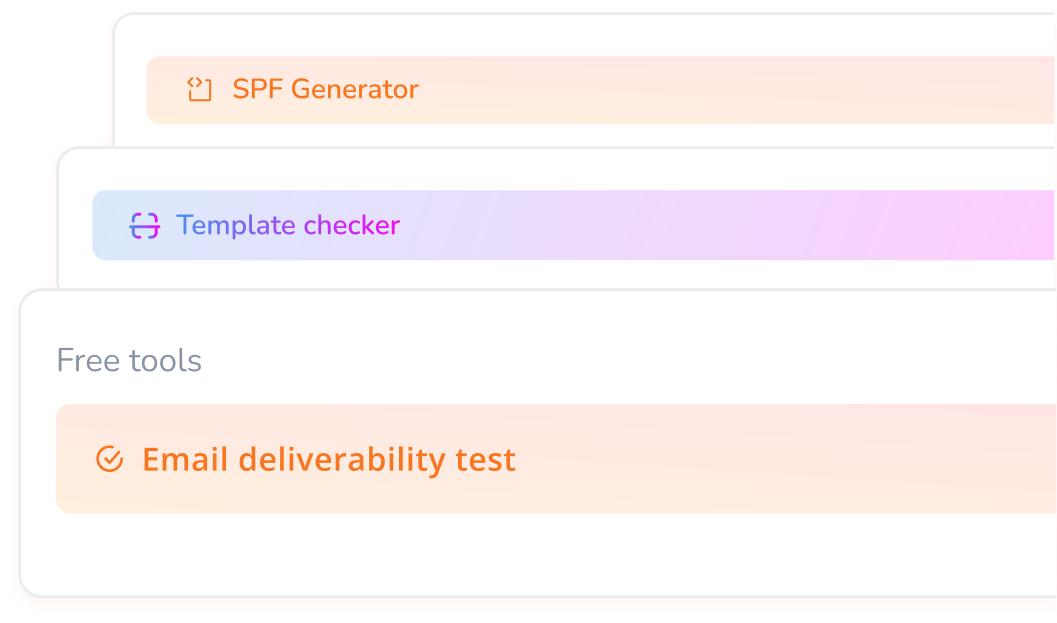
➡ Not sure where your emails are landing? Run a free Email Deliverability Test and find out instantly.
Warmy.io vs Inboxy.io: Feature-by-Feature Comparison
| FEATURE | Warmy | Inboxy |
|---|---|---|
| Dedicated AI for user’s deliverability | ✅ (Adeline AI) | ❌ Not available |
| Unlimited mailboxes can be connected | ✅ | ❌ Not applicable |
| Providers that can be warmed up | Gmail and Google Workspace, MS365, Outlook, Sendgrid, Yahoo, Mailgun, Custom SMTP, Brevo, Zoho, Zoho Pro, AOL Mail, Elastic Email, SendPulse, Mailjet, Amazon SES, GoHighLevel, SMTP.com, ExpertSender | ❌ Not applicable / No warmup feature |
| Maximum warmup emails a day | Millions | ❌ |
| Network size | >1M+ active mailboxes | ❌ |
| Warm up with clicks | ✅ | ❌ |
| Blacklist monitoring | ✅(included in the email deliverability test) | ✅ |
| API Access | ✅ | ❌ |
| Seed Lists (Gmail, outlook, Yahoo) | ✅ | ❌ |
| Auto-archives warmup emails | ✅ | ❌ |
| Reporting | Advanced | Basic |
| Warmup customization | Advanced (distribution per provider, language, topic, temperature, engagement patterns) | ❌ |
| Multiple language options for warmup emails | ✅ | ❌ |
| Topic warmup | ✅ | ❌ |
| Spintax on the user template | ✅ | ❌ |
| Email validation | ✅ | ❌ |
| Scalable for teams | ✅ (+ has an agency dashboard) | ❌ |
| Email Deliverability Test | ✅ | ✅ |
| Dedicated Customer Success Manager | ✅ | ❌ |
| Dedicated deliverability expert for every customer | ✅ | ❌ |
| Email Template Checker inside the platform | ✅ | ❌ |
| Email Template Checker (free Chrome extension) | ✅ | ❌ |
| Email deliverability A/B testing | ✅ | ❌ |
Why Warmy.io Is the Stronger Choice for Email Deliverability
When it comes to email warm-up, volume, flexibility, and tooling depth matter. Here’s what sets Warmy.io apart:
Speed of Reputation Recovery
When your domain gets flagged as spam, recovery depends on volume. Warmy’s capacity lets you warm multiple mailboxes in parallel — cutting recovery time from 6–8 weeks down to 2–3. Inboxy’s 3,600 monthly limit forces sequential warming, extending your downtime and delaying pipeline restart.
Multi-Language & Topic Warm-Up
ISPs detect pattern matching. Inboxy sends identical warm-up messages. Warmy simulates natural sending across different languages, topics, and sender patterns on the same accounts — making your warm-up invisible to spam filters rather than telegraphing it as automated behavior.
Direct Google Postmaster Integration
Gmail’s Postmaster Tools are where ISPs expose reputation data. Warmy connects directly to Google Postmaster, giving you real-time visibility into authentication failures, spam complaint spikes, and user engagement — the exact signals ISPs use to flag or allow your emails. Inboxy doesn’t offer this connection.
Email Authentication Built In
Email authentication standards like SPF and DMARC are foundational to inbox placement. RFC 7208 defines the SPF standard that receiving mail servers use to validate your sending domain.
Microsoft’s email authentication documentation confirms that sender reputation signals — built through consistent, authenticated sending — are a primary factor in inbox placement decisions across Outlook and Microsoft 365.
For a broader look at how Warmy compares across the market, see the best email warmup and deliverability tools for 2026.
Ready to Improve Your Email Deliverability?
Warmy.io is built for businesses and individuals who need reliable, scalable email warm-up — not just monitoring. Whether you’re launching a new sending domain, recovering from spam folder placement, or scaling outbound volume, Warmy.io gives you the infrastructure to do it right.
That said, Inboxy may be a reasonable fit depending on your use case. Choose Inboxy if you send fewer than 5,000 emails per month, primarily monitor existing campaigns for spam risk, or need real-time inbox activity tracking on already-established accounts with a solid sender reputation.
Inboxy falls short, however, if you are warming a new domain or recovering from spam folder placement, manage multiple sending accounts simultaneously, or need to test warm-up effectiveness before launching campaigns. In those cases, the gap between Inboxy’s 3,600 monthly warm-up cap and Warmy’s infrastructure becomes a practical limitation — not just a feature comparison.
Not sure where you stand? Take advantage of Warmy’s free email deliverability test to get a clear picture of your inbox placement before your next campaign.
➡ Ready to protect your sender reputation at scale? Sign up and see Warmy in action.
What is the main difference between Warmy.io and Inboxy.io?
Warmy.io is a comprehensive email warm-up and deliverability platform with AI-powered warming, multi-language support, and millions warm-up emails per day. Inboxy focuses primarily on spam scoring and inbox monitoring, with a warm-up limit of 3,600 emails per month and fewer built-in tools.
Does Inboxy.io offer email warm-up?
Yes, Inboxy includes basic email warm-up functionality, but it lacks the scale, customization, and supplementary tools that Warmy.io provides. Warmy.io supports warm-up across different languages and topics, adds your own templates, and connects directly to Google Postmaster for reputation tracking.
How many emails can Warmy.io warm up per month?
Warmy.io can warm up millions of emails per day, compared to Inboxy’s 3,600 per month. This makes Warmy.io the stronger option for teams managing multiple sending accounts or running high-volume outbound campaigns.
Does Warmy.io support Google and Outlook accounts?
Yes. Warmy.io supports Google (Gmail/Google Workspace), Outlook, and custom SMTP warm-up, making it compatible with virtually any email provider your team uses.
How quickly will email warm-up improve my ROI?
Domain warm-up typically shows ROI improvements within 2-3 weeks. You’ll see higher inbox placement rates, which immediately increases reply rates and pipeline velocity. Warmy’s warm-up with clicks feature tracks engagement during warm-up, letting you measure reputation improvement before launching campaigns.
What happens if I choose Inboxy and it doesn’t warm up my domain fast enough?
You’ll discover this 4-6 weeks into your campaign when you notice low inbox placement and high bounce rates. By then, your domain reputation is already damaged. Warm-up should happen before high-volume sending, not during.