

| TL;DR: SMTP Error 452 4.2.2 means the recipient’s mailbox has run out of storage space, so the receiving server is temporarily refusing the message until room is freed up. In most cases it clears on its own within a few retries once the mailbox owner deletes old mail or an administrator raises the storage quota; if the error keeps recurring, the causes and fixes below cover both the sender side and the server side. |
|---|
Today, email is one of the most vital parts of our everyday communication, used for professional correspondence, marketing, and plain personal messages. Email exchange is based on Simple Mail Transfer Protocol (SMTP), the internet standard that defines how mail servers hand messages off from one server to the next.
SMTP ensures that the email will actually be sent by an origin server and reach the destination server without any disruptions, enabling the smooth interaction of emails across the globe. However, things can go wrong, a message will not arrive, and the situation results in a considerable headache for both the sender and the recipient.
One such thing is SMTP Error 452 4.2.2, which can be challenging because of its technical nature. Typically, it means that a mail cannot be delivered because the recipient’s mailbox is full or the server is out of storage room. Hence, this is often an alert for the user to keep tabs on the mailbox size, or admins to adjust server settings to accommodate volume flow.
Understanding SMTP error 452 4.2.2
SMTP Error 452 4.2.2 indicates a storage problem: the recipient’s mailbox is full, or the server’s own storage limit has been exceeded. In simpler terms, the email has not been delivered because there is nowhere to store it. Unlike many other 4XX codes, this one is specific to storage capacity and shouldn’t be ignored – for a broader look at the numeric code family it belongs to, see Warmy’s SMTP Error 452 resolution guide.
When the error message appears, the desired email will not be sent. It has the following immediate effects:
- Circulation delays. Important messages are not transmitted, meaning that they may not be delivered in time for critical deadlines or opportunities.
- Extra effort. They may need to find a different email delivery service to ensure their message reaches the recipient. This effort can cause unnecessary stress.
- User dissatisfaction. The sender and receiver of the message can receive this error with dissatisfaction, as they will need to take urgent action to clear mailbox space or adjust server storage settings in the future to allow the email to be sent.
Common сauses of SMTP email error 452 4.2.2
SMTP Error 452 4.2.2 happens for a handful of common reasons, ranging from mailbox and server storage limits to configuration settings and sending volume. For the full picture of how this code fits among other SMTP error codes, Warmy’s error code reference breaks down every class from 1XX to 5XX. Below are the main causes to check first, in order of likelihood.
Overfilled Recipient Mailbox
Once an individual’s mailbox exceeds the maximum storage it can handle, it can’t take any more emails. Email service providers allocate user-specific amounts of storage, and once someone reaches that limit, any new emails coming in are bounced back with an SMTP error code 452 4.2.2. Once the recipient deletes some emails or moves them to an archive folder, they can start to receive emails again.
Server Storage Issues
It is not just a single mailbox problem. Entire email servers have storage limitations that, when reached, cause the same error in every email addressed to users on that server. Because server storage issues are usually widespread to more than one user or even an organization as a whole, they must be addressed by the responsible server administrators to improve the storage capacity or manage the emails more efficiently.
Configuration Settings
Incorrect SMTP server configurations may also be the reason for this error. In order to optimize resource allocation, an organization’s administrators might lower the thresholds for the sizes of their users’ mailboxes and the amount of data to be stored on the server. However, it might happen that this leads to users reaching their limits sooner. Changing these values to more realistic ones that match the organization’s needs may resolve this issue.
High Volume of Sent Emails
Moreover, sending a high volume of emails within a brief timeframe can also trigger SMTP Error 452 4.2.2. The receiving server might apply rate limiting or other anti-spam controls that track incoming volume rather than individual mailbox space – a related but distinct issue covered in Warmy’s guide to SMTP Error 452 4.5.3. Consequently, the email server returns the error to protect against accidental or intentional spam floods, and resumes delivery once the incoming volume drops back to normal.
How to diagnose SMTP error 452 4.2.2
1. Understanding Bounce Messages
Whenever an email does not reach the desired address, the sender obtains a bounce message with the exact details of the delivery failure – an SMTP error code. Incorrect reading of these messages seems crucial, because some actionable clues might be apparent immediately:
- It might explicitly state that the receiving mailbox is full or the server has refused the message due to store capacity.
- Other hints, such as miscellaneous details about configuration settings or rate-limiting, should also not be disregarded.
2. Checking Server Logs
Email Server logs are especially useful for email administrators since they aid in the identification of SMTP errors. Email transactions, from which such error messages are generated, contain valuable information . The quickest way to identify particular causes is to:
- Filter the logs for occurrences of the 452 4.2.2 error code
- Check for any repeating patterns, such as sending a large attachment to Office 365 or a considerable number of recipients, which might be a sign of server quotas.
3. Verifying Mailbox Storage Limits and Usage
Mailbox storage can be checked by senders, recipients, or their administrators. A recipient can look up their current storage consumption against their limit; if usage is close to the cap, cleaning the mailbox will likely fix the issue. An administrator can review settings, current usage, and limits for individual mailboxes and for the whole server, and should size those limits so the server is never asked to store more than it can physically handle.
Pro Tip: Before assuming a mailbox is oversized, run the numbers instead of guessing. Warmy’s free Mailbox Calculator estimates how much storage a mailbox actually needs based on volume and attachment size, so you can set a realistic limit instead of an arbitrary one.
4. Engage with Recipient’s IT Support (If Applicable)
Establish Contact with Recipient’s IT Support In the event that the diagnosis is conducted from the sender’s side and all signs point to the recipient’s mailbox or server, recipient’s IT support or system administrator can be contacted to receive their feedback. Enabling direct access to the server or mailbox conditions otherwise unattainable, aforementioned contact source can facilitate the checks. In this way, senders and administrators can best diagnose the nature of SMTP Error 452 4.2.2 to resolve it in a targeted and efficient manner.
Resolving SMTP Error 452 4.2.2
For Email Senders
1. Reducing Email Send Rate
- Space Your Sends. Instead of sending a large number of emails in rapid succession, distribute your email dispatch over a longer time frame. This is especially important when emailing domains that are aware to have strict receiving restrictions.
- Throttle Emails. The majority of email marketing tools have an email throttling feature, which allows you to control how many emails are dispatched every hour to avoid overwhelming the recipient server.
2. Optimizing Email Content Size
- Compress Images. Before embedding images in your email, compress them to reduce their size without significantly impacting quality.
- Limit attachments If you can, link to the file online instead of connecting it as an attachment. Ideally, the link itself will not be stored in the Email, eliminating the need for space. It reduces your email’s file size and storage usage on the other server.
- Make HTML simple. Use clean, easy HTML if you can. If there is a lot of code and big stuff, many elements take over the email for no reason.
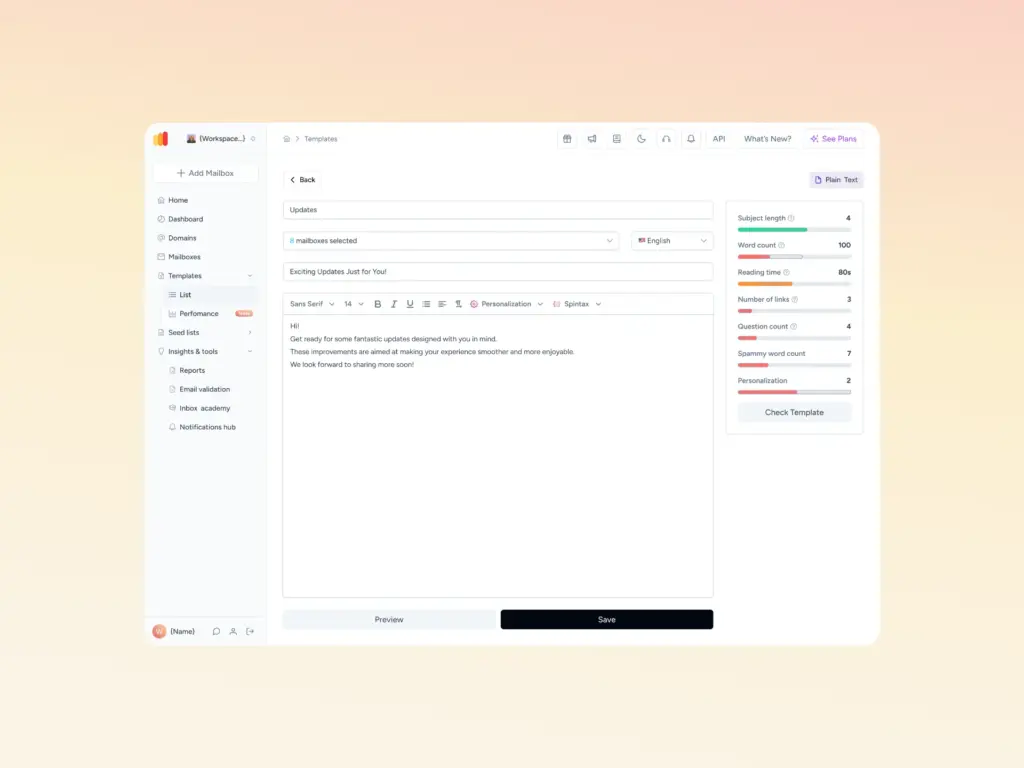
Pro Tip: Bloated HTML and spam-trigger language are the two most common reasons a lean email still bounces or lands in spam. Run it through Warmy’s free Template Checker before you send – it scans subject lines and body copy for spam triggers and formatting issues, then returns a spam score with specific fixes.
3. Contacting the Recipient
- Direct Communication. Try to contact the recipient by other means, such as phone or message platforms, to notify them of the problem. It is important for urgent communication.
- Educate about Mailbox Management. In some cases, you can advise the recipient how to manage their mailbox. For example, how to archive old emails or clear the trash.
4. Adjusting SMTP Settings
- Sending limits review: check if the sending limits of your email server are not suitable; you may be one of the common senders who send too many emails too fast.
- Retry intervals configuration: optimize your server settings for resending emails that have returned due to this error. Choose the optimal retry interval to give the recipient time to empty the basket.
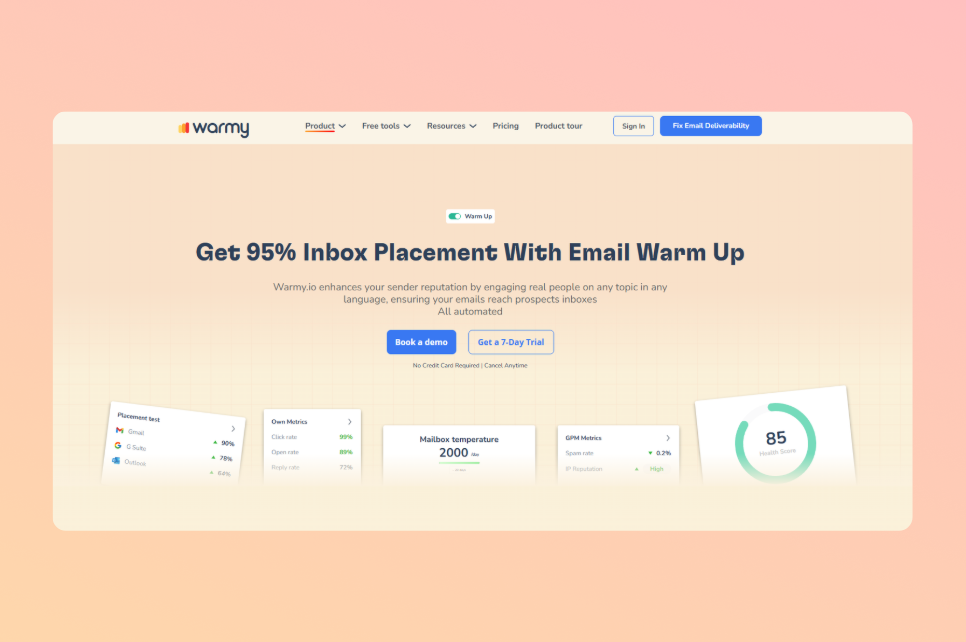
Not sure whether your own sending reputation is contributing to bounces like this one? Warm up your domain with Warmy to build sender trust with Gmail, Outlook, and Yahoo before you scale your sending volume.
For Server Administrators/Recipients
1. Increasing Mailbox/Storage Limits
- Evaluate Current Limits. Start by assessing the existing mailbox and storage limits on your server, and check them against actual usage patterns rather than default settings. For a reference on how storage limits and cleanup work on the provider side, see Google’s guide to managing Gmail storage.
- Expand Storage Capacity. If feasible, increase the storage capacity for mailboxes, especially for users who frequently encounter storage issues. This can be done by reallocating resources or upgrading your server’s storage hardware.
- Implement Tiered Storage Plans. Consider offering different storage plans for users, allowing them to choose a plan that suits their email volume. This approach can also incentivize users to manage their mailbox sizes more effectively
2. Monitoring and Managing Mailbox Sizes
- Implement Alerts. Set up alerts for when mailboxes approach their storage limits. These alerts can be directed to both the user and the administrators, ensuring timely action can be taken before the mailbox is full.
- Regular Audits. Conduct regular audits of mailbox sizes across your server. Identify and address mailboxes that consistently hover near or at their capacity.
- Educate Users. Provide users with tips and best practices for managing their emails, such as regular cleaning of inbox, archiving old emails, and unsubscribing from unnecessary newsletters.
3. Updating Server Configurations
Review email retention policies and adjust them so messages aren’t kept longer than necessary. Where possible, apply automatic archiving to move older mail out of active storage before it counts against the quota.
Optimize your server’s SMTP delivery settings, and check both sending and receiving limits to minimize the chance of overloading the recipient’s mailbox or your own server.
Configure rate limiting on the server for outbound emails. This will prevent it from sending too many emails too quickly, which can also affect SMTP Error 452 4.2.2 on the receiving end.
Preventive measures and best practices
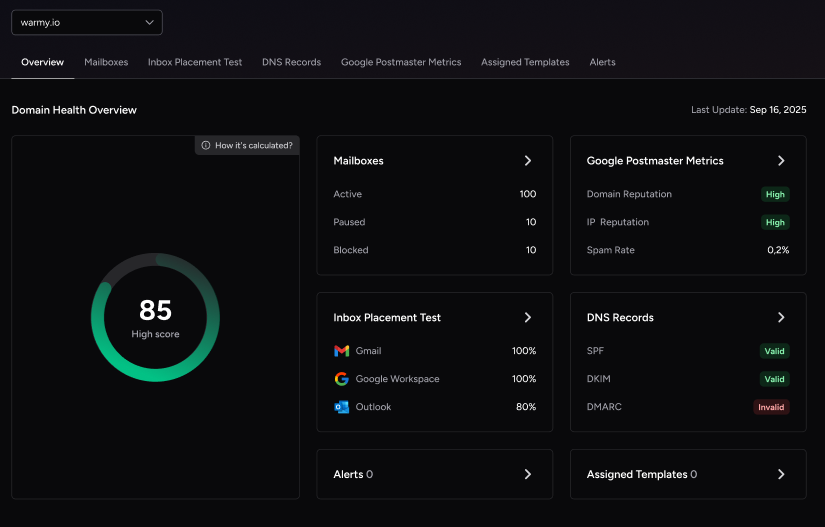
Preventing this error long-term comes down to keeping mailboxes healthy and sending practices reasonable, and proactive tools such as Warmy.io help with both. Warmy’s step-by-step domain warmup guide is a good starting point if you’re setting up sending practices from scratch, and how Warmy’s platform works explains the mechanics behind the deliverability features below.
Email Warm-up. A strong warmup tool such as Warmy.io lets your new or dormant email accounts ramp up sending volume gradually, so that a solid sender reputation is built before the account is asked to handle real volume, which in turn keeps emails landing in the inbox rather than getting deferred or bounced.
Bonus Tip
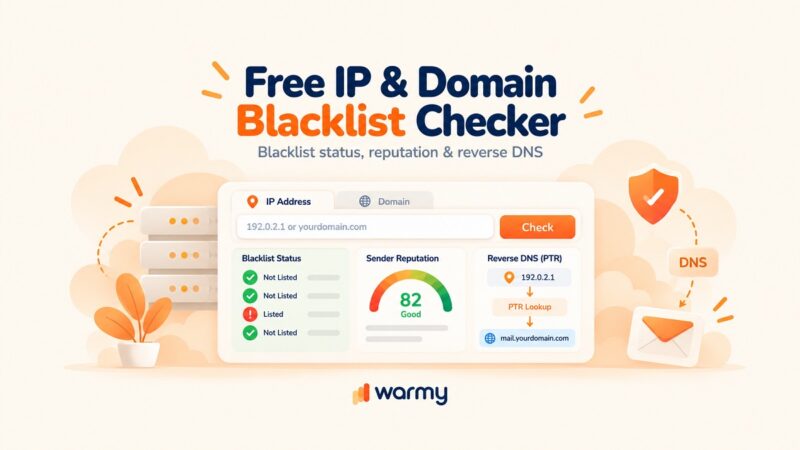
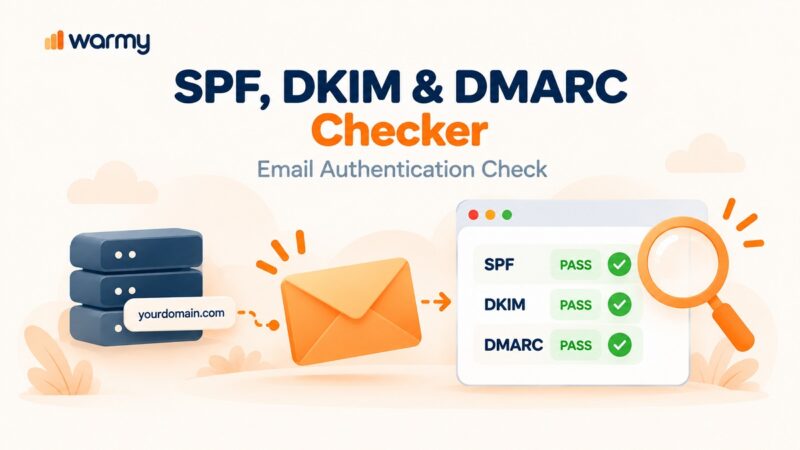
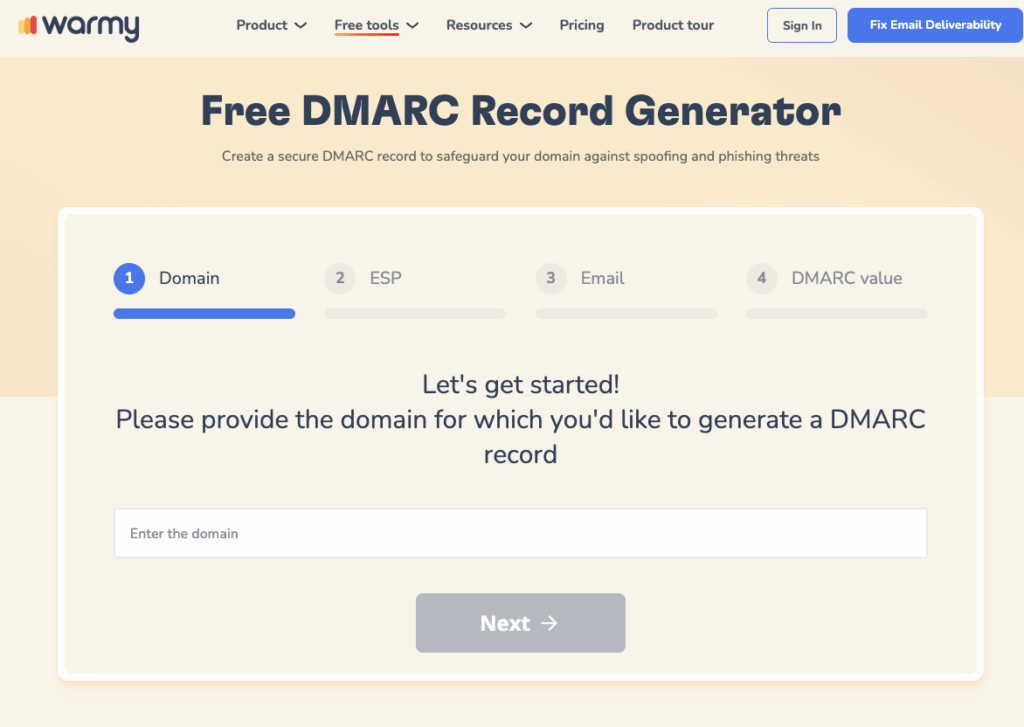
Deliverability and authentication checks. Free tools such as Warmy.io provide easy email delivery checks to ensure nothing affects your email reception. Free blacklist checks are also available to verify that your domain is not blocked. Additionally, users can easily verify and generate SPF and DMARC records , which are essential in preventing your emails from being identified by spam or phishing algorithms. This is also done with Warmy.io.
Implement the best practices. . Regular monitoring is made simple with tools like Warmy.io, which watch over and help improve your email performance. It also helps to train your team on good mailbox habits – clearing out old mail regularly and keeping sending volume steady rather than bursty – and to review Warmy’s comparison of the best email warmup tools.
Pro Tip: Set a recurring monthly check rather than waiting for the next bounce. A quick pass through your deliverability dashboard catches a creeping mailbox or a drifting sender score long before it turns into a 452 4.2.2 or a full-blown blocklist listing.
Conclusion
Every modern person cherishes the opportunity for uninterrupted email communication with other people – colleagues, friends, family members, or business partners.
Therefore, addressing issues related to SMTP Error 452 4.2.2 is crucial: the error, being synonymous with full mailboxes and server storage issues, slows down the flow of information and can result in lost clients, missed opportunities, lost time, and severe annoyance.
By understanding the issues that provoke the event and the above strategies for email senders and server administrators/recipients, one can efficiently nullify its effects on their own work.
People who utilize Warmy.io services to warm up email, test deliverability, check blacklists, and validate authentication settings receive additional support in doing so.
Overall, the message is clear: maintaining active email accounts, making proper server setups, checking them regularly, and following email communication best practices will not obstruct the connectivity and communication our lives increasingly depend on. The point is simple: it should be efficient, reliable, and secure.
Ready to stop guessing why emails bounce? Book a free demo with Warmy and see exactly how healthy your sending reputation and mailbox management really are.